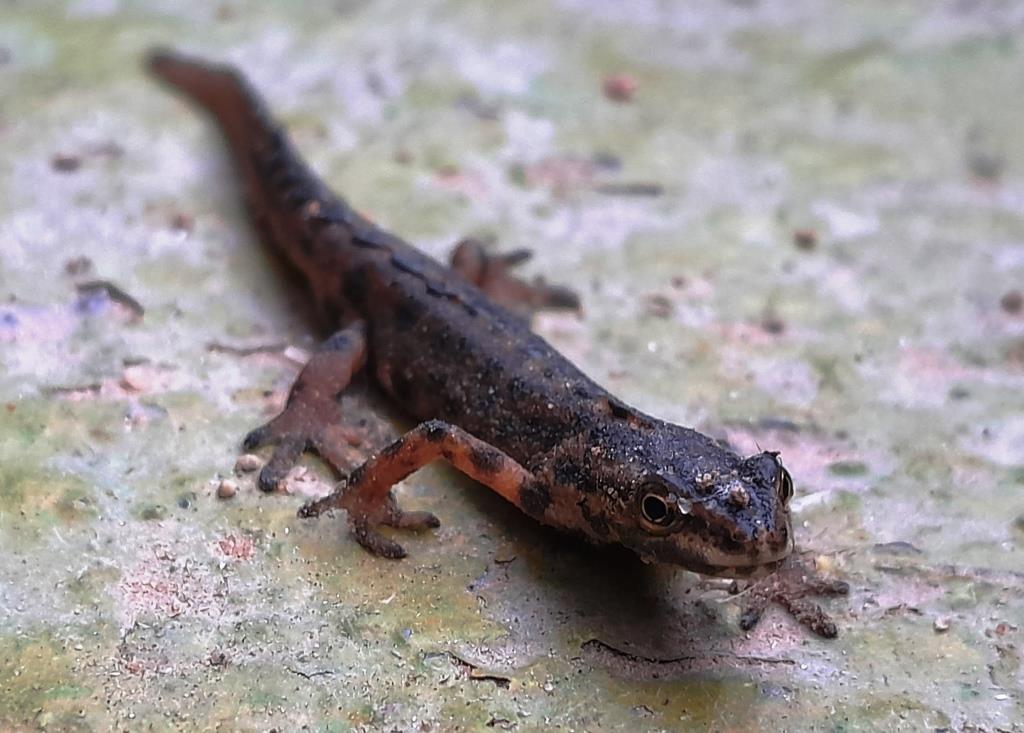
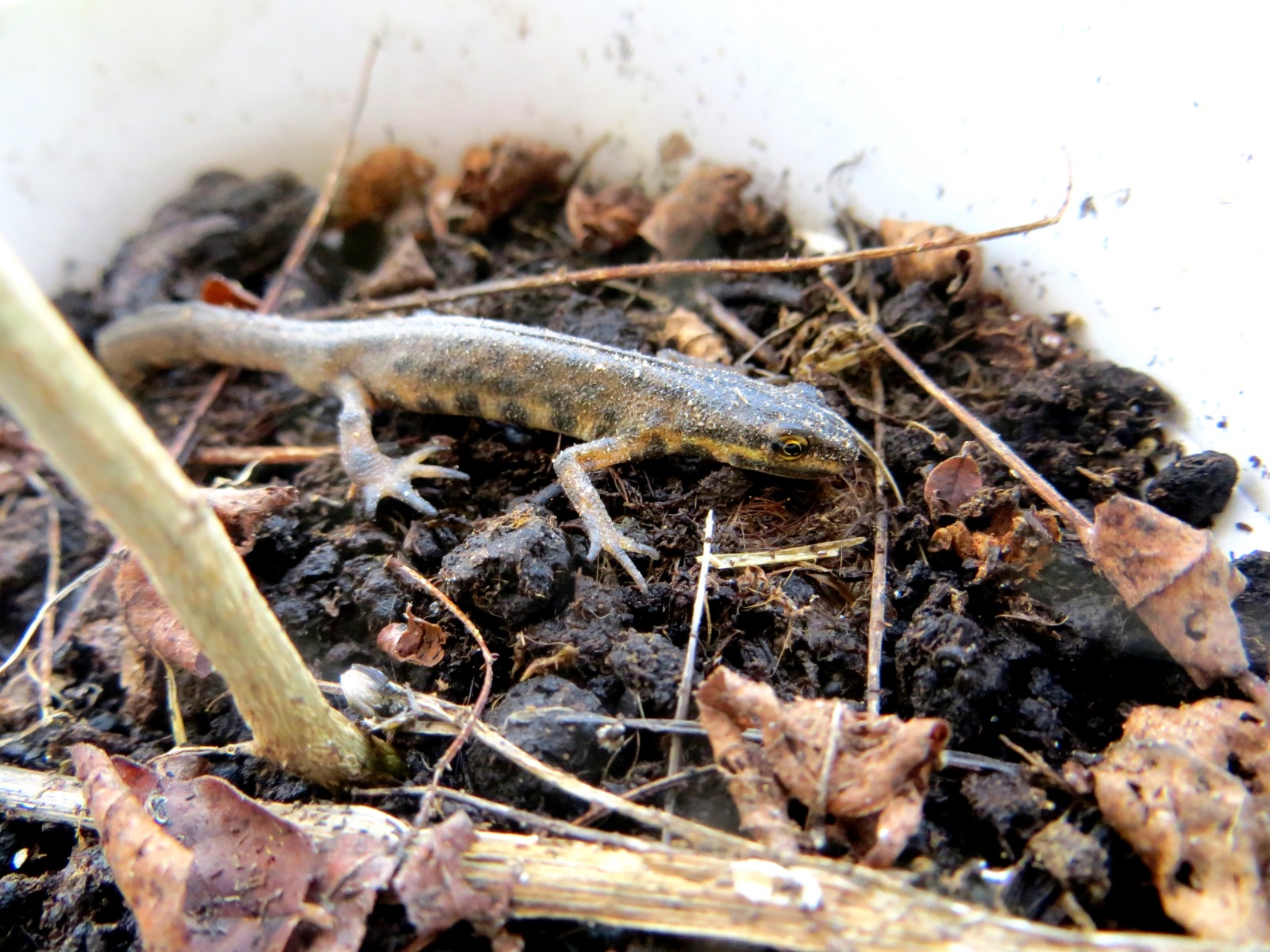
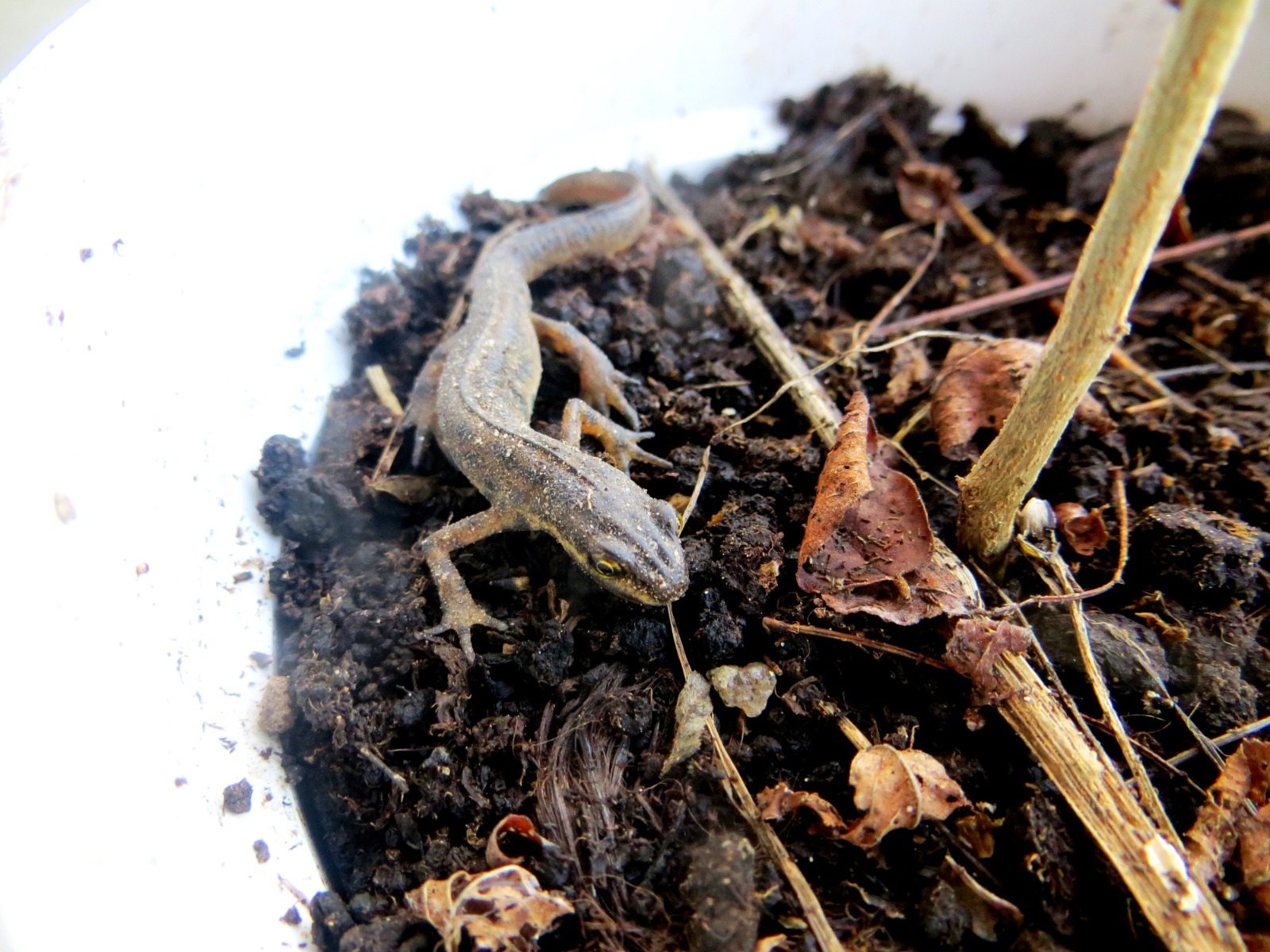
Smooth newt (Lissotriton vulgaris)
Smooth skin. The basic color of the back of males is brownish gray with dark, round spots; for females – light brown, brownish yellow without spots. The belly of both sexes is yellowish or light orange with dark spots. In spring, males develop a high dorsal crest with irregular indentations.
Active during the warm period of the year, spends autumn and winter in hibernation. Active around the clock in the water during the breeding season. On land, it is active at dusk, in the evenings, and early in the night. It winters in small groups, sometimes up to a few tens or hundreds. Feeding habitats include mixed forests, gardens, parks, shrubs, and meadows.
Spends daytime in rodent burrows, under tree roots, branches, stones, and in moss. Breeding habitats are small ponds, mostly fishless, well overgrown with aquatic plants, warm and sunny. Hibernation microhabitats are rodent and mole burrows, stumps, branch piles, and cellars near water bodies. On land, it feeds on earthworms, ticks, butterfly caterpillars, other insects, and their larvae. In the water, it feeds on mosquito larvae, small crustaceans, water beetle larvae, small mollusks, and fish and amphibian eggs.
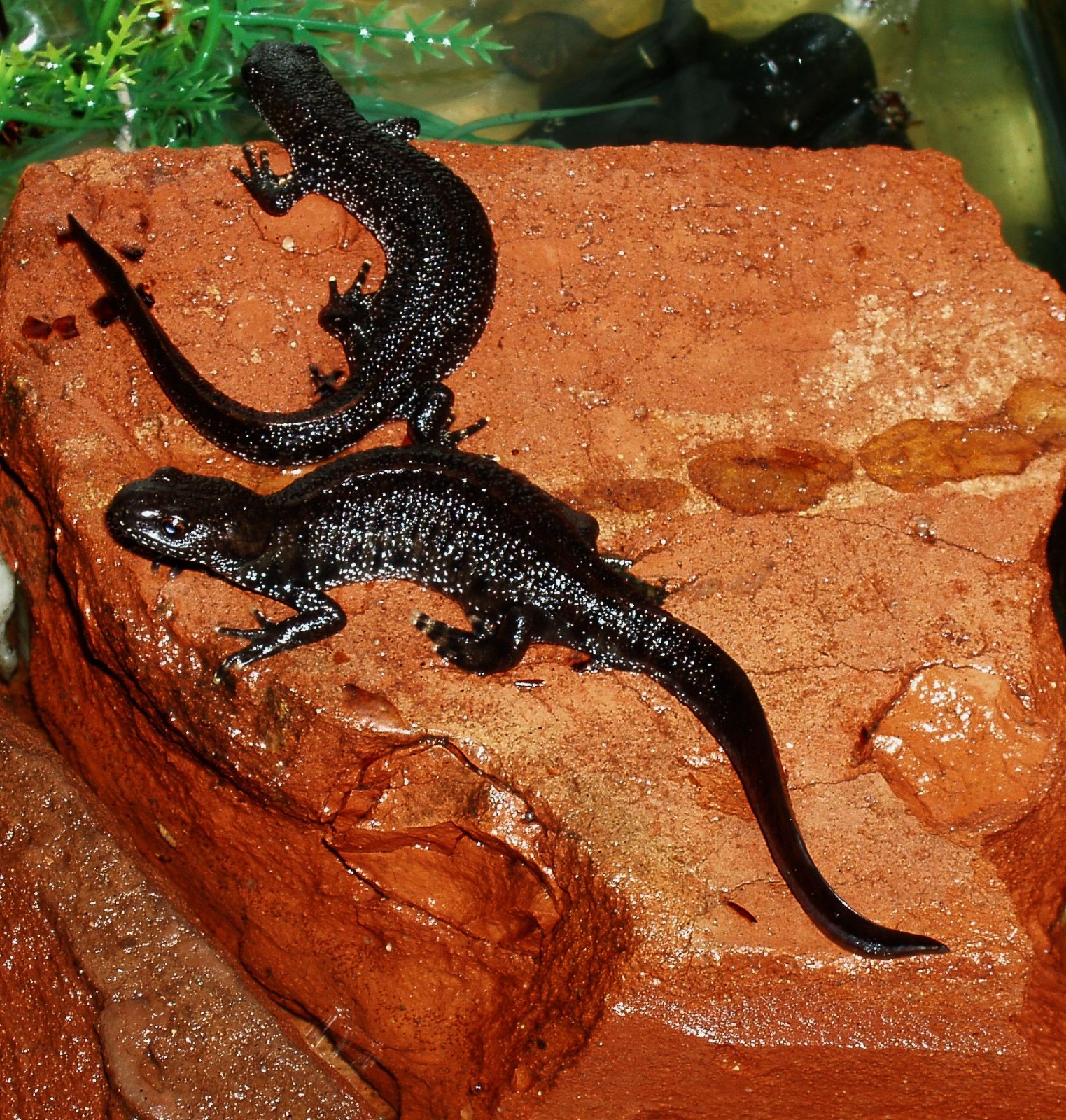
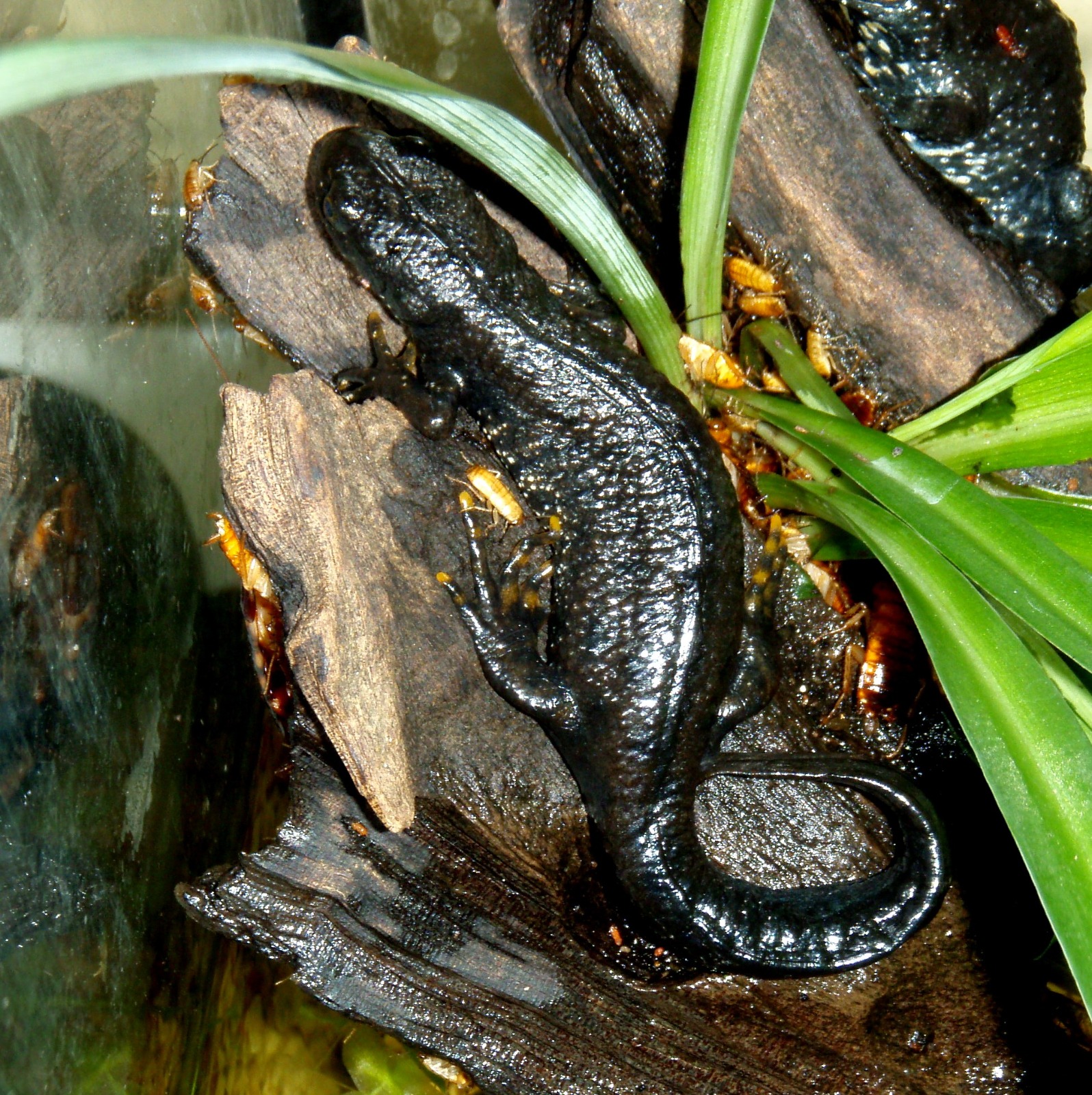
Great crested newt (Triturus cristatus)
Skin is finely granular. The basic color of the back is black, brownish black. The belly is orange or yellow with black spots. In spring, males develop a high dorsal crest with irregular indentations, consisting of two parts: the body and the tail parts; on the sides of the tail, there is a light blue, steel-white, and orange stripe. Females do not have a dorsal crest. Males also have a large cloacal swelling; in females, it is much smaller.
Active during the warm period of the year, spends late autumn and winter in hibernation. Active around the clock during the breeding season, especially during the day. On land, it is active at dusk, in the evenings, early in the night, after rain, or during rain. Feeding habitats include mixed forests, as well as parks, shrubs, and river valleys near wet places: swamps, ponds. Spends daytime in burrows, under tree roots, branches, stones, and in moss. Breeding habitats are fishless ponds, well overgrown with aquatic plants, and sunny. Hibernation microhabitats are rodent burrows, stumps, branch piles, cellars, and pits. Winters alone or in large groups of up to several hundred. On land, it feeds on earthworms, slugs, insects and their larvae, and arachnids. In the water, it feeds on water beetles, mollusks, mosquito larvae, dragonfly larvae, fish and amphibian eggs, small crustaceans, and amphibian larvae.
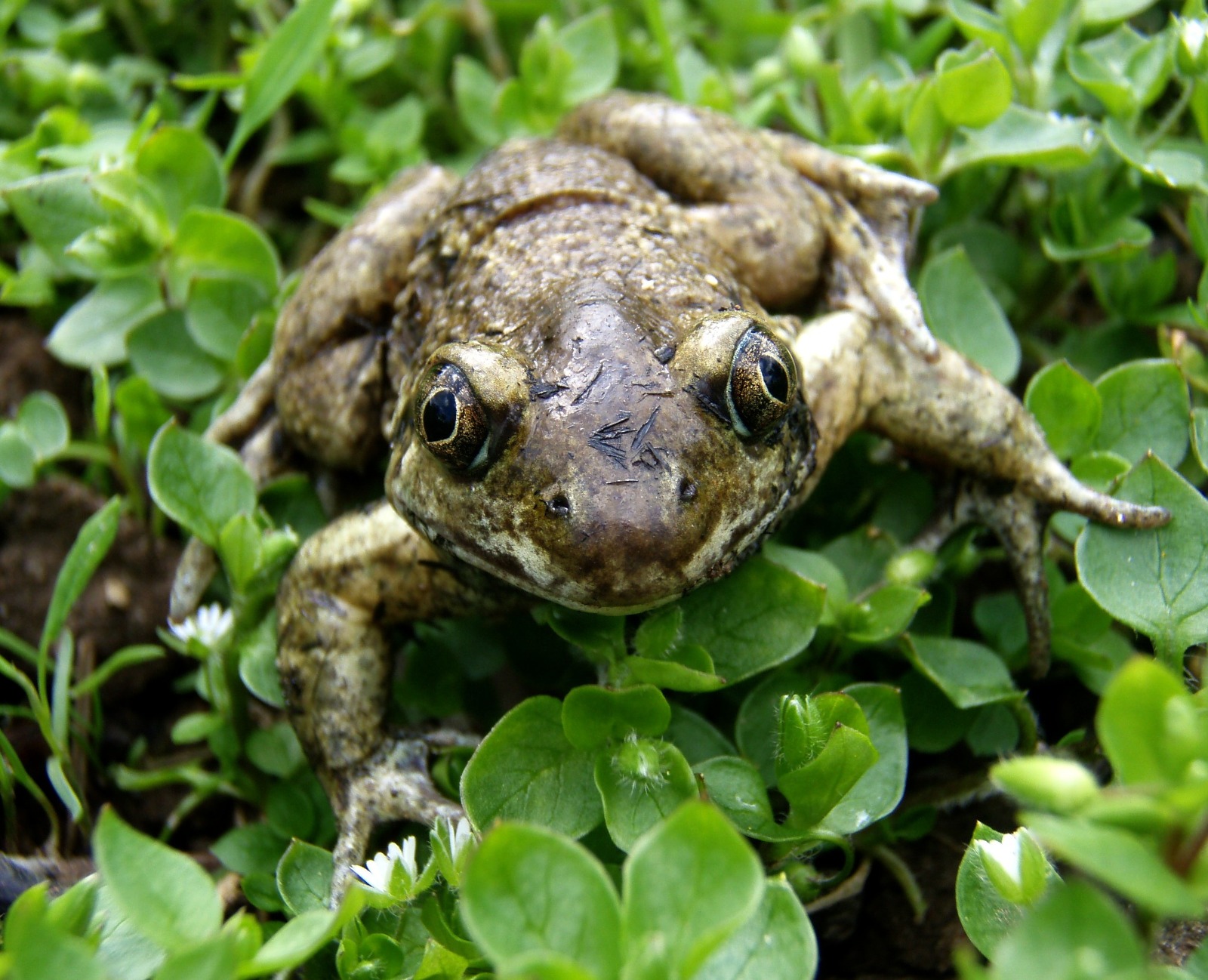
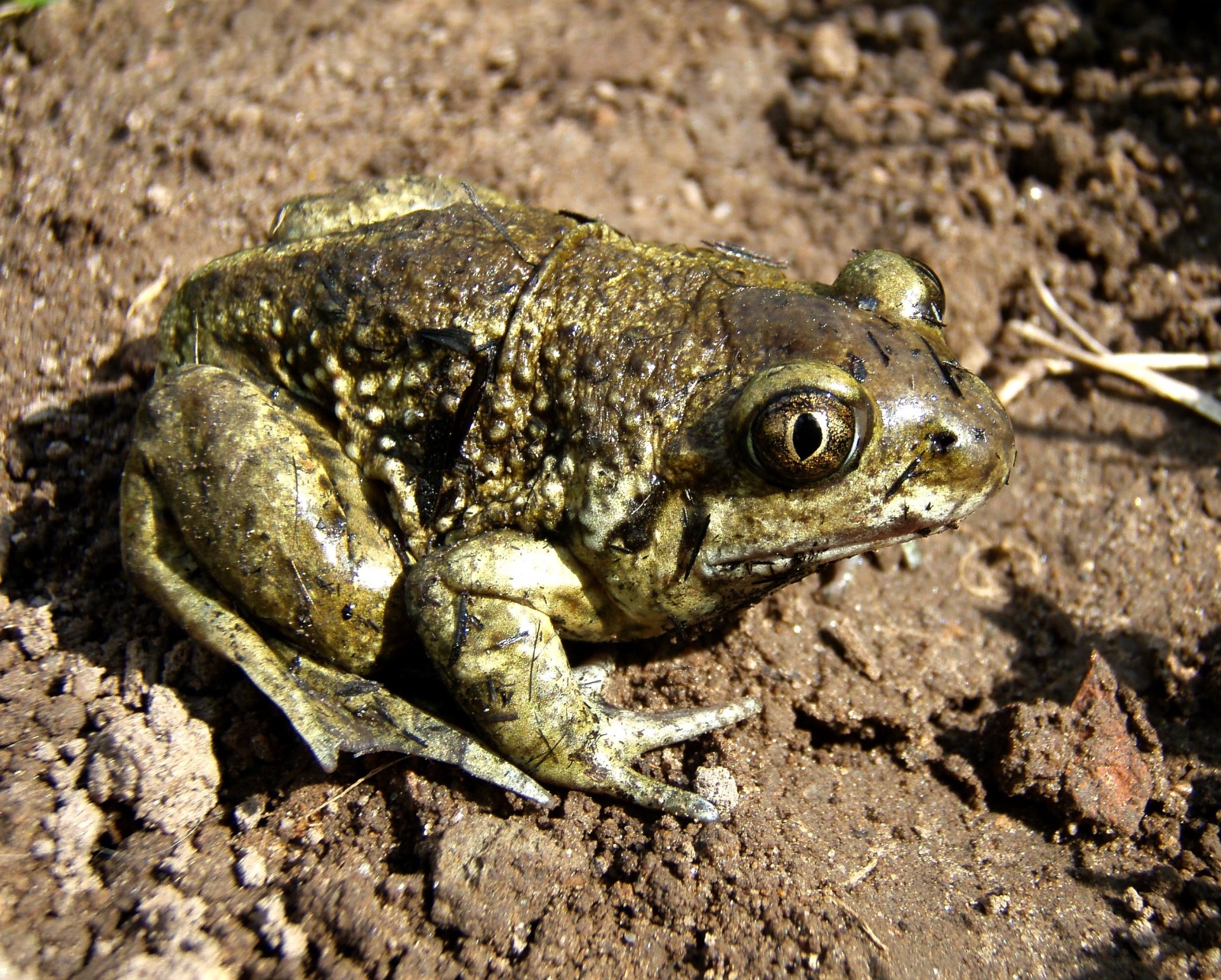
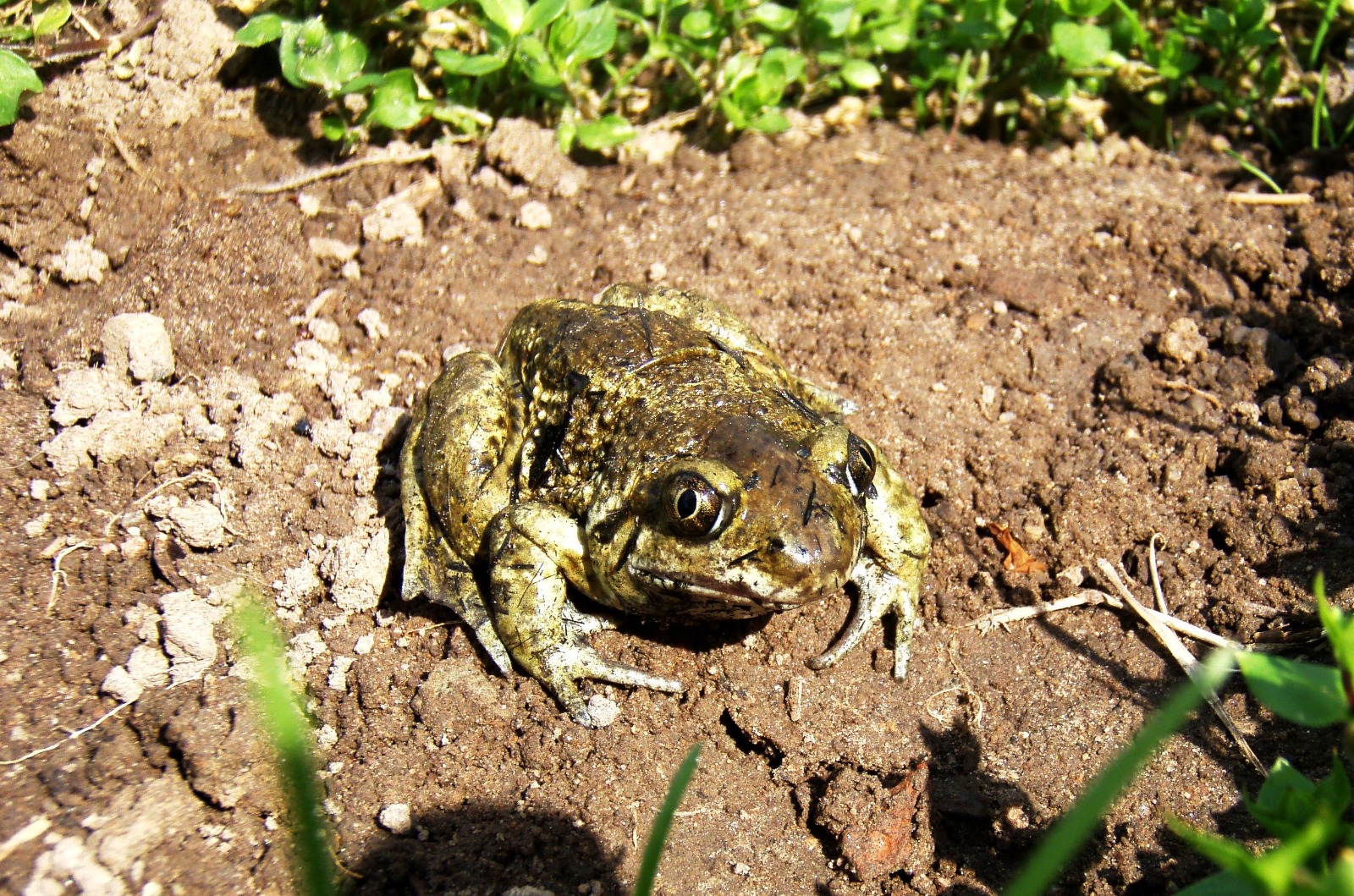
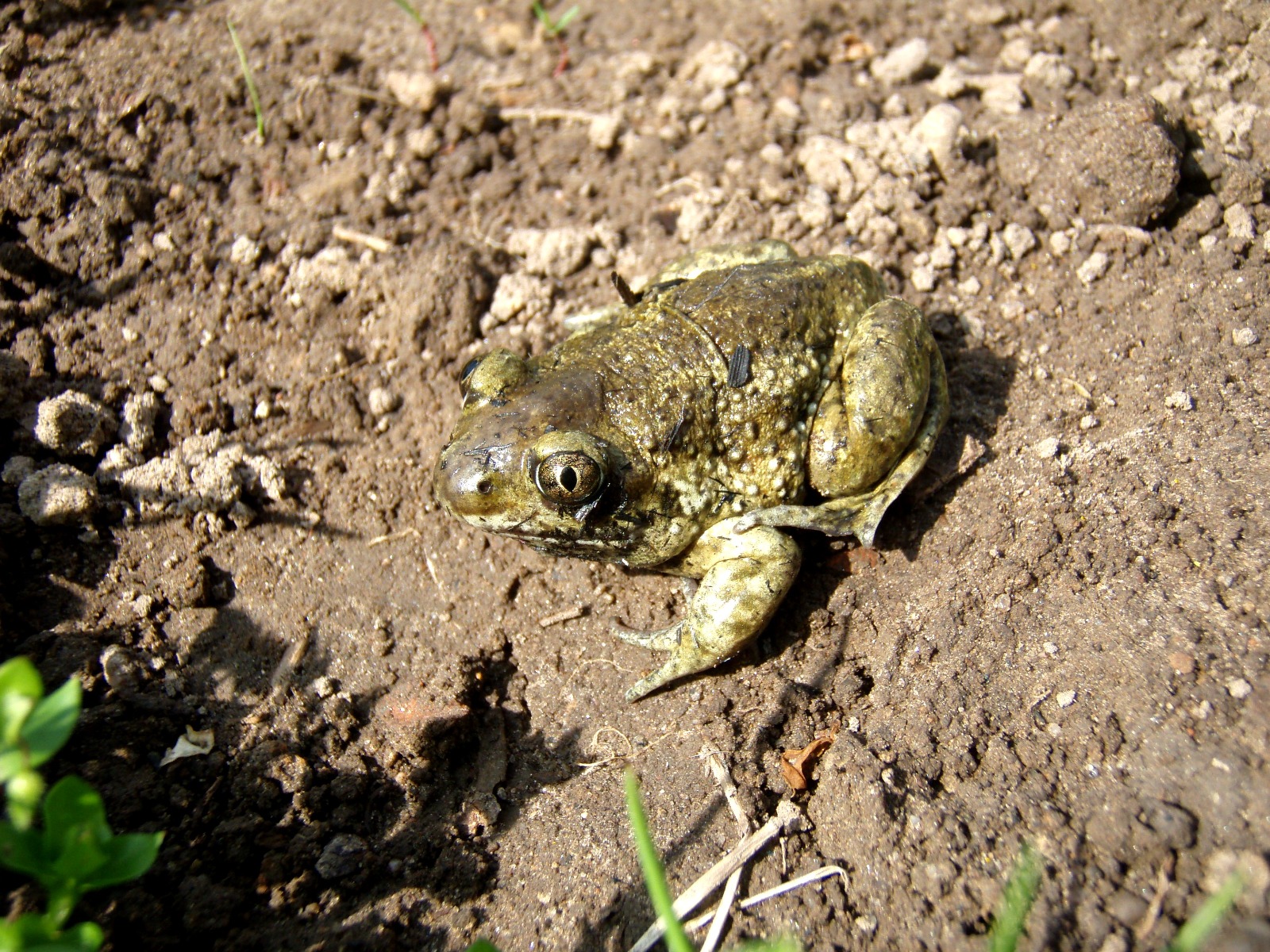
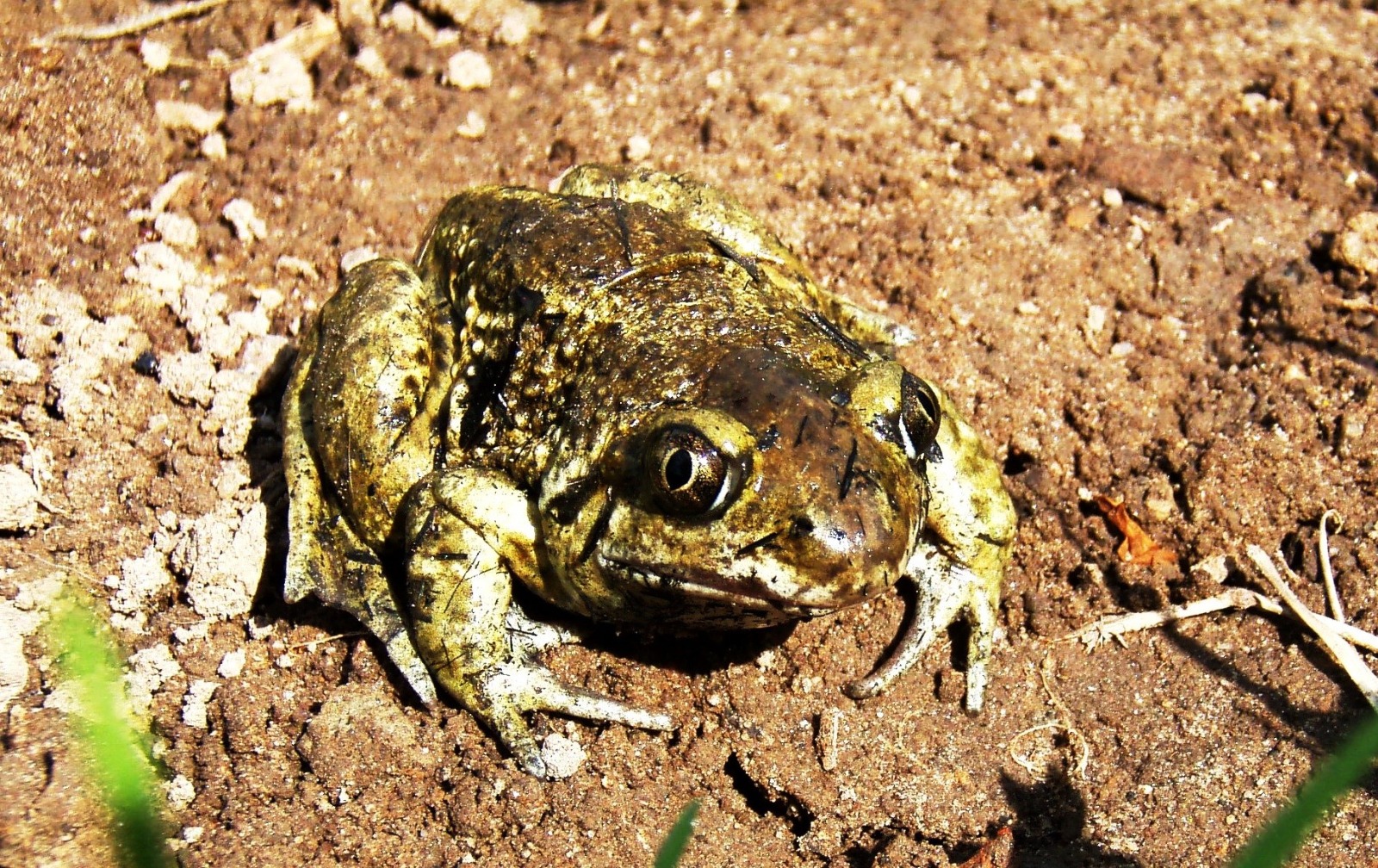
Common spadefoot (Pelobates fuscus)
The basic color of the back is yellowish brown, light greenish gray with dark spots of various sizes. The forehead between the eyes is convex, the pupil is vertical.
Active during the warm period of the year, spends the winter in hibernation. Active in the evenings and at night, spends the day burrowing into the ground. Feeding habitats are mixed forests, shrubs, forest edges, meadows, gardens, and fields. Avoids stony soil. Breeding habitats are small overgrown ponds. Hibernation microhabitats are rodent burrows, also spends the winter burrowing into the ground. Feeds on ants, beetles, larvae, spiders, and earthworms. In spring, it lays 1,000–2,500 eggs in the water, in two strings that wrap around the previous year’s aquatic plants in a cone shape. Tadpoles grow up to 175 mm and live in the water until metamorphosis. Reaches sexual maturity in the third year of life.
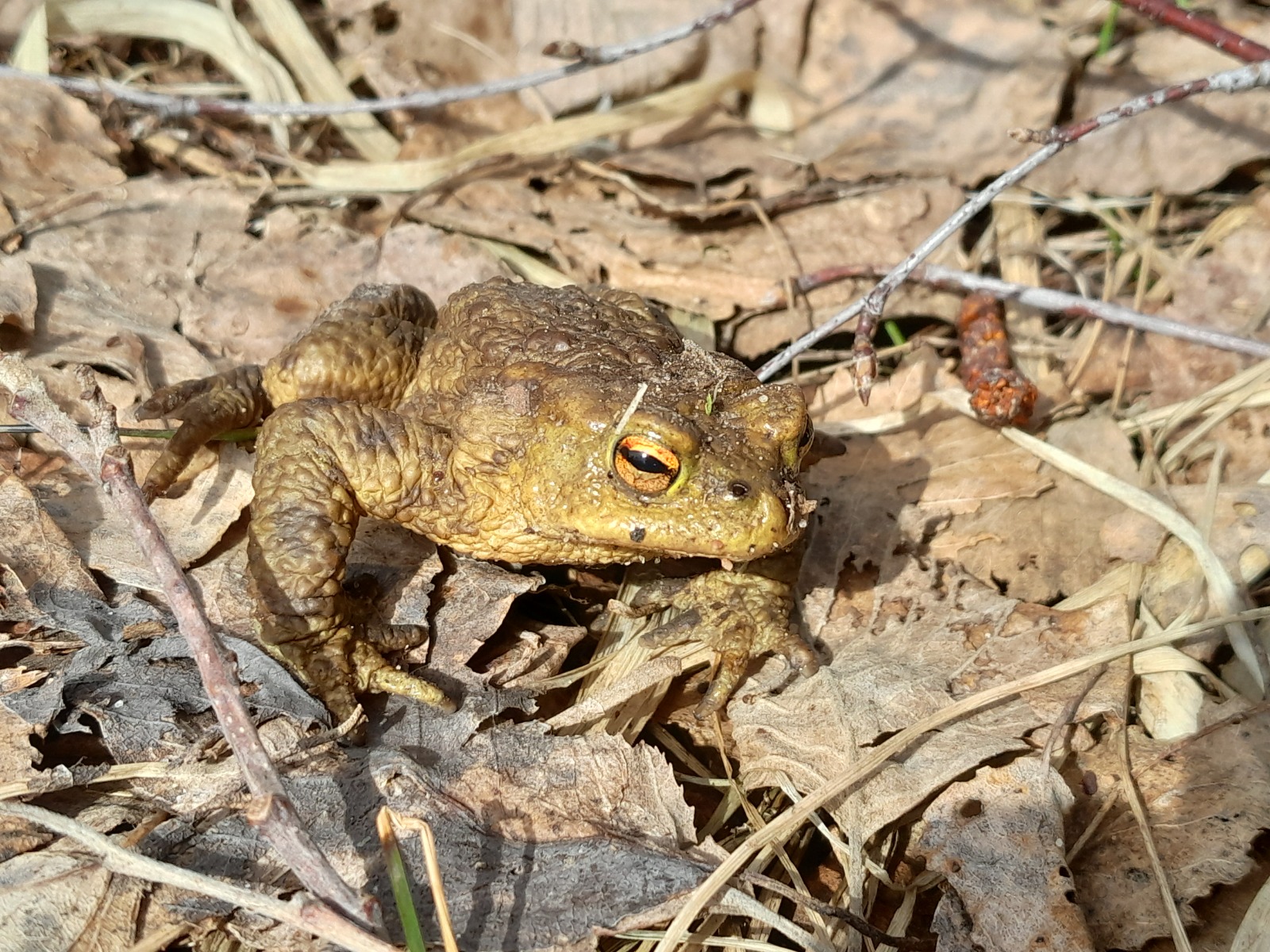
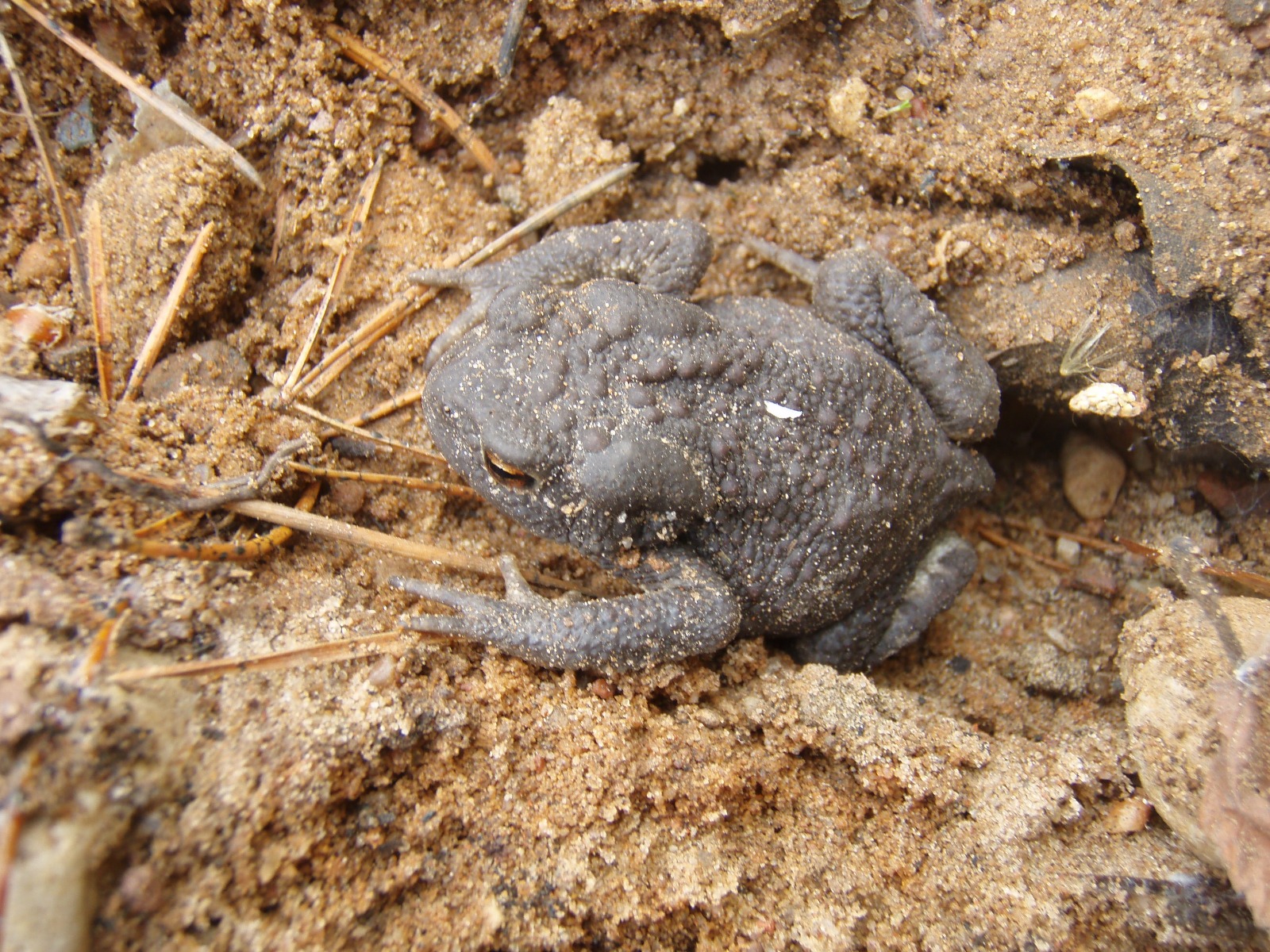
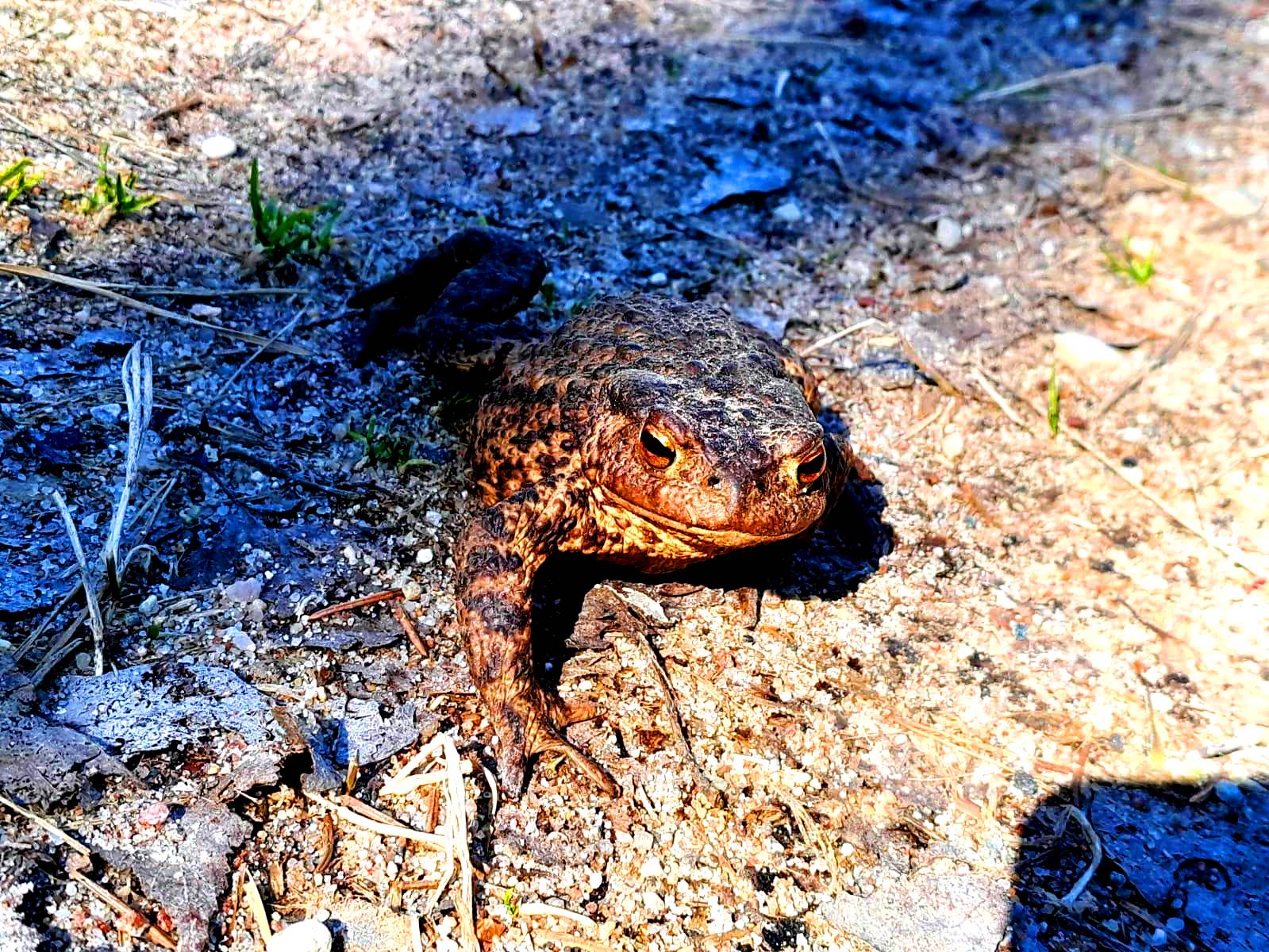
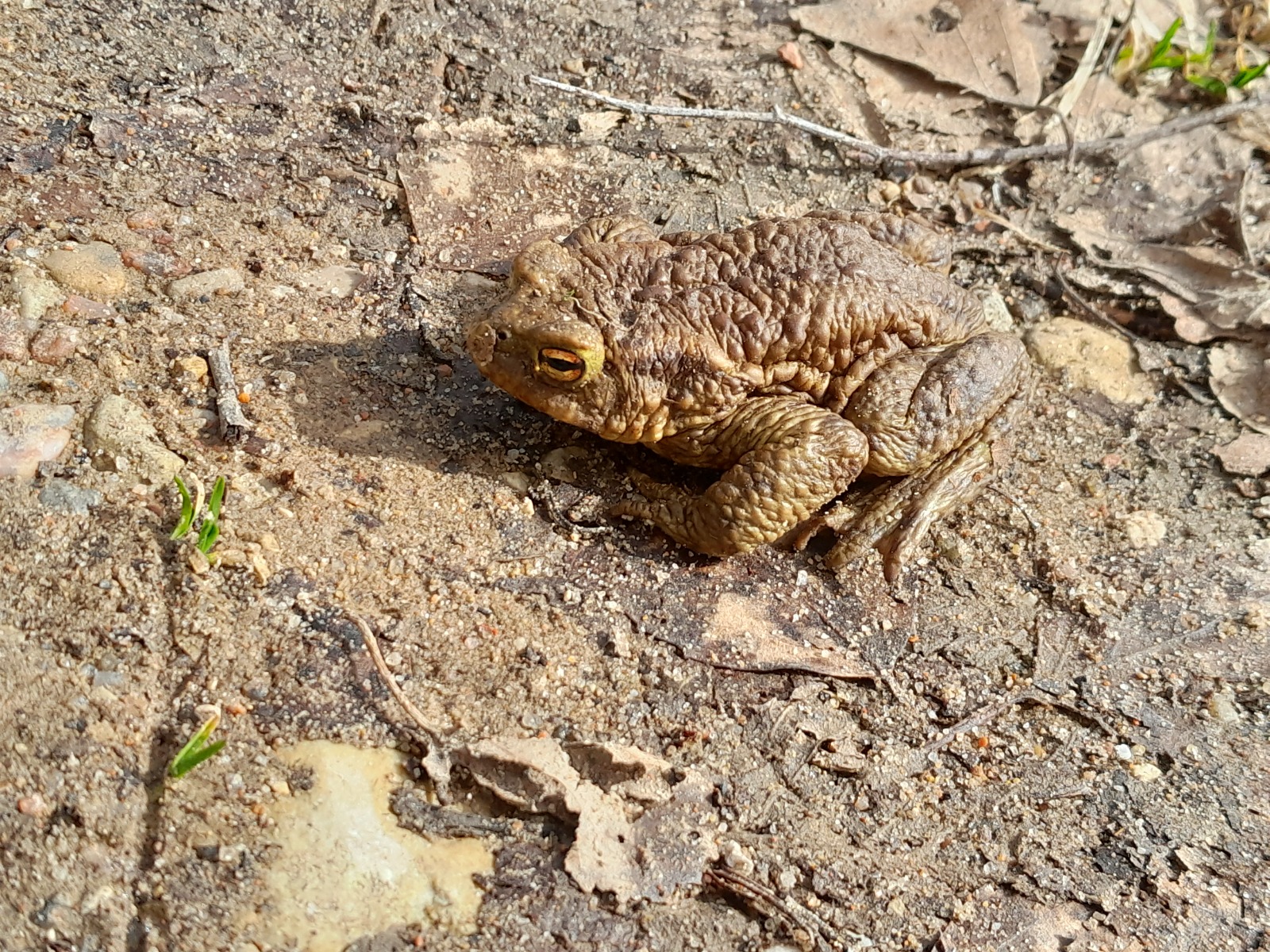
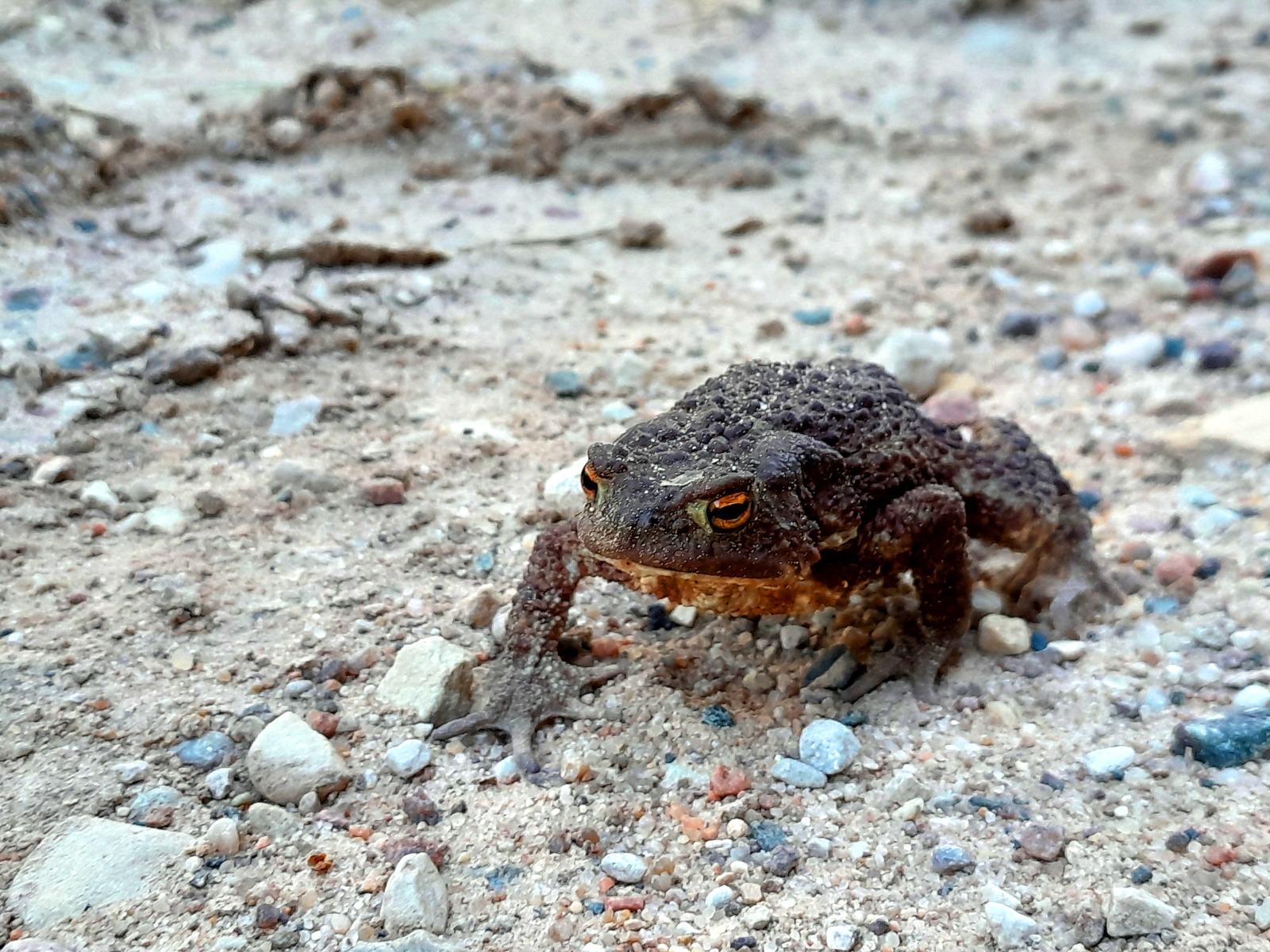
Common toad (Bufo bufo L.)
Skin is highly warty. The basic color of the back is gray, brown, in a single tone or with dark spots of various sizes.
Seasonal and diurnal activity. Active during the warm period of the year, spends the winter in hibernation. Active in the evenings at dusk, during the day when it rains, spends the day under stones, in burrows, under tree branches, and boards. Feeding habitats are forests, shrubs, meadows, gardens, fields, and swamps. Found in human-populated areas in the countryside. Breeding habitats are well-overgrown ponds, puddles, ditches, including those populated with fish. Hibernation microhabitats are burrows, cellars, and house foundations. Feeds on beetles, slugs, larvae, and earthworms. In spring, it lays 1,200–7,000 eggs in the water, in a 3–5 m long string wrapped around aquatic plants. Tadpoles live in the water until metamorphosis. Reaches sexual maturity in the third to fourth year of life.
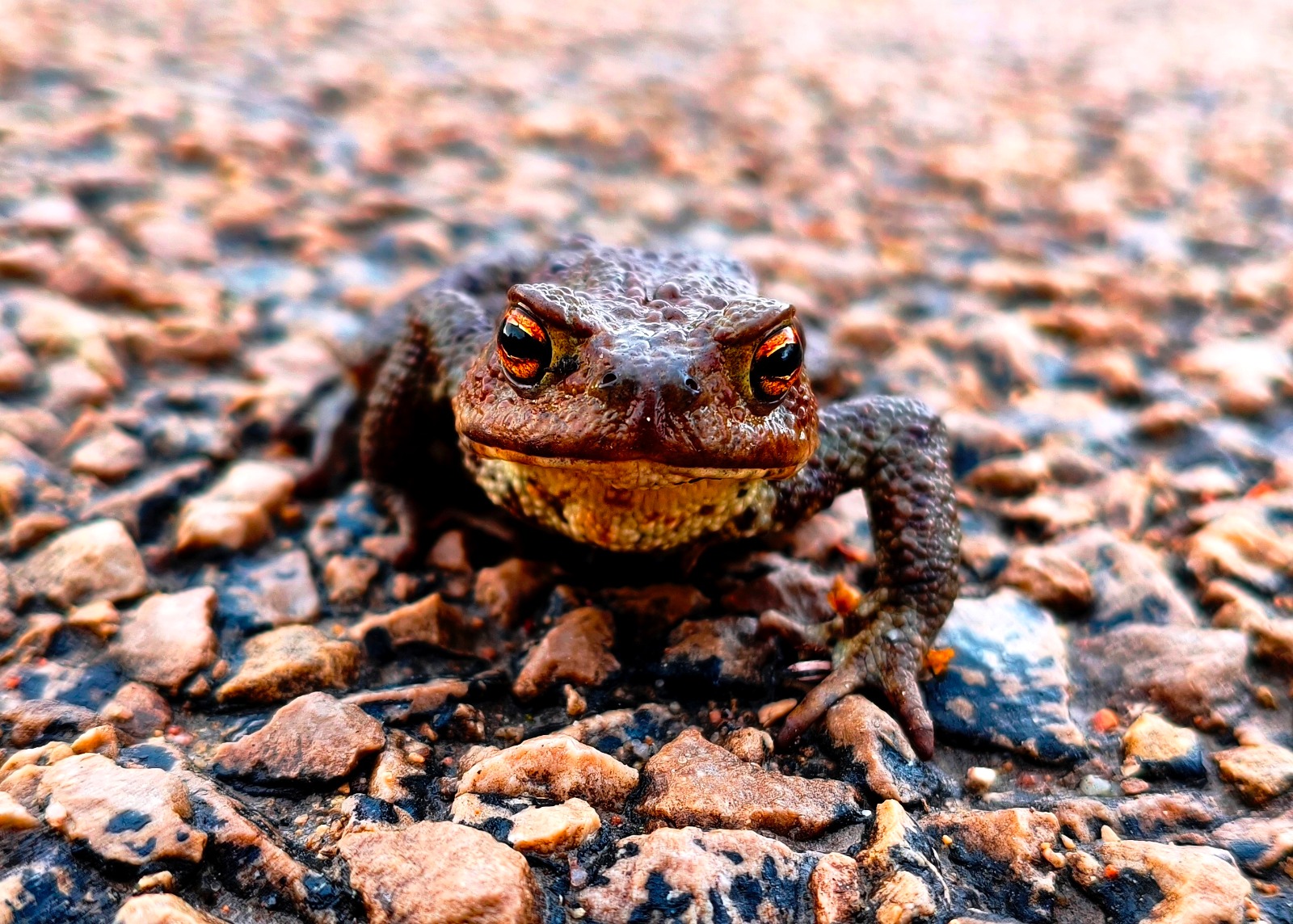
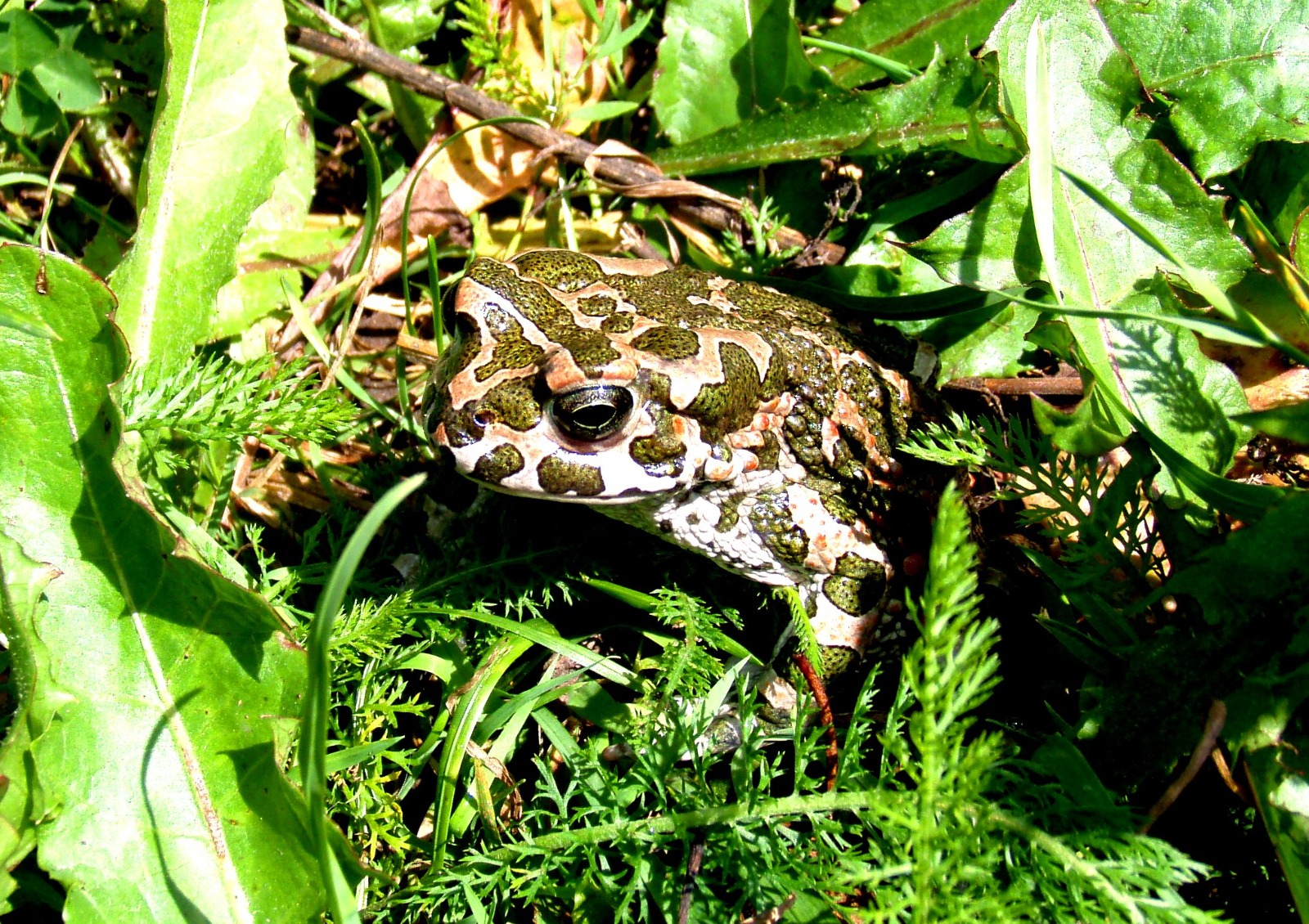
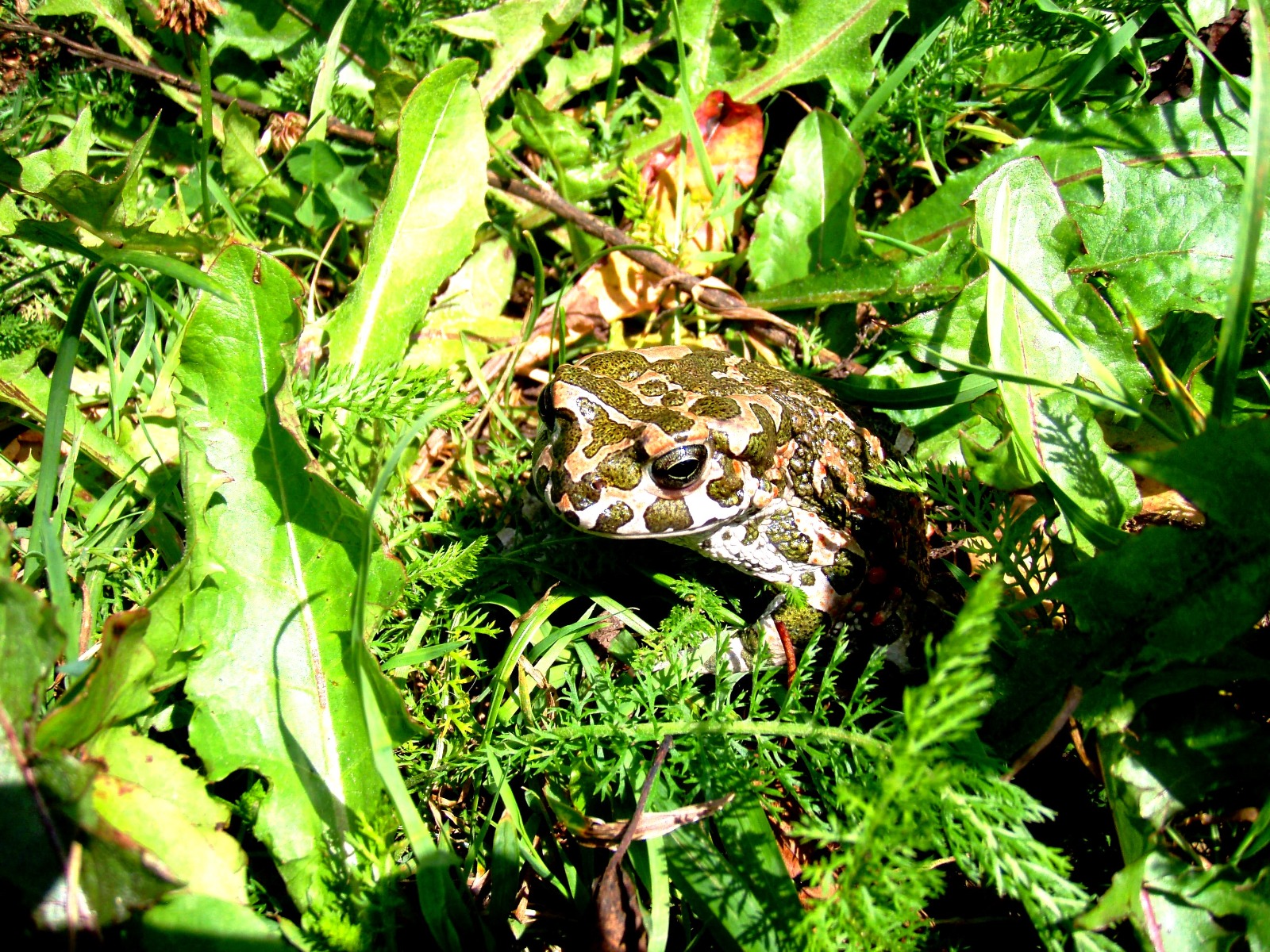
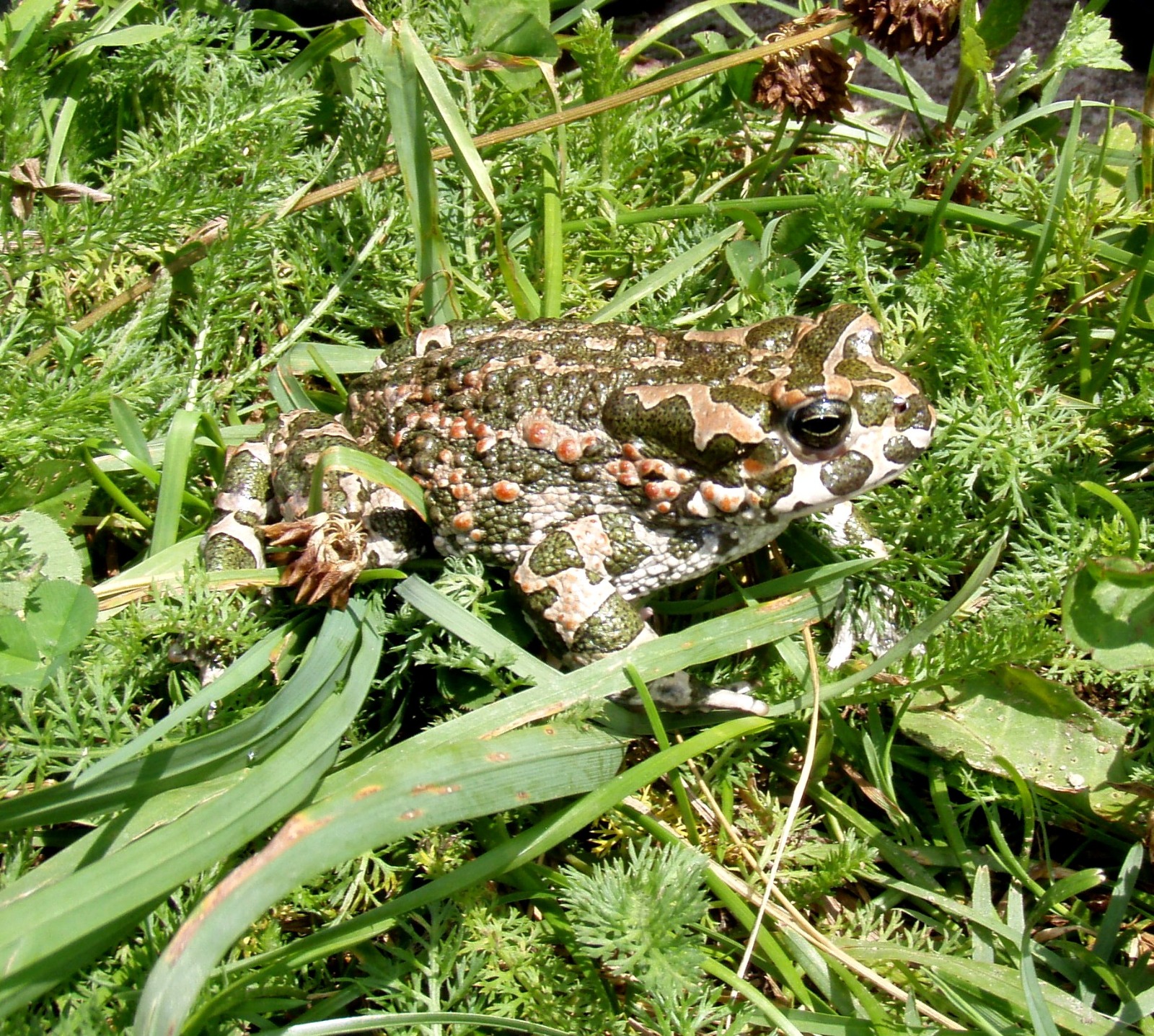
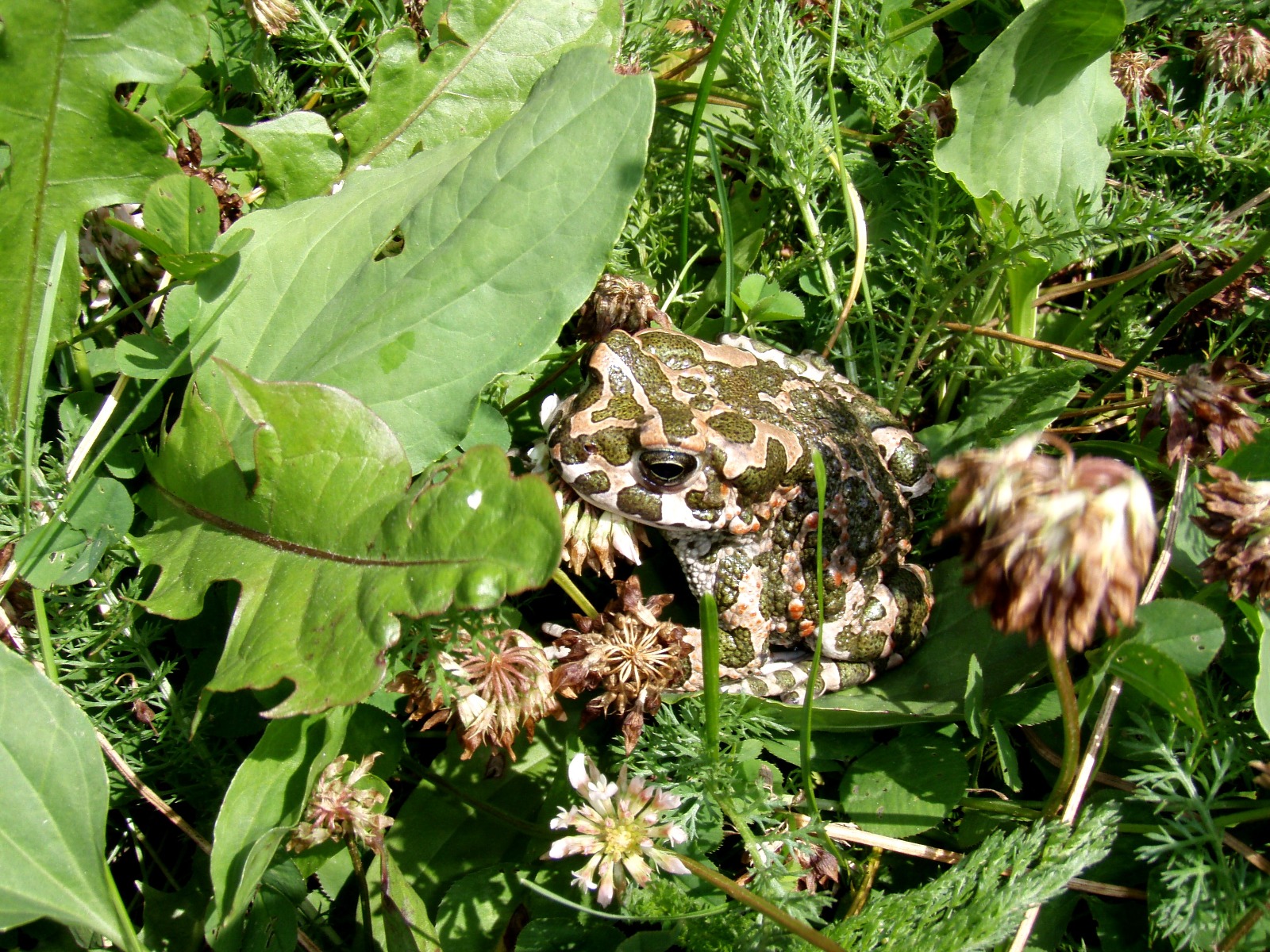
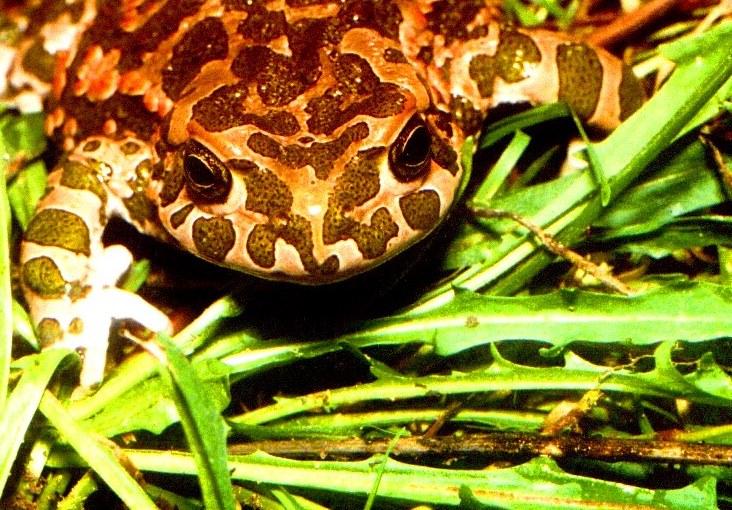
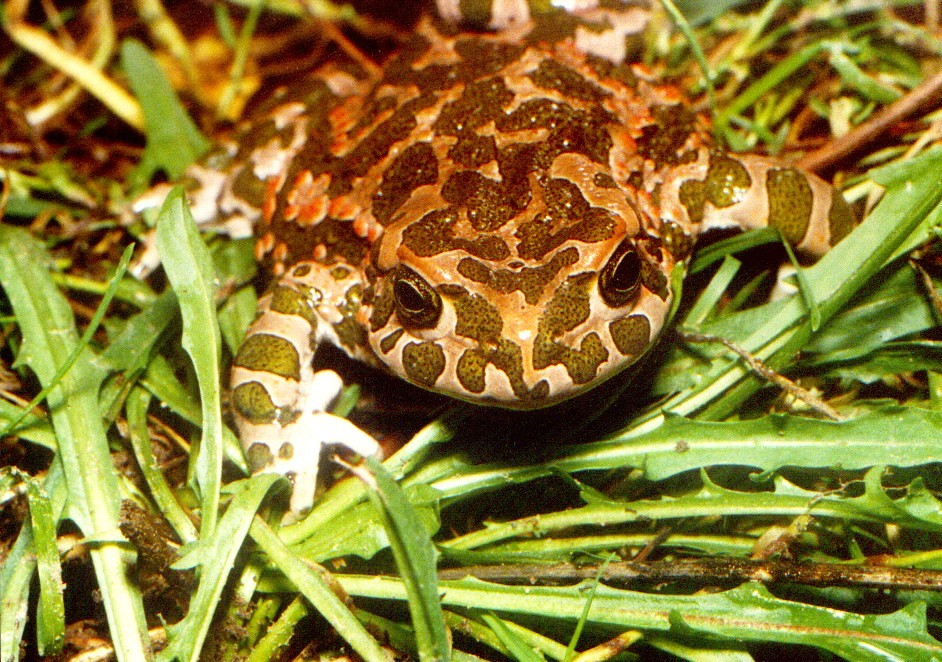
European green toad (Bufotes viridis Laur.)
Skin is warty. The basic color of the back is light gray with dark green spots of various sizes and shapes.
Active during the warm period of the year, spends the winter in hibernation. Active in the evenings at dusk, spends the day burrowing into the ground, under stones, in burrows, under tree branches. Feeding habitats are shrubs, meadows, gardens, and fields. Found in human-populated areas in villages and cities. Breeding habitats are ponds, puddles, and ditches. Hibernation microhabitats are rodent burrows, pits, stone piles, also spends the winter burrowing into the ground. Feeds on beetles, ants, larvae, and earthworms. In spring, it lays 3,000–5,000 eggs in the water, in a string with two rows of eggs that wrap around aquatic plants or lie at the bottom of the water body. Tadpoles live in the water until metamorphosis. Reaches sexual maturity in the fourth year of life.
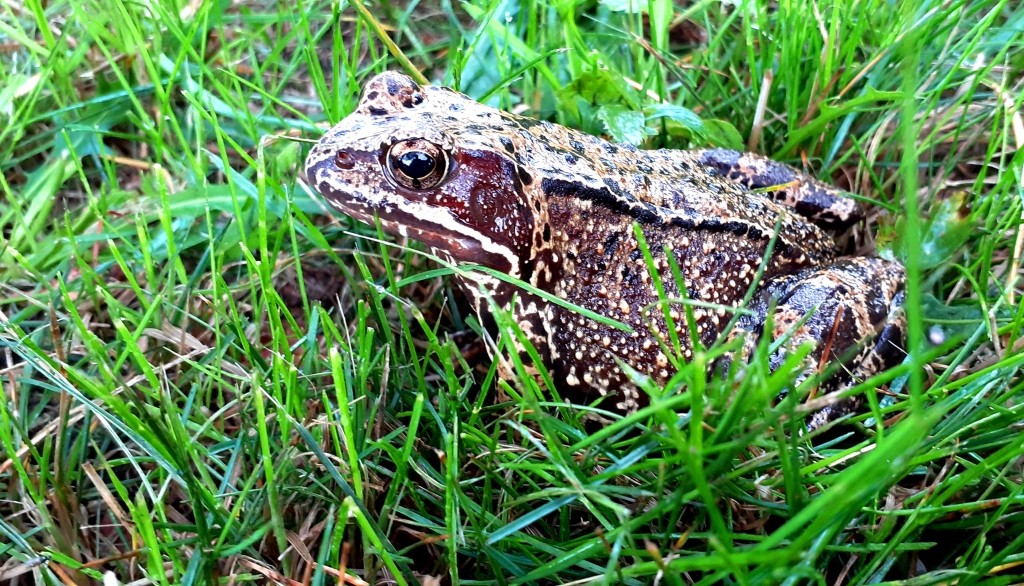
Common frog (Rana temporaria L.)
Smooth skin. The color of the back is very variable: brown, gray, reddish, almost always with black spots. There is usually a dark V-shaped spot on the back of the head. The belly is grayish or yellowish white with a marble pattern.
Seasonal and diurnal activity. Active during the warm period of the year, spends the winter in hibernation. Active in the evenings, usually during rain during the day. A terrestrial species. Feeding habitats are forests, meadows, swamps, and gardens. Breeding habitats are ponds and ditches of various types. Hibernation takes place in the water, usually in water bodies with a flow: springs, streams, and small rivers. Feeds on beetles, mosquitoes, mollusks, larvae, and earthworms. In spring, it lays 600–1,400 eggs in the water, in a large clump. Tadpoles live in the water until metamorphosis. Reaches sexual maturity in the third year of life.
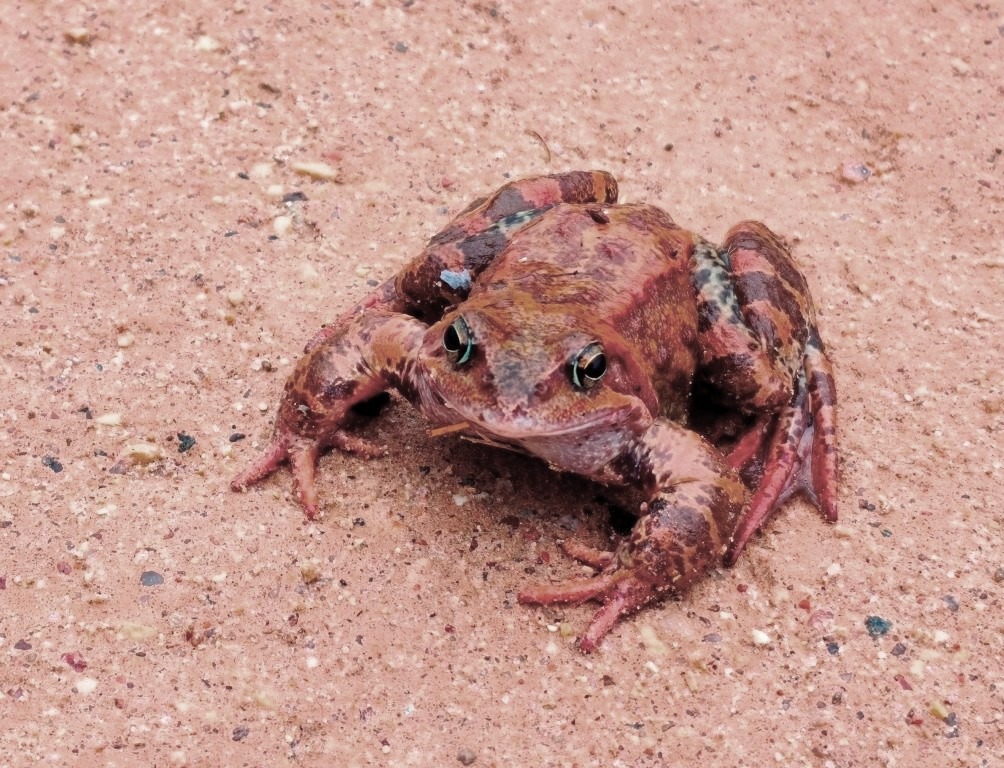
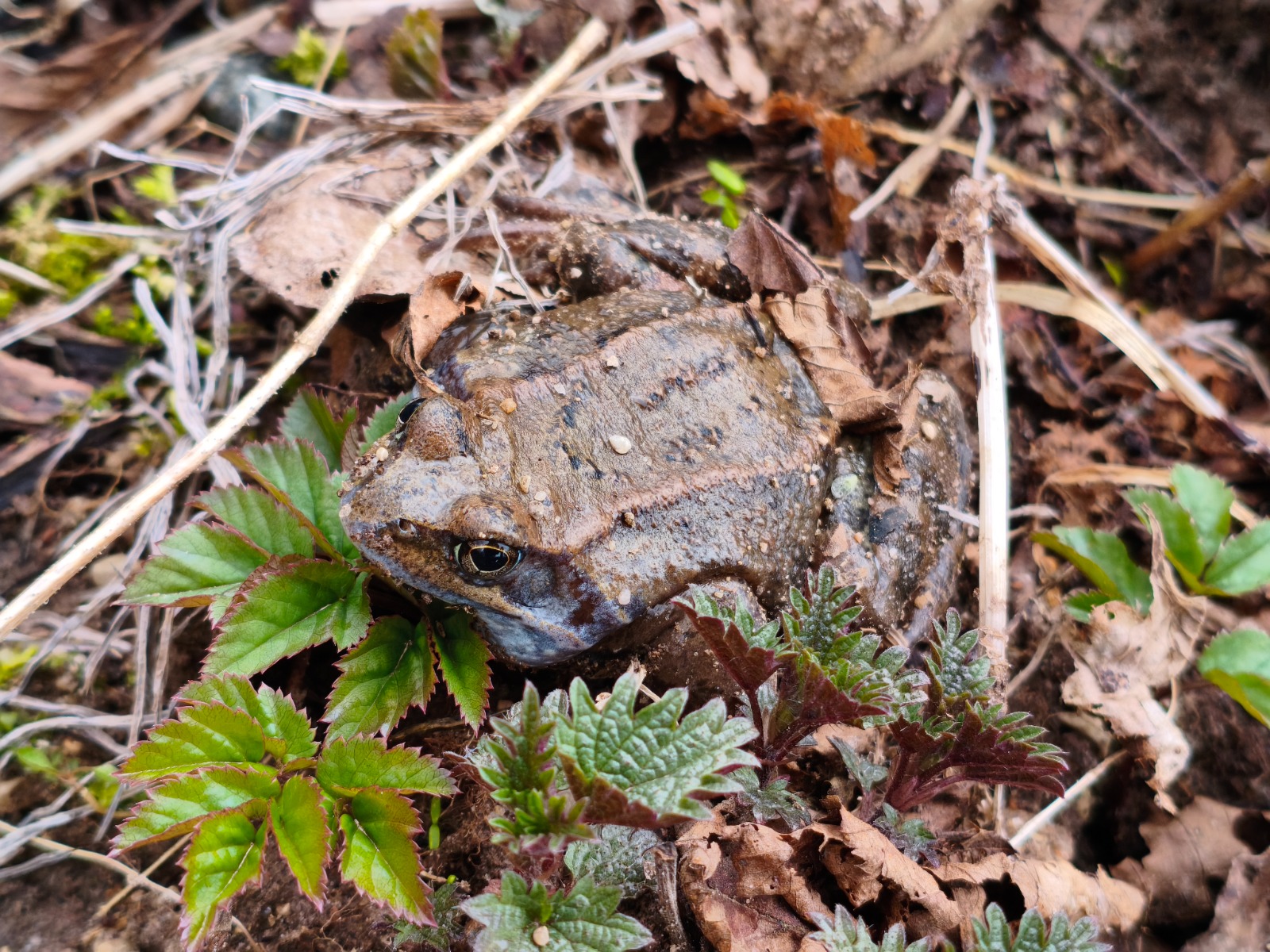
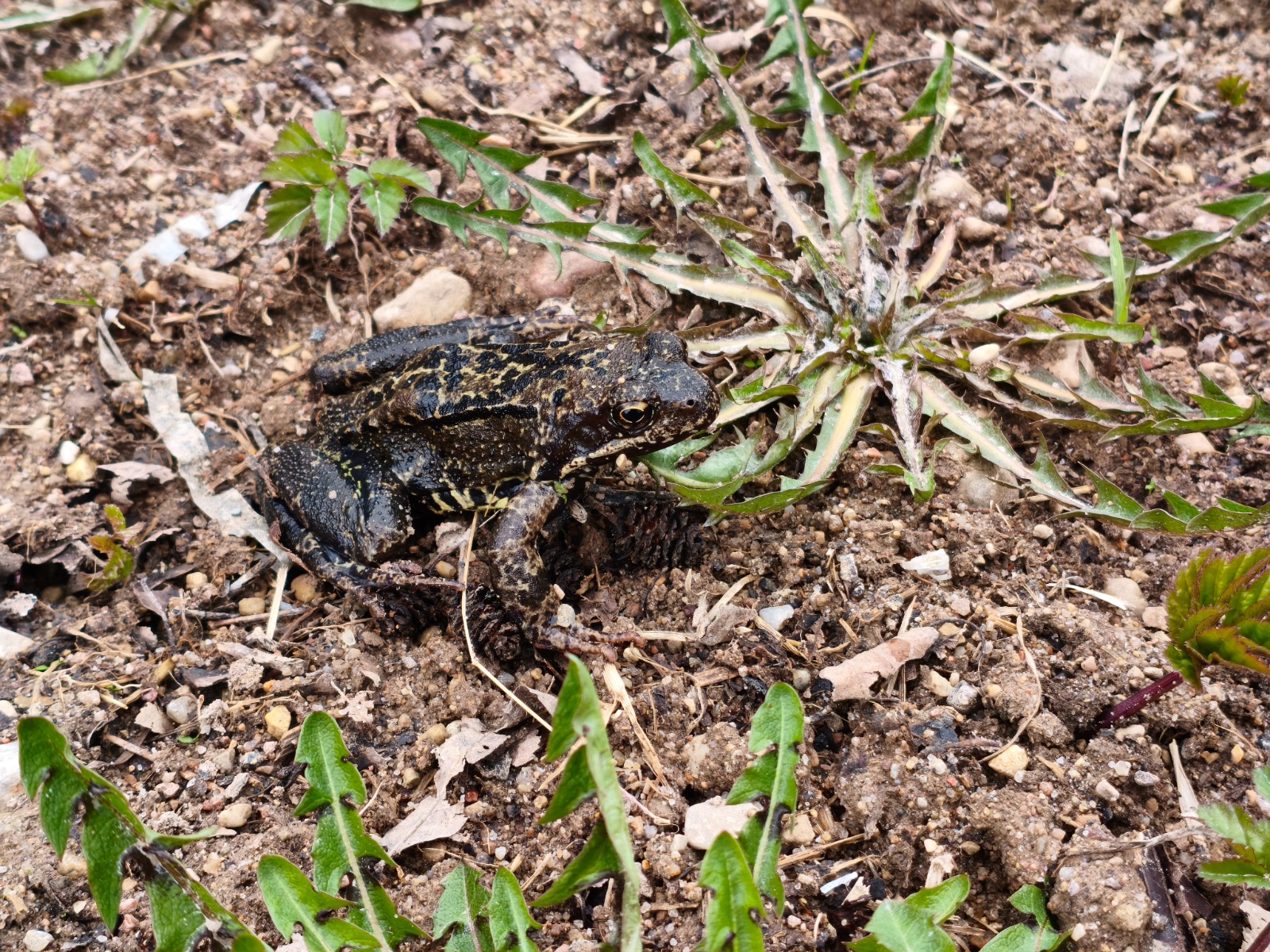
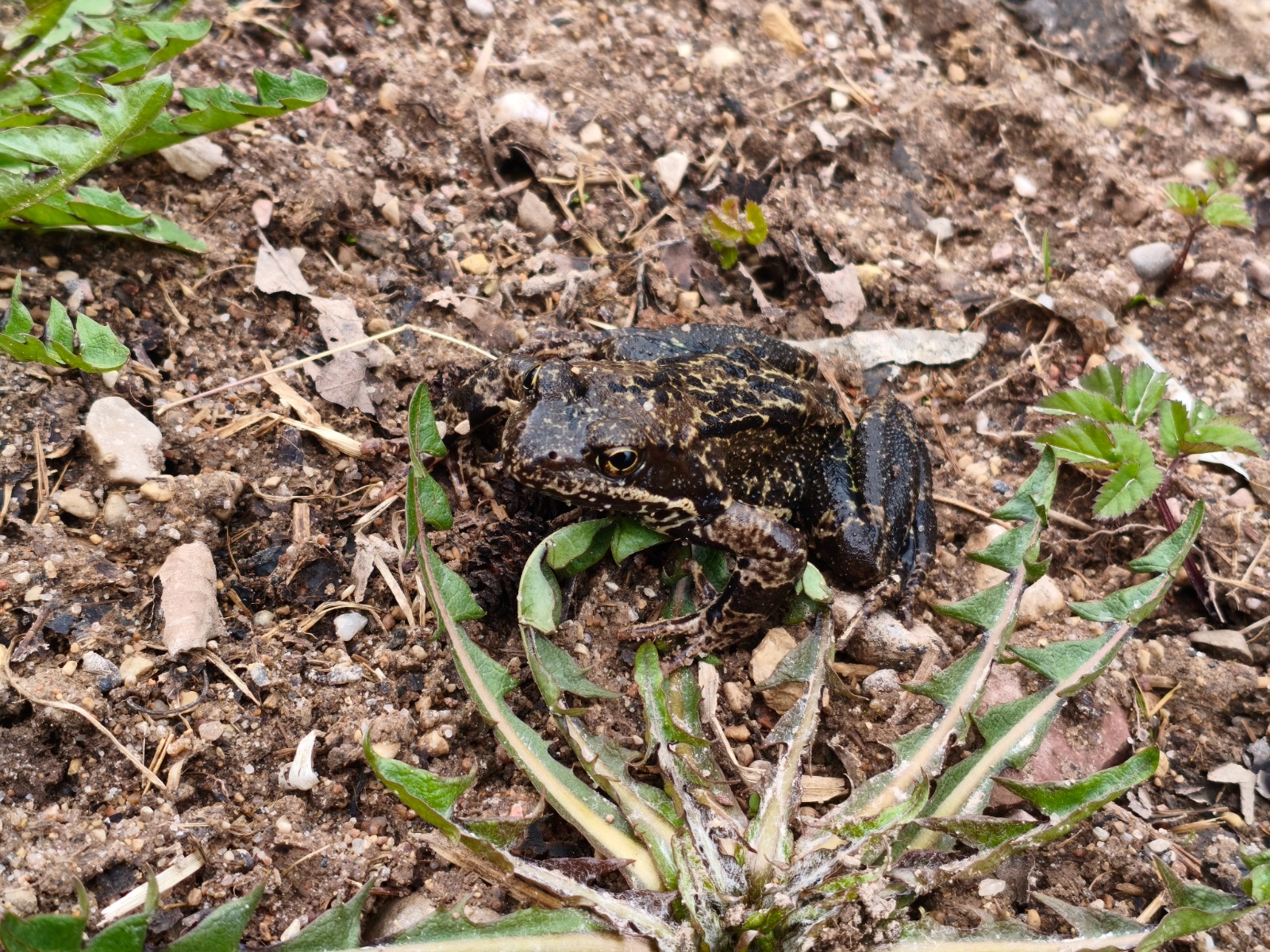
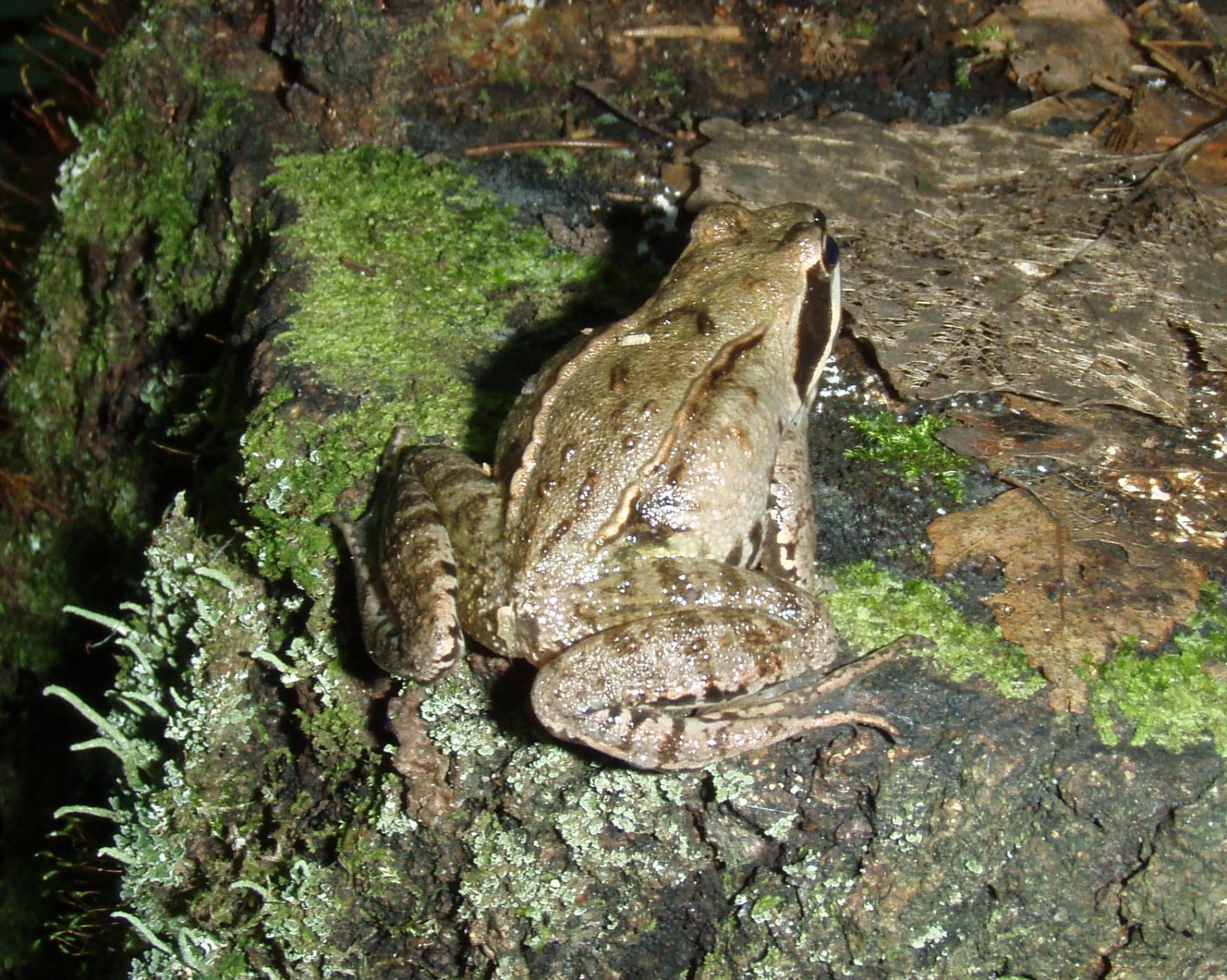
Moor frog (Rana arvalis Nilsson)
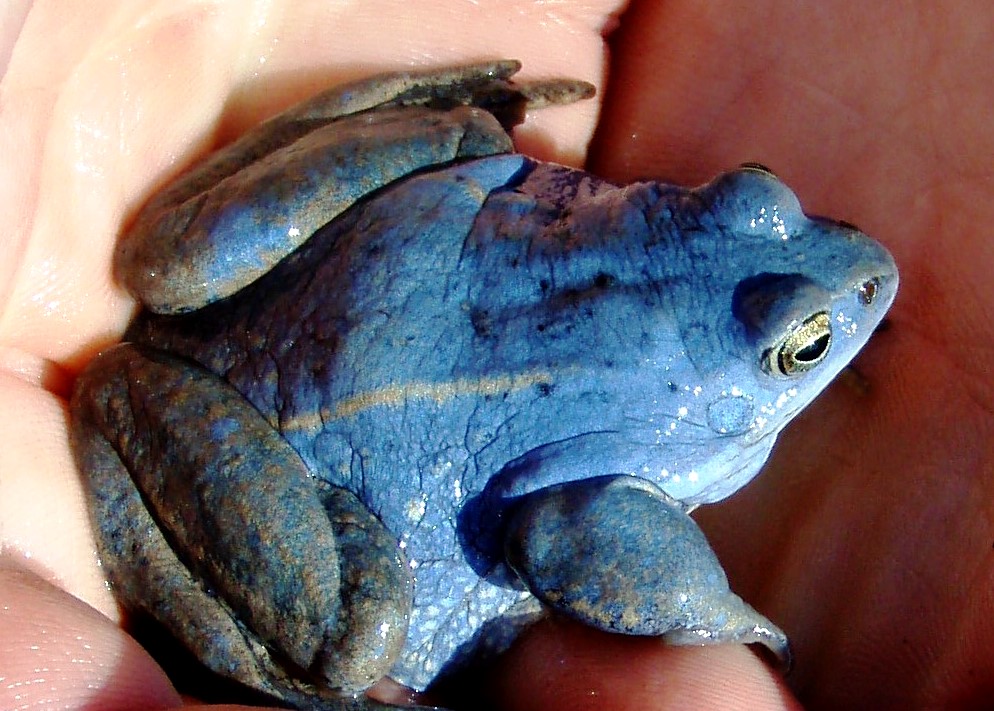
Smooth skin. The color of the back is brown, chocolate-colored, reddish, often, but not always, with black spots. There is a dark V-shaped spot on the back of the head. The belly is white without spots. In spring, males turn light blue.
Active during the warm period of the year, spends the winter in hibernation. Active in the evenings and at night, usually during rain during the day. A terrestrial species. Feeding habitats are forests, meadows, and swamps. Breeding habitats are ponds and ditches of various types. Hibernation occurs on land – in burrows, in pits under leaves, as well as in the water, in flowing water bodies: streams, small rivers. Feeds on beetles, mosquitoes, mollusks, butterfly larvae, spiders, and earthworms. In spring, it lays 500–2,700 eggs in the water, in one or two clumps. Tadpoles live in the water until metamorphosis. Reaches sexual maturity in the third year of life.
Pool frog (Pelophylax lessonae Camerano)
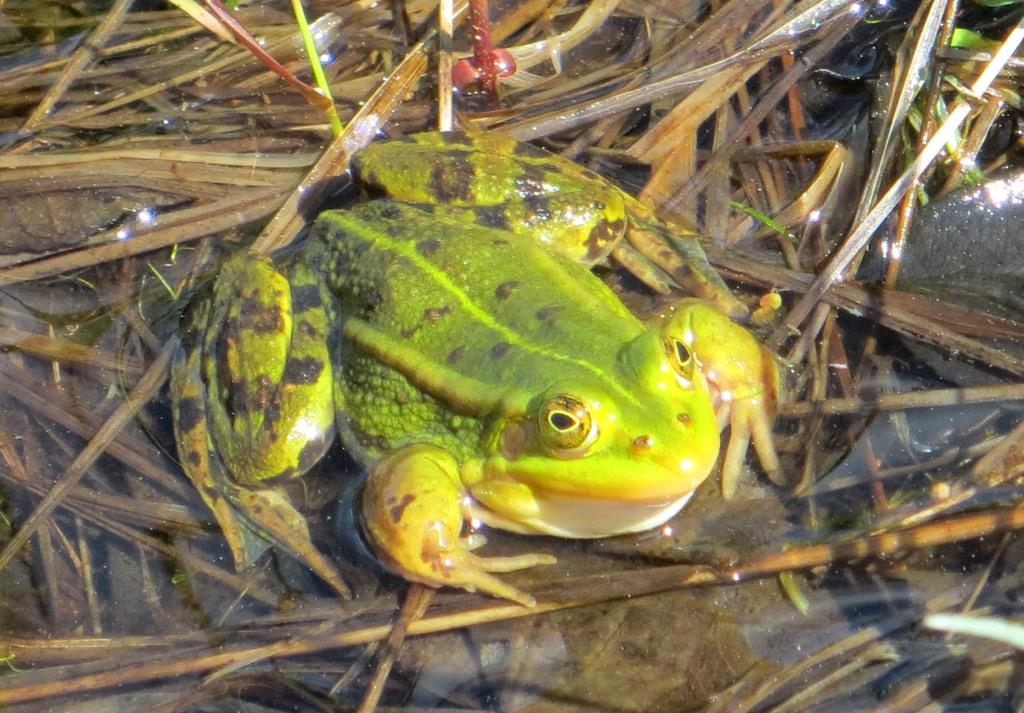
Smooth skin. The back is bright green or olive green, with black spots; there is often a light stripe along the back. The belly is white or yellowish white, very rarely with black spots. Seasonal and diurnal activity.
Active during the warm period of the year, spends the winter in hibernation. Active during the day and in the evenings. Aquatic and semi-aquatic species. Feeding habitats are various types of water bodies: ponds, quarries, oxbow lakes. Breeding habitats are the same as feeding habitats. Hibernation occurs in the water and on land – in burrows, near water bodies. Feeds on beetles, larvae, and flying insects. Eats other amphibians, tadpoles, and fish fry. In spring, it lays 2,000–3,000 eggs in the water, in small portions. Tadpoles live in the water until metamorphosis; juveniles have an aquatic and semi-aquatic lifestyle. Reaches sexual maturity in the third year of life.
Marsh frog (Pelophylax ridibundus Pall.)
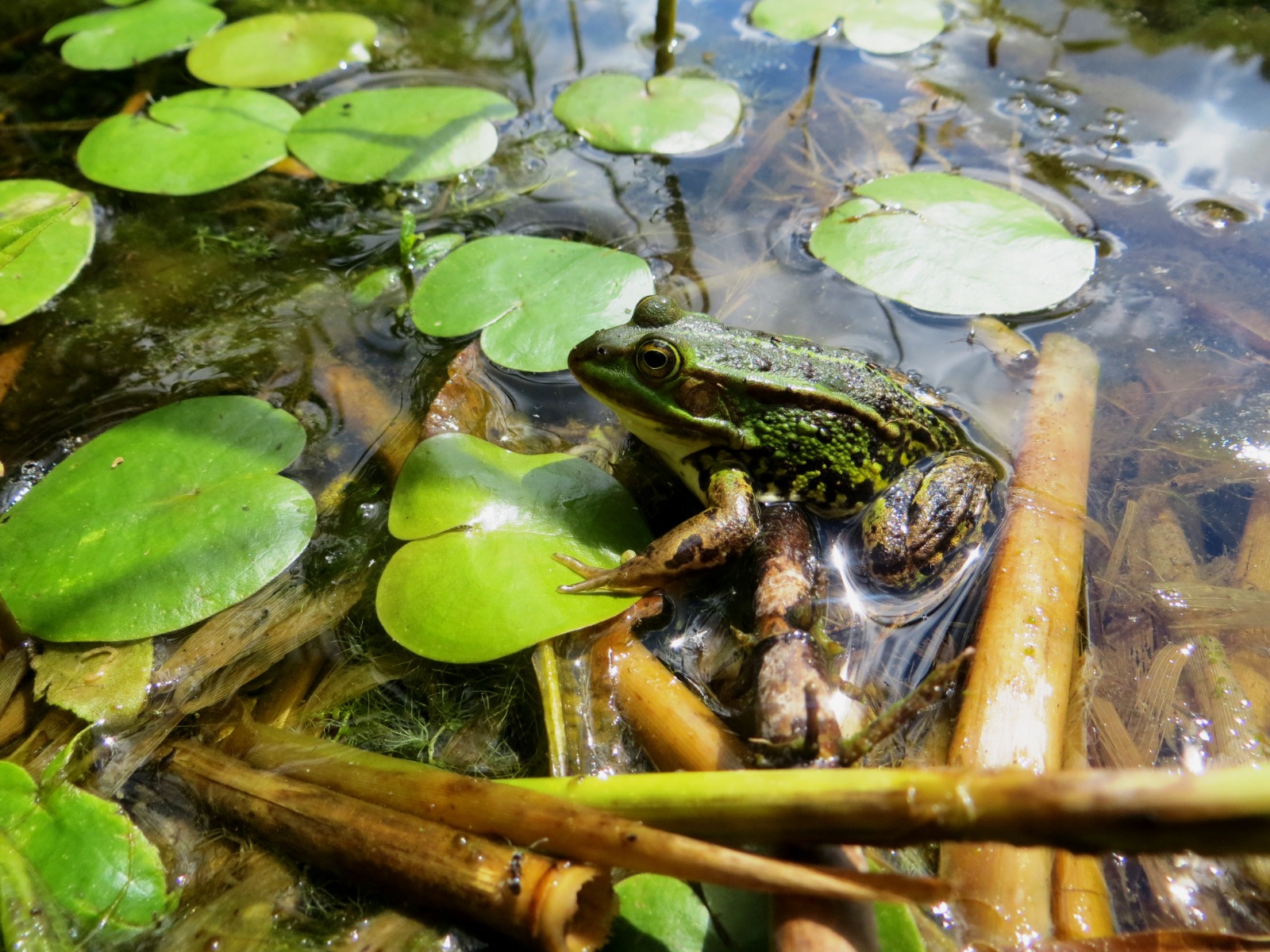
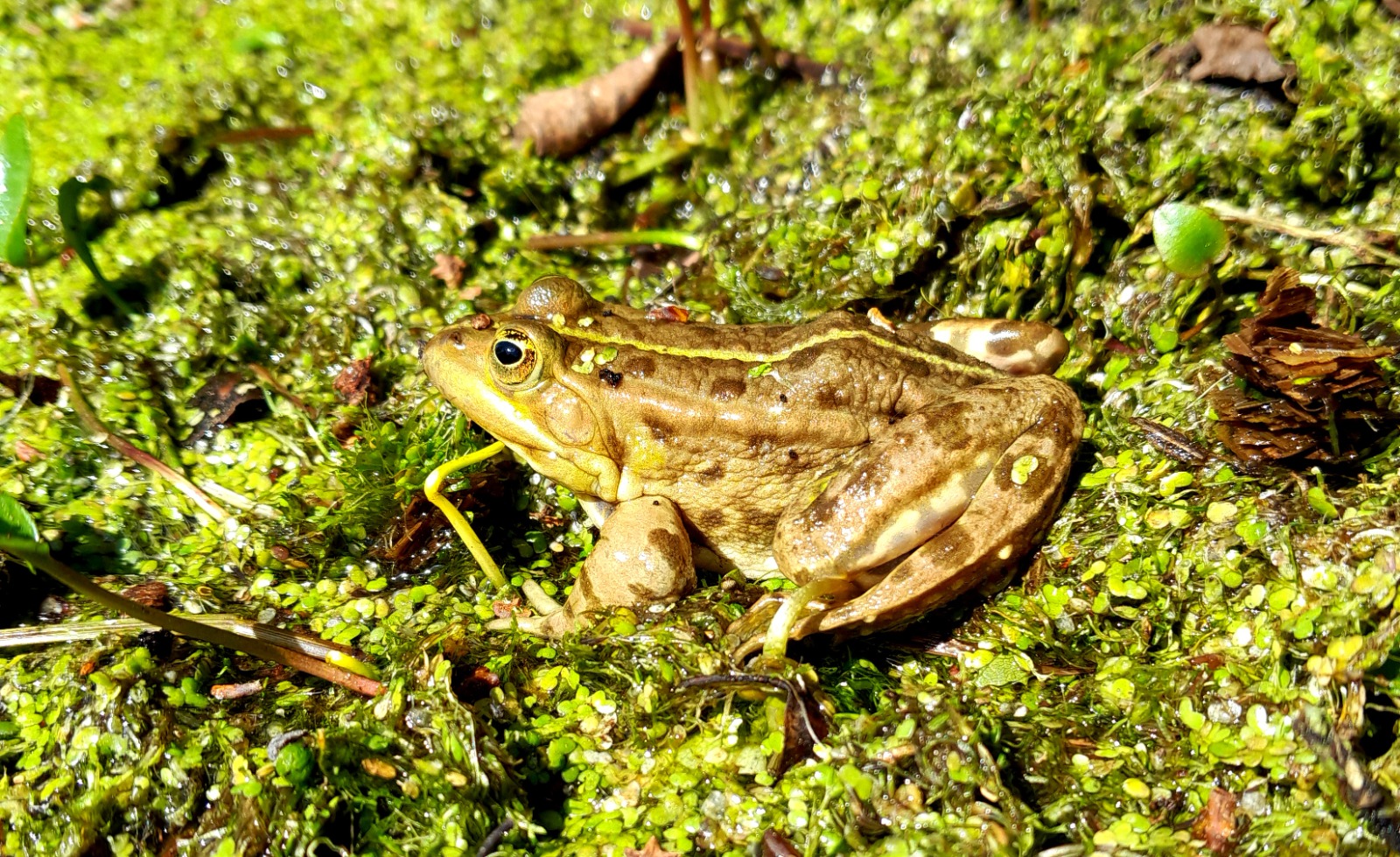
The basic color of the back is green with dark spots of various sizes, often a lighter stripe along the back. Seasonal and diurnal activity.
Active during the warm period of the year, spends the winter in hibernation. Active all day and in the evenings at dusk. Aquatic and semi-aquatic species. Feeding habitats are various types of water bodies, mostly large ones: rivers, lakes, large canals. Breeding habitats are the same as feeding habitats. Hibernation takes place underwater in feeding habitats. Feeds on beetles and larvae. Eats other amphibians, tadpoles, and fish fry. In spring, it lays 300–8,000 eggs in the water, in two clumps or in small portions of 8–10 eggs. Tadpoles live in the water until metamorphosis; juveniles have an aquatic and semi-aquatic lifestyle. Reaches sexual maturity in the third year of life.
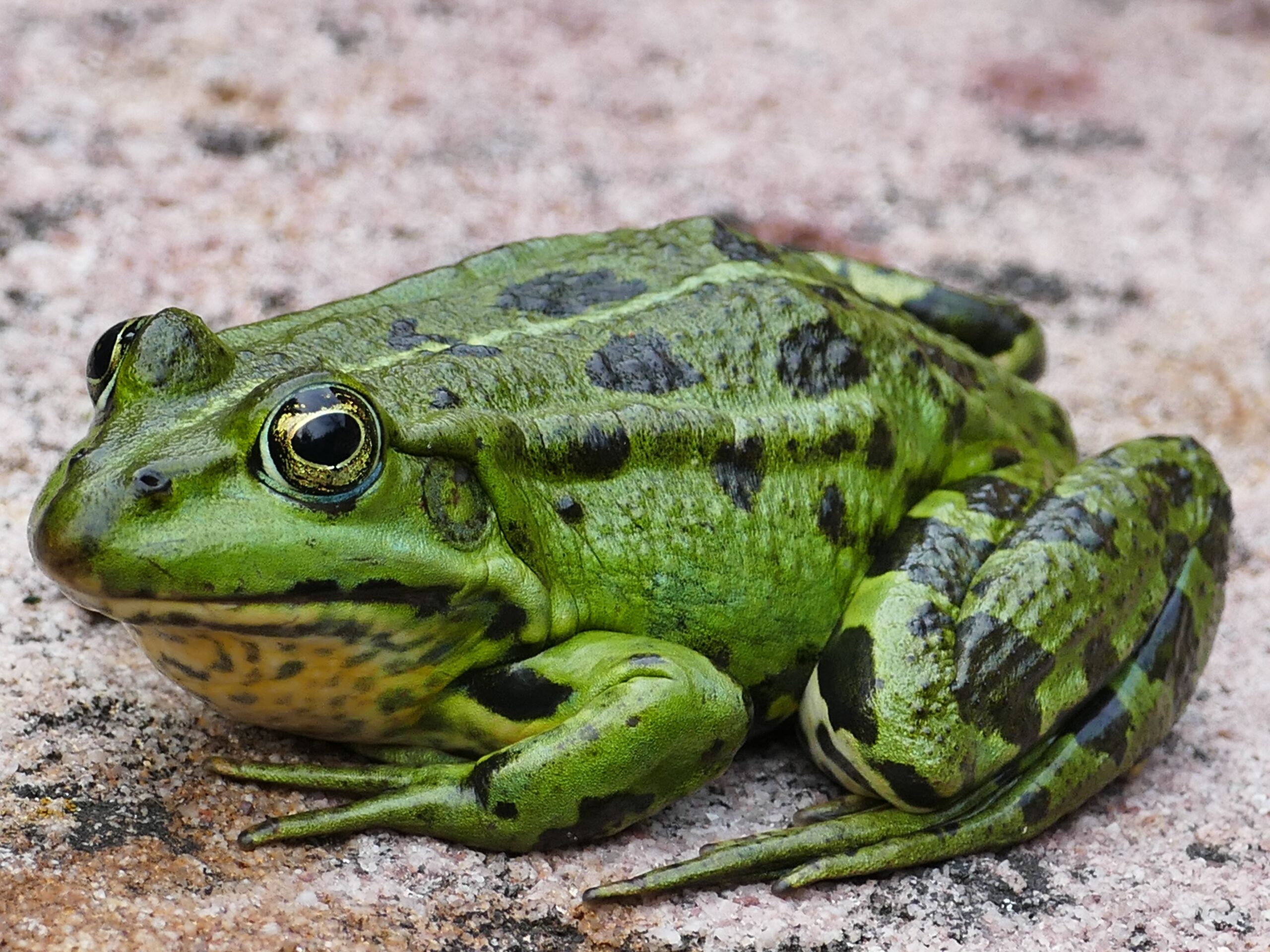
Edible frog (Pelophylax kl. esculentus L.)
Smooth skin. The back is green, with black spots, often a light stripe along the back. The belly is white or gray, usually with black spots. Seasonal and diurnal activity. Active during the warm period of the year, spends the winter in hibernation.
Active all day and in the evenings at dusk. Aquatic and semi-aquatic species. Feeding habitats are various types of water bodies (along with at least one of the parent species): small and large ponds, quarries, oxbow lakes. Breeding habitats are the same as feeding habitats. Hibernation takes place underwater in feeding habitats or on land in burrows. Feeds on beetles, larvae, and flying insects. Eats other amphibians, tadpoles, and fish fry. Tadpoles live in the water until metamorphosis; juveniles have an aquatic and semi-aquatic lifestyle. Reaches sexual maturity in the third year of life.