Sand lizard (Lacerta agilis L.)
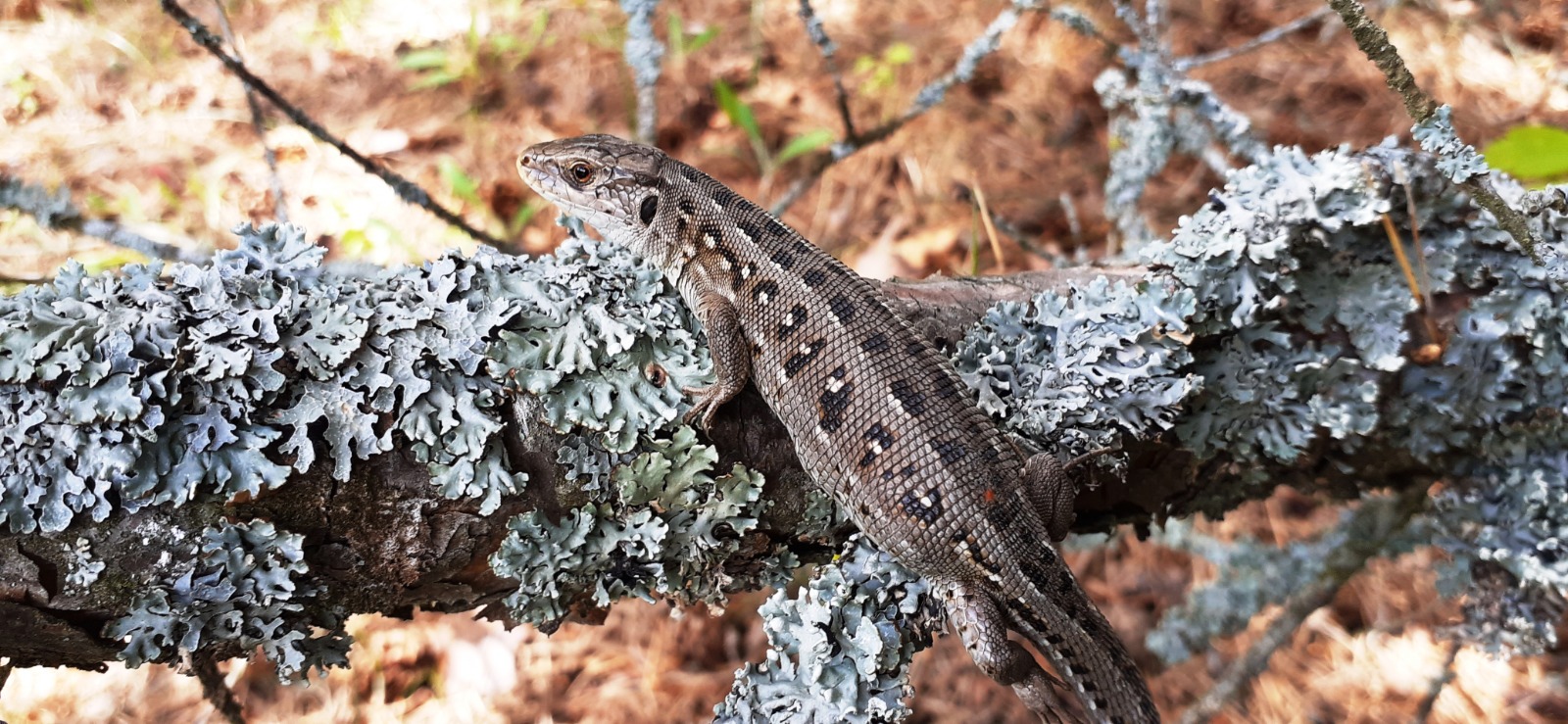
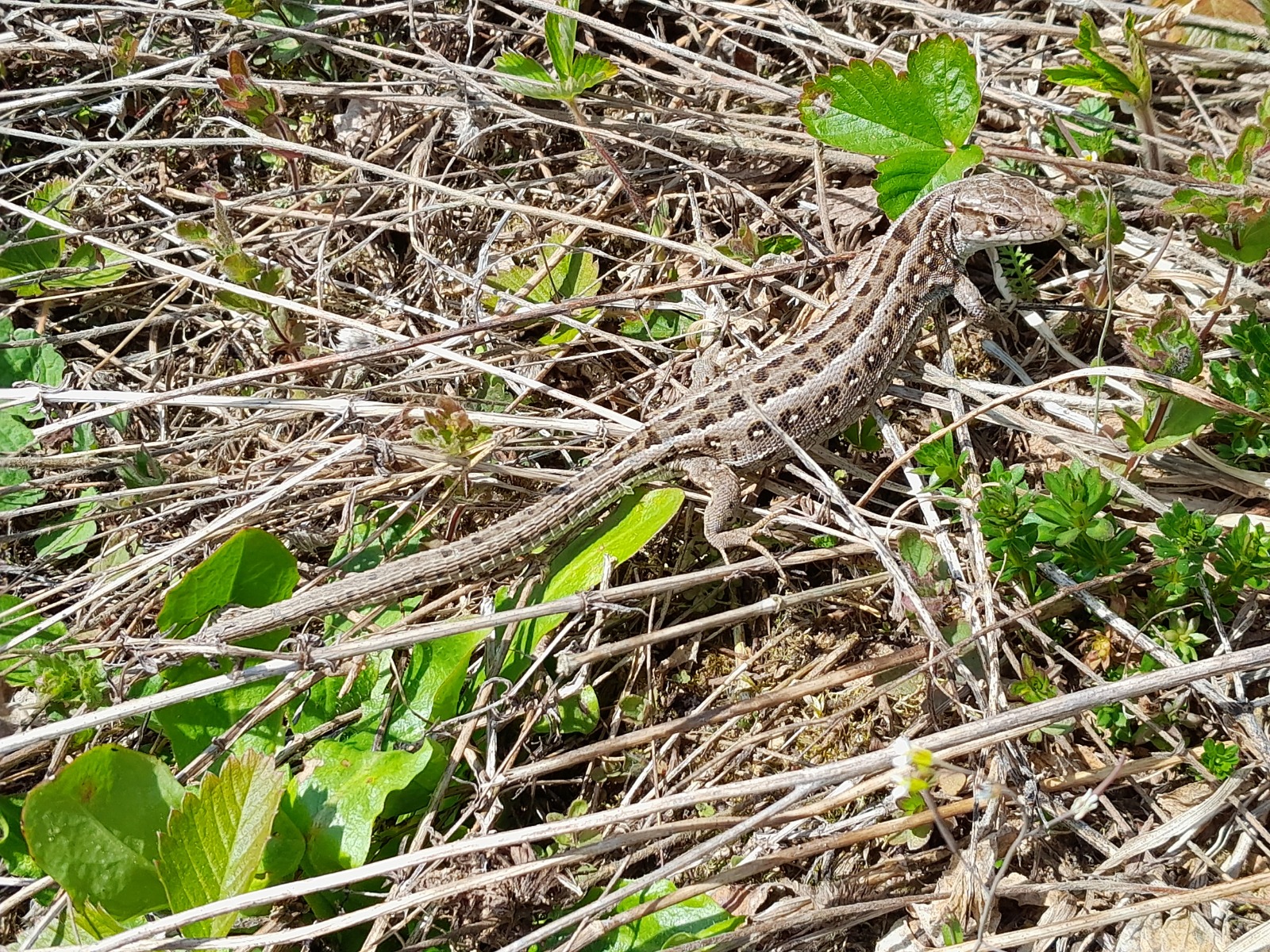
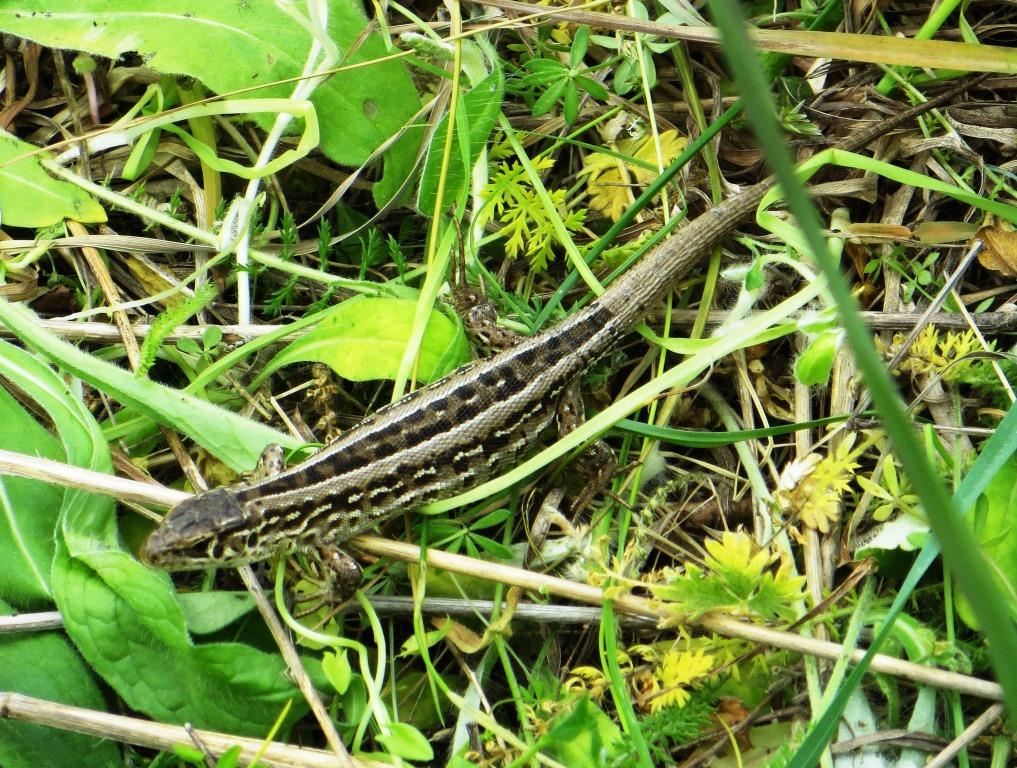
The total length of adult individuals usually reaches 18–25 cm, of which about two-thirds is the tail. The body is robust, with a relatively wide head and strong legs adapted for active movement over the substrate. The scales are granular, on the dorsal surface with small, characteristically arranged flat yellow or white dot-like markings bordered by darker lines.
The coloration varies – the back can be brown, grayish, or greenish brown. During the reproductive season, males stand out with a bright green side and back coloration, which serves as a visual signal in territorial defense and attracting females. Females are characterized by a more cautious coloration – a brownish tone with clearly pronounced stripes and dark oval spots on the sides.
In choosing habitats, it prefers open or semi-open terrestrial habitats with a mosaic structure. The species is common in dry meadows, dunes, heaths, forest edges, clearings, and along roadsides, where the substrate is well-drained and sunny. Microhabitats are also important – rodent burrows, ground cover gaps, and vegetation cover, which provide effective hiding and hibernation possibilities.
Viviparous lizard (Zootoca vivipara Jacq.)
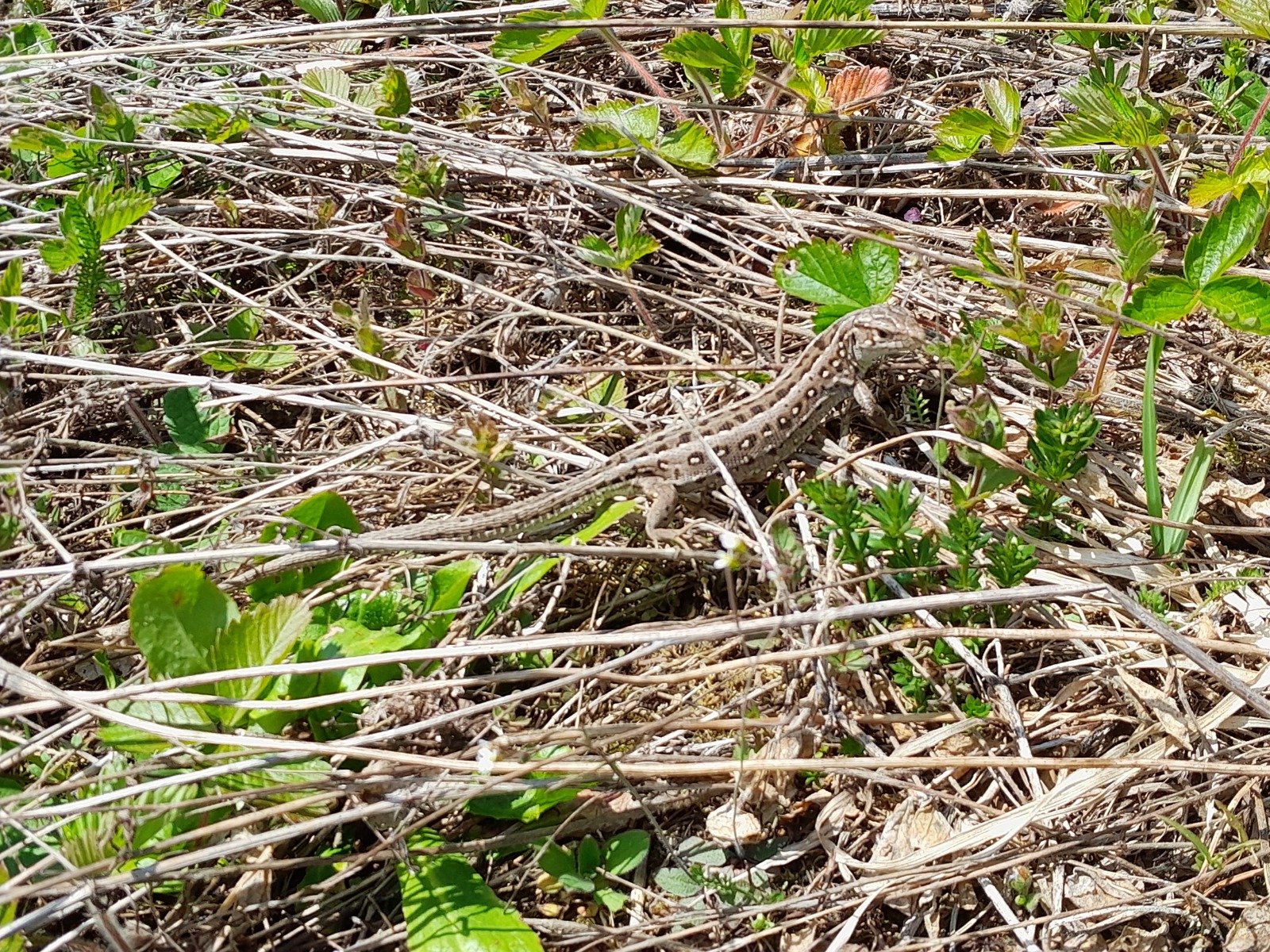
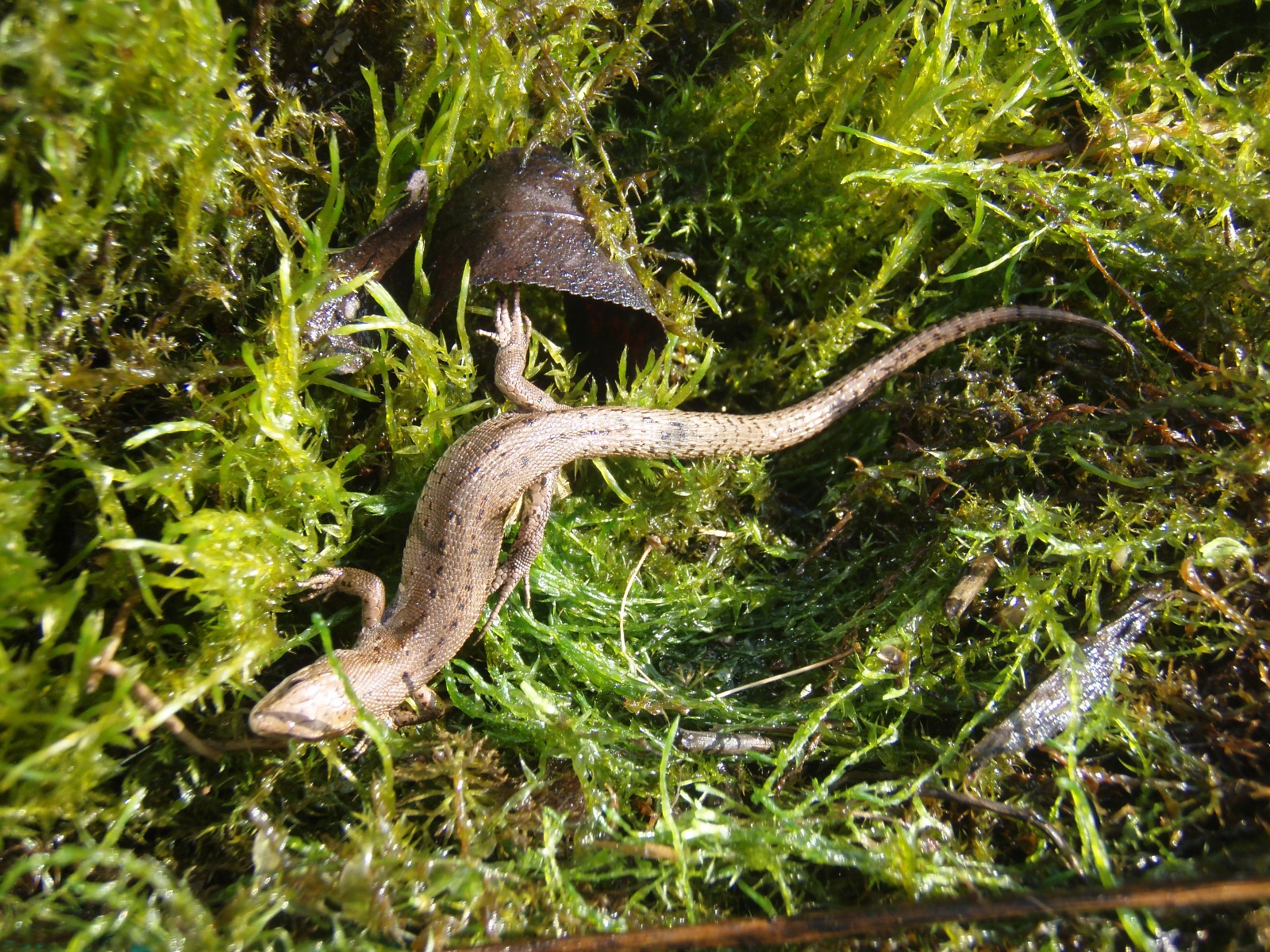
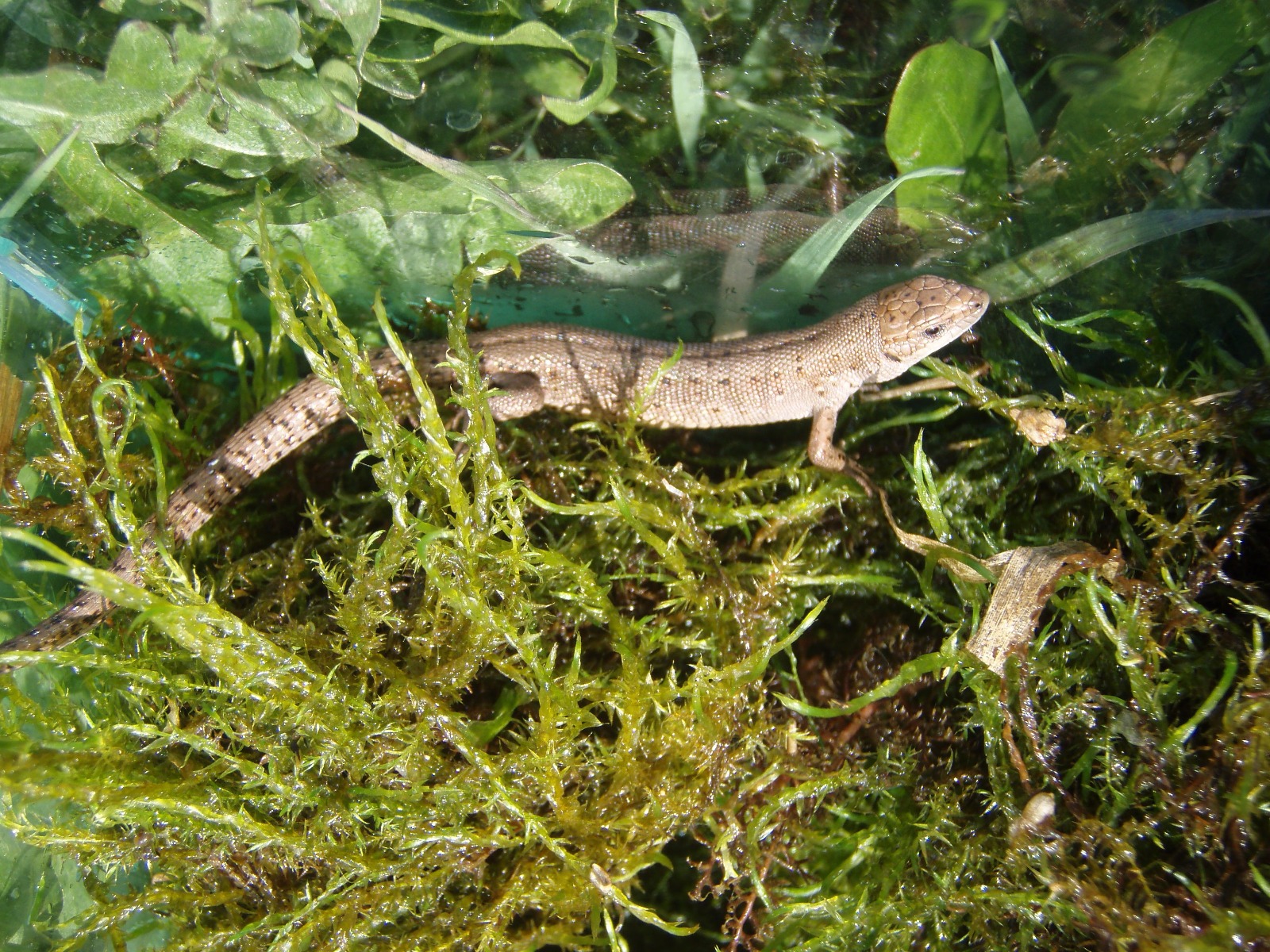
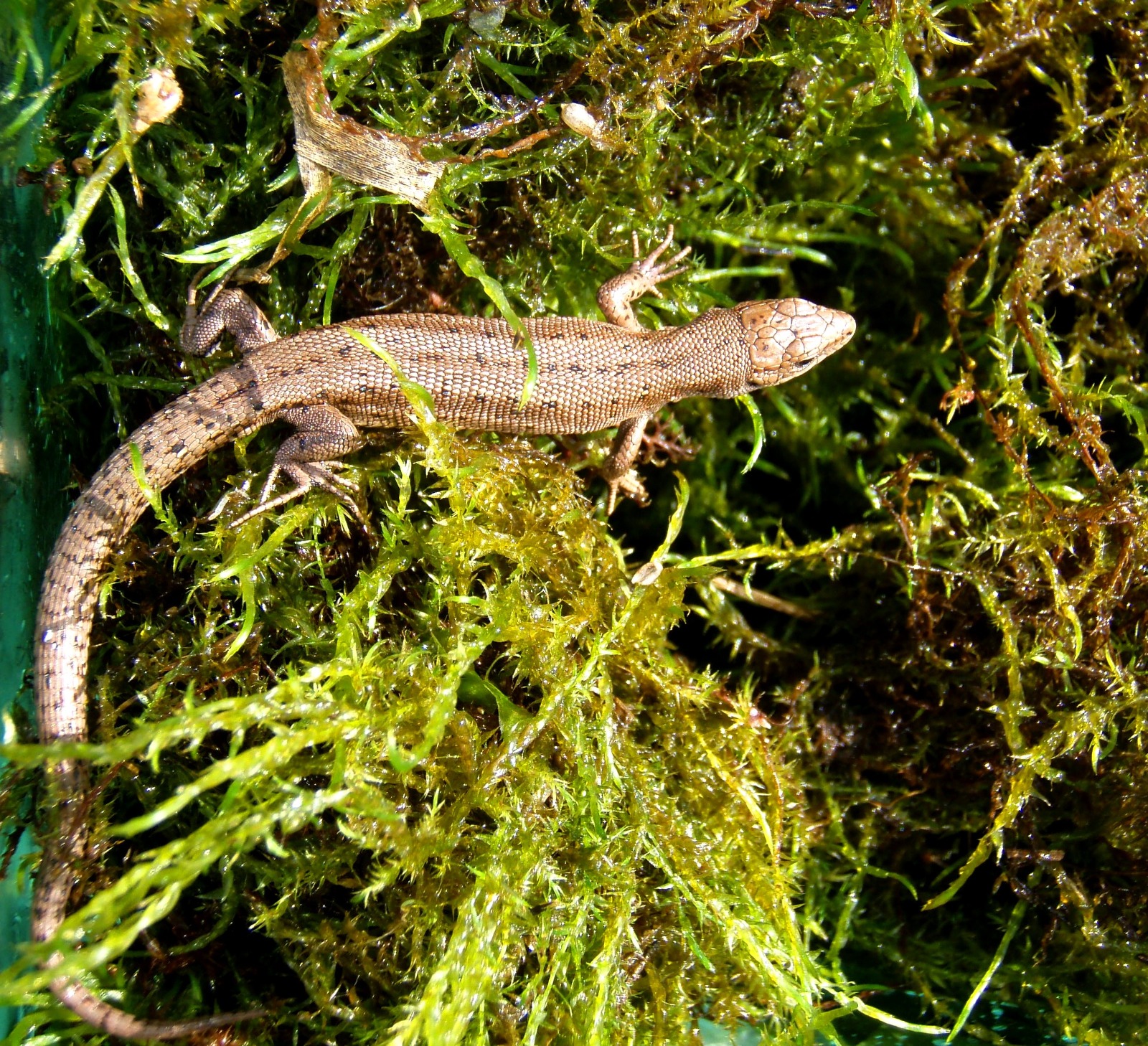
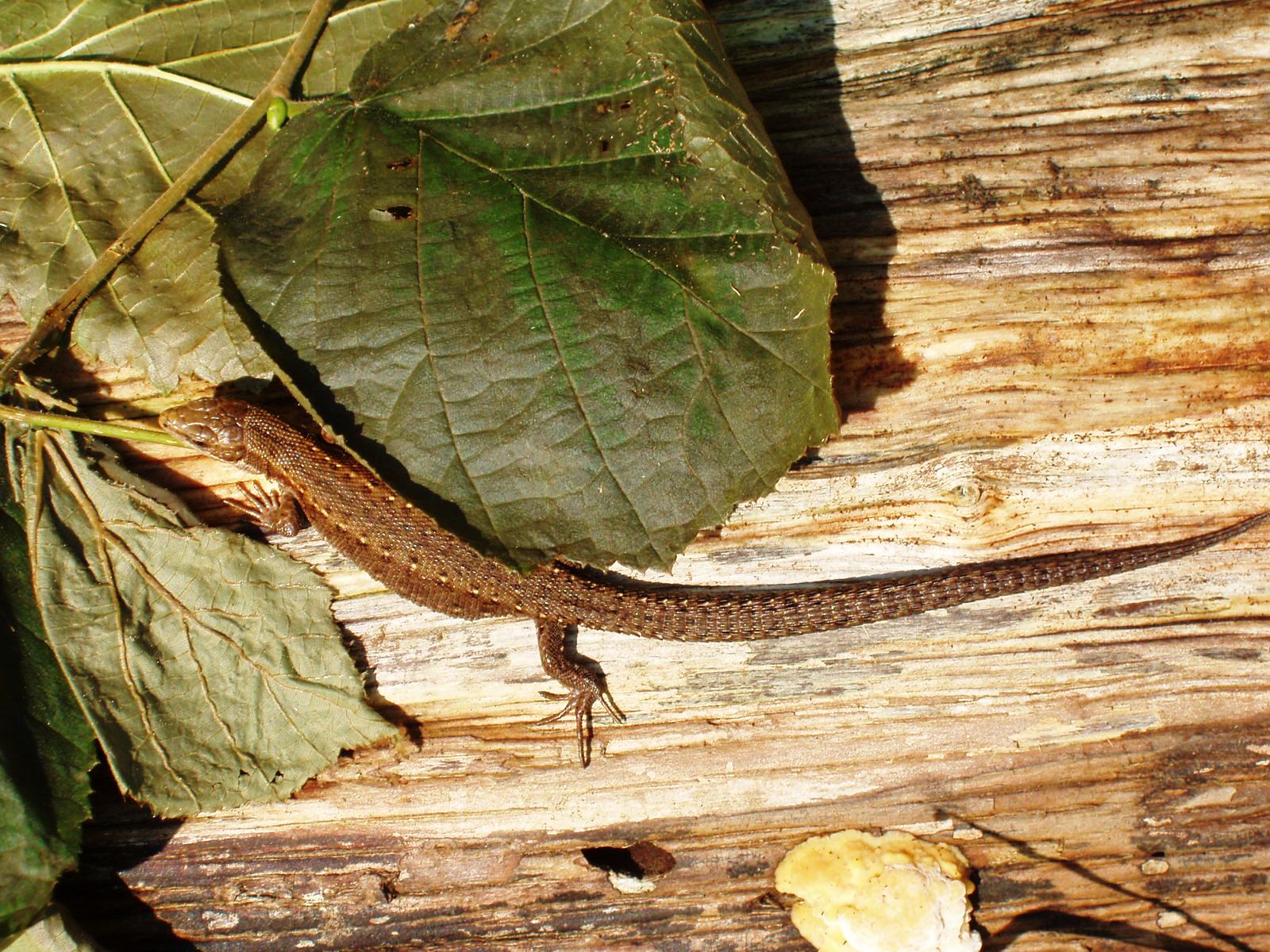
The total length of adult individuals usually reaches 14–18 cm, of which about half is the tail. The body is slender, the head is slightly separated from the neck, and the legs are proportionally shorter than in similar species (e.g., the sand lizard). The scales are smooth and closely arranged, ensuring good movement in closed vegetation and moist habitats.
The dorsal coloration is usually brown or grayish with darker side bands and small spotty structures. In some males, a yellowish or orangish belly tone can be observed during the reproductive season. The female’s coloration is more uniform, with a longitudinal light stripe in the middle of the back.
Habitat choice is closely related to moist and moderately open vegetation. The species is found in marshy meadows, moist forest edges, peat bogs, ditch edges, as well as sparse forest and shrub habitats. Crucial for it are microhabitats with sufficient cover and substrate moisture – moss patches, grass clumps, fallen tree trunks, and leaf piles, which provide thermoregulation and shelter opportunities. The species is diurnal and especially active in the warmer hours of the day, using the sun to maintain its body temperature.
Eastern slow worm (Anguis colchica Nordmann)
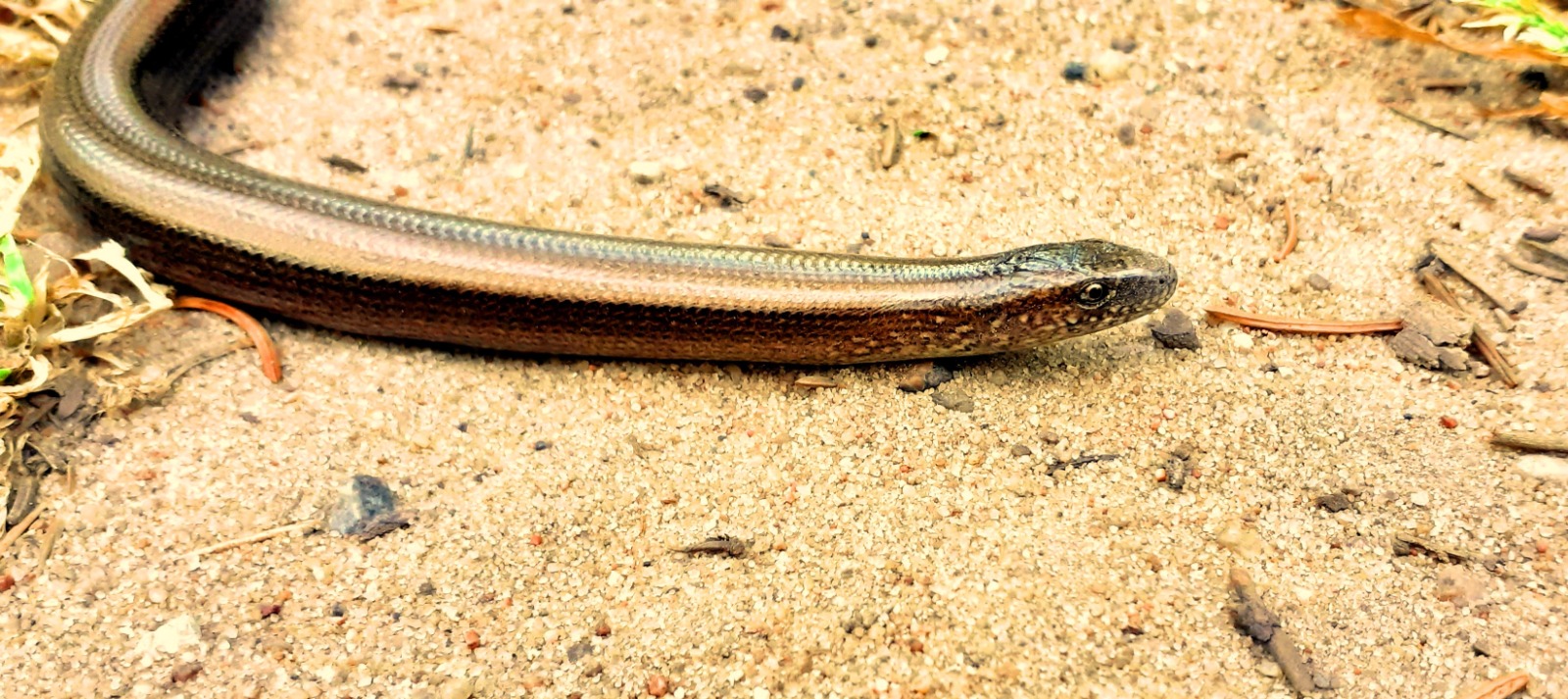
Morphologically, this species is characterized by an elongated, cylindrical body, the length of which usually reaches 20–40 cm. The body is smooth and covered with small, shiny scales that give it a metallic hue.
Coloration varies from grayish brown to copper or bronze tones; males often have a more uniform tone, while females and young individuals may have a dark, longitudinal line in the center of the back. Sometimes dark side stripes can be observed. The belly is usually darker – grayish or black. Slow worms, unlike snakes, have visible eyelid movements. The head is small and indistinctly separated from the body, and the tail is long. After losing its tail, it can partially regenerate, but it becomes shorter and in a different color.
The species inhabits various habitats – deciduous and mixed forests, forest edges, shrubs, meadows with lush vegetation, gardens, and agricultural areas. Crucial is a denser soil cover and hiding places, such as fallen logs, stones, leaf and branch piles, which provide protection from predators and help in thermoregulation. The slow worm is slow, often stays in the ground cover, and is largely crepuscular and nocturnal, adapted to a life in a hidden environment. Feeds mainly on invertebrates – slugs, earthworms, and insects.
Grass snake (Natrix natrix L.)
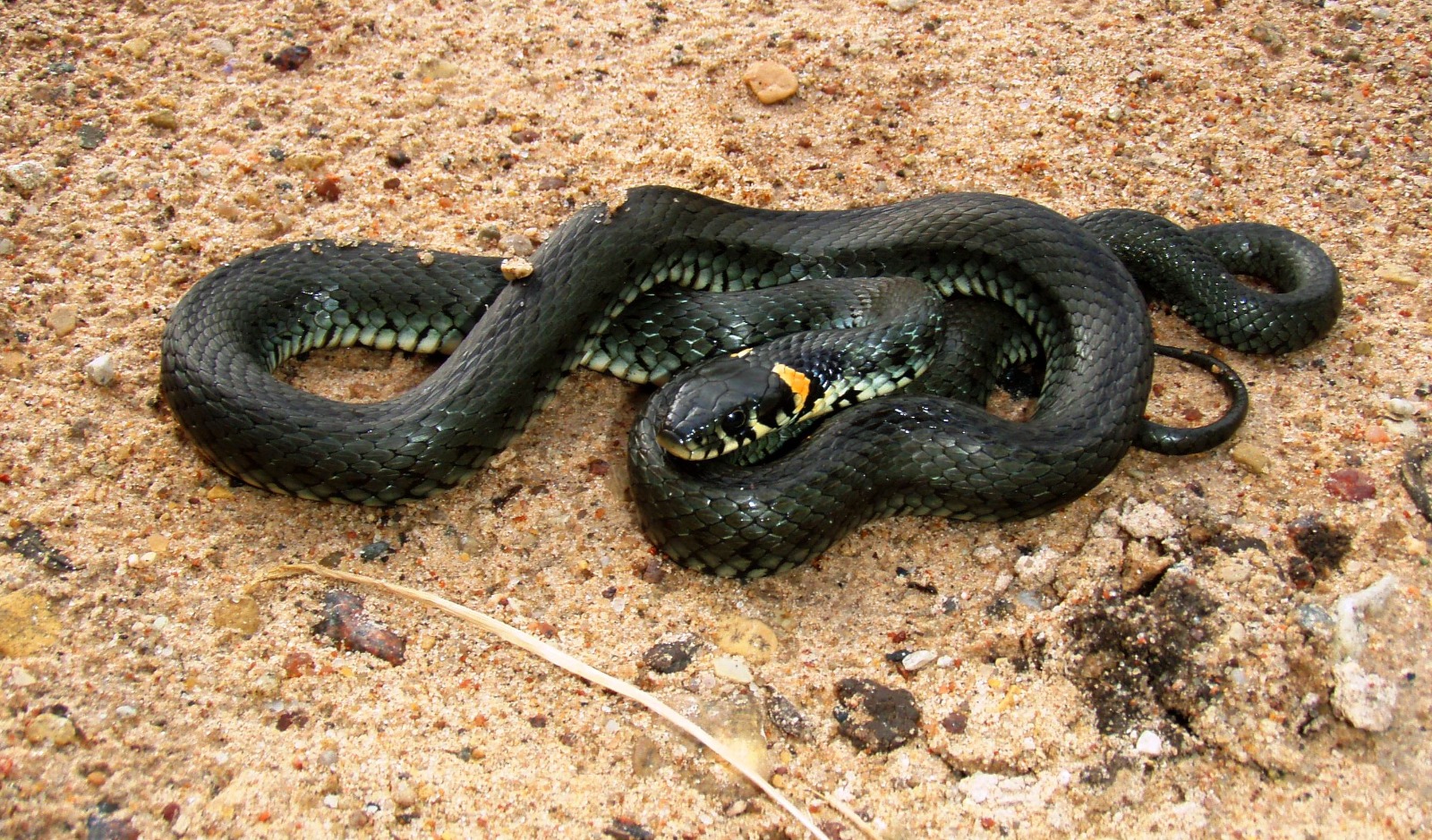
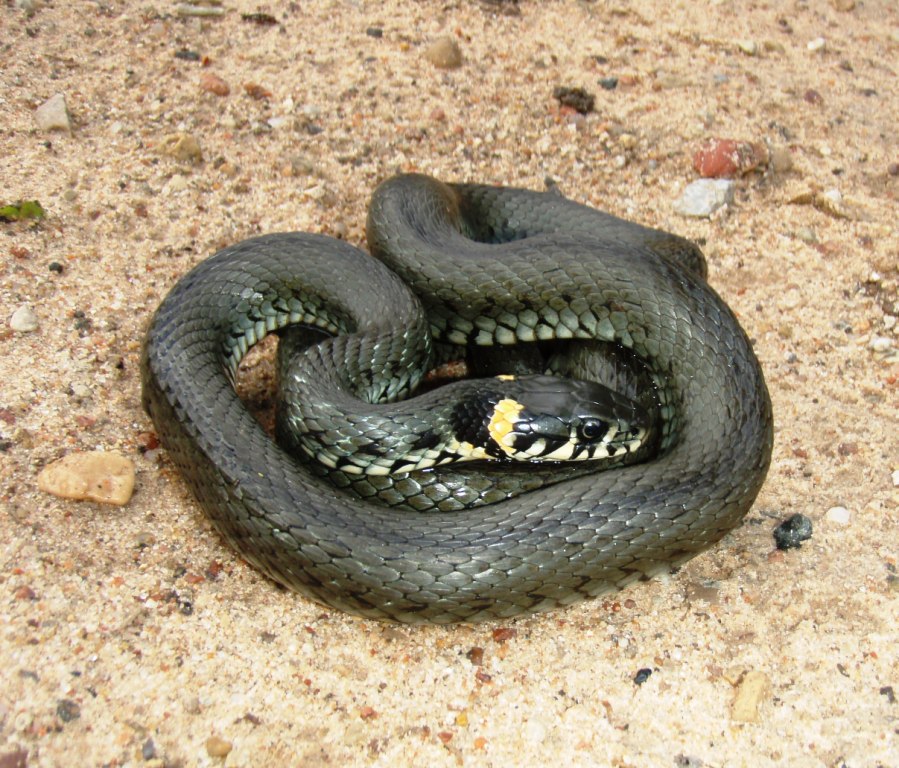
A non-venomous snake in Latvia, one of Latvia’s most characteristic reptile species. Adult grass snakes usually reach a length of 80–120 cm, less often up to 150 cm. The body is round, but not as stout as vipers, and the head is slightly separated from the neck, forming a softer contour.
The most characteristic feature of the grass snake is the yellow or light orange semicircular spots on the sides of the head, just behind the eyes, which form the so-called “yellow ears” mark. The body coloration is usually dark green, brownish, or gray with fine, dark dots or transverse stripes. Grass snake eyes have round pupils, indicating an active diurnal lifestyle. The tail is long and tapers gradually.
Inhabits moist and sunny places. It is most often found near ponds, lakes, rivers, ditches, swamps, and flooded grasslands. The grass snake often stays in forest edges, meadows, and near gardens where water bodies are located nearby.
Common European adder (Vipera berus L.)
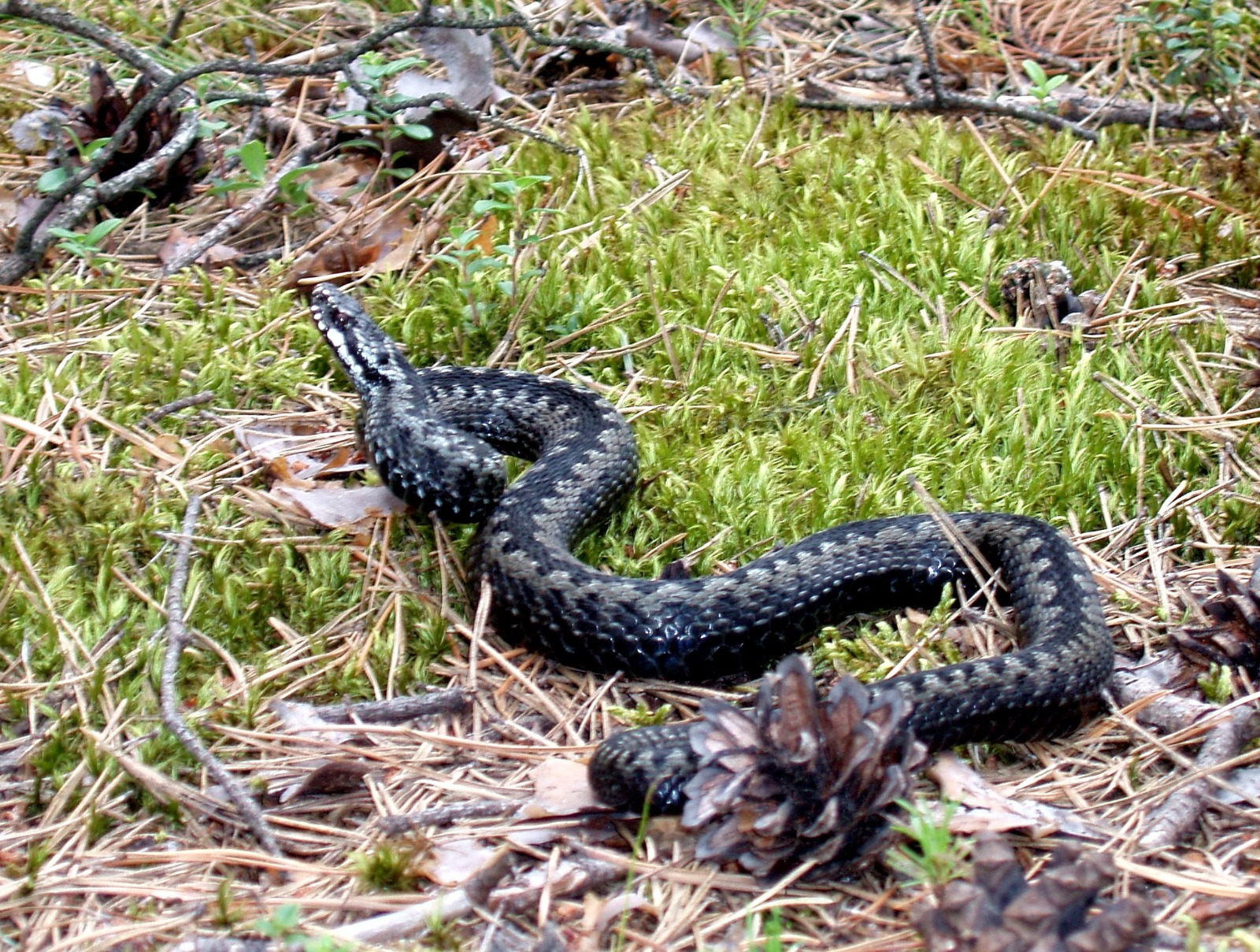
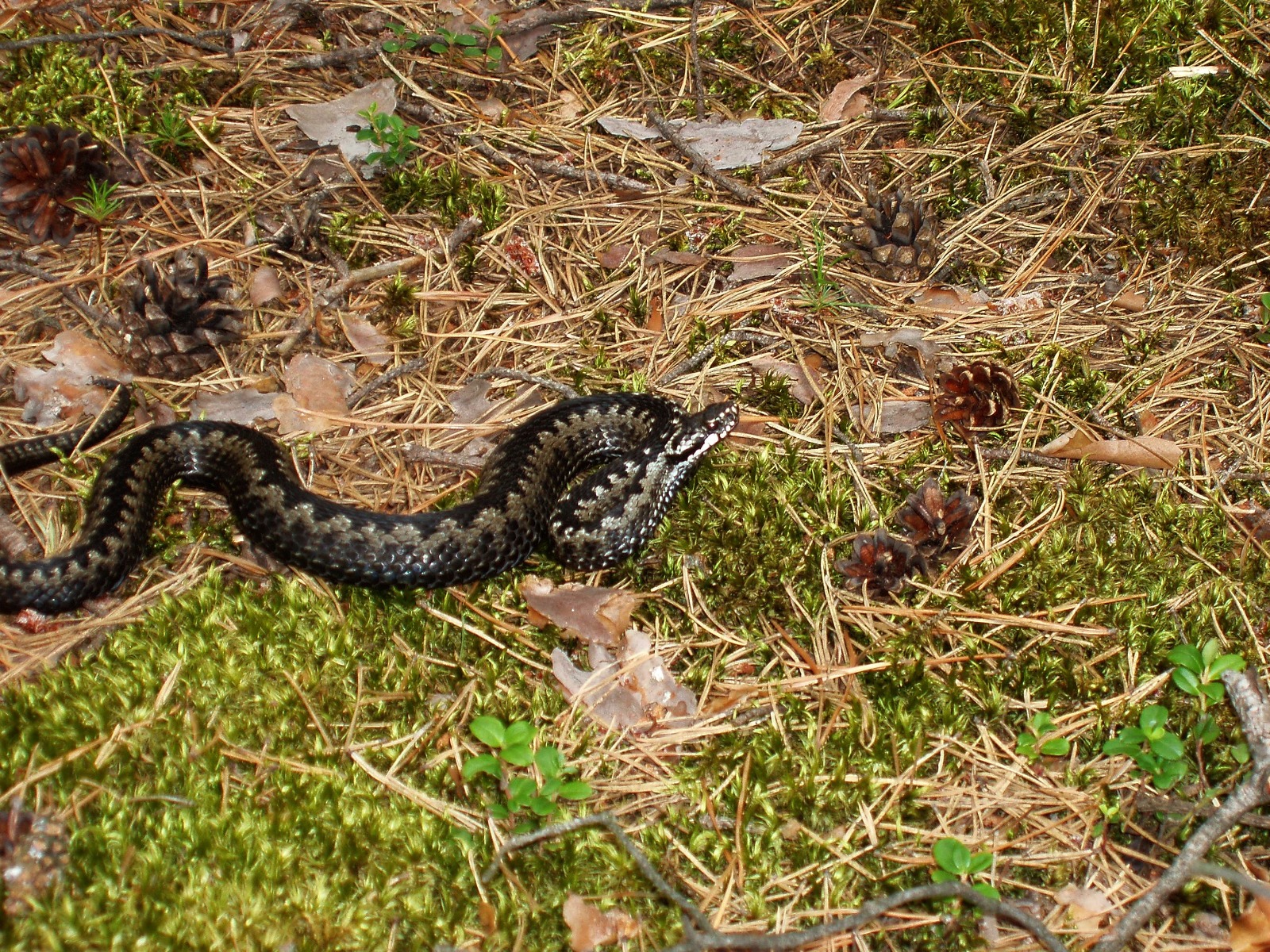
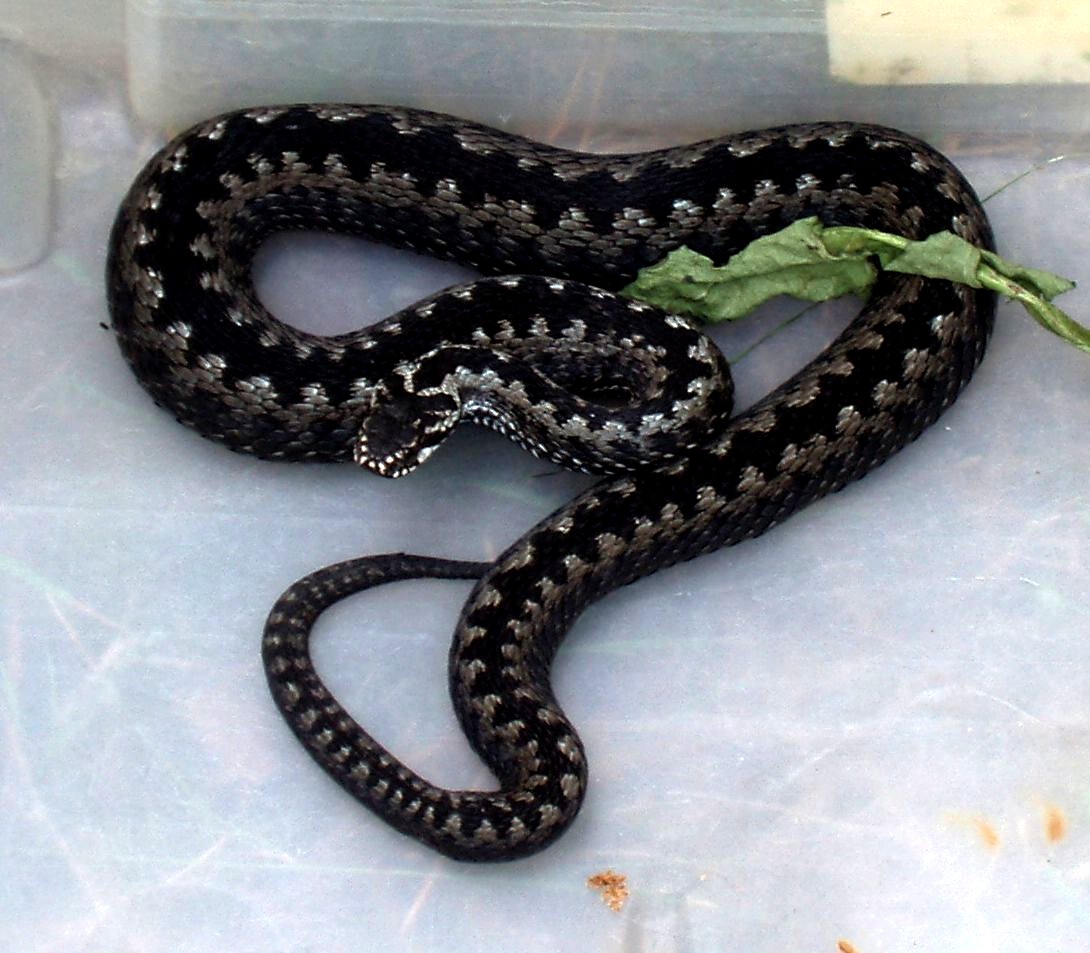
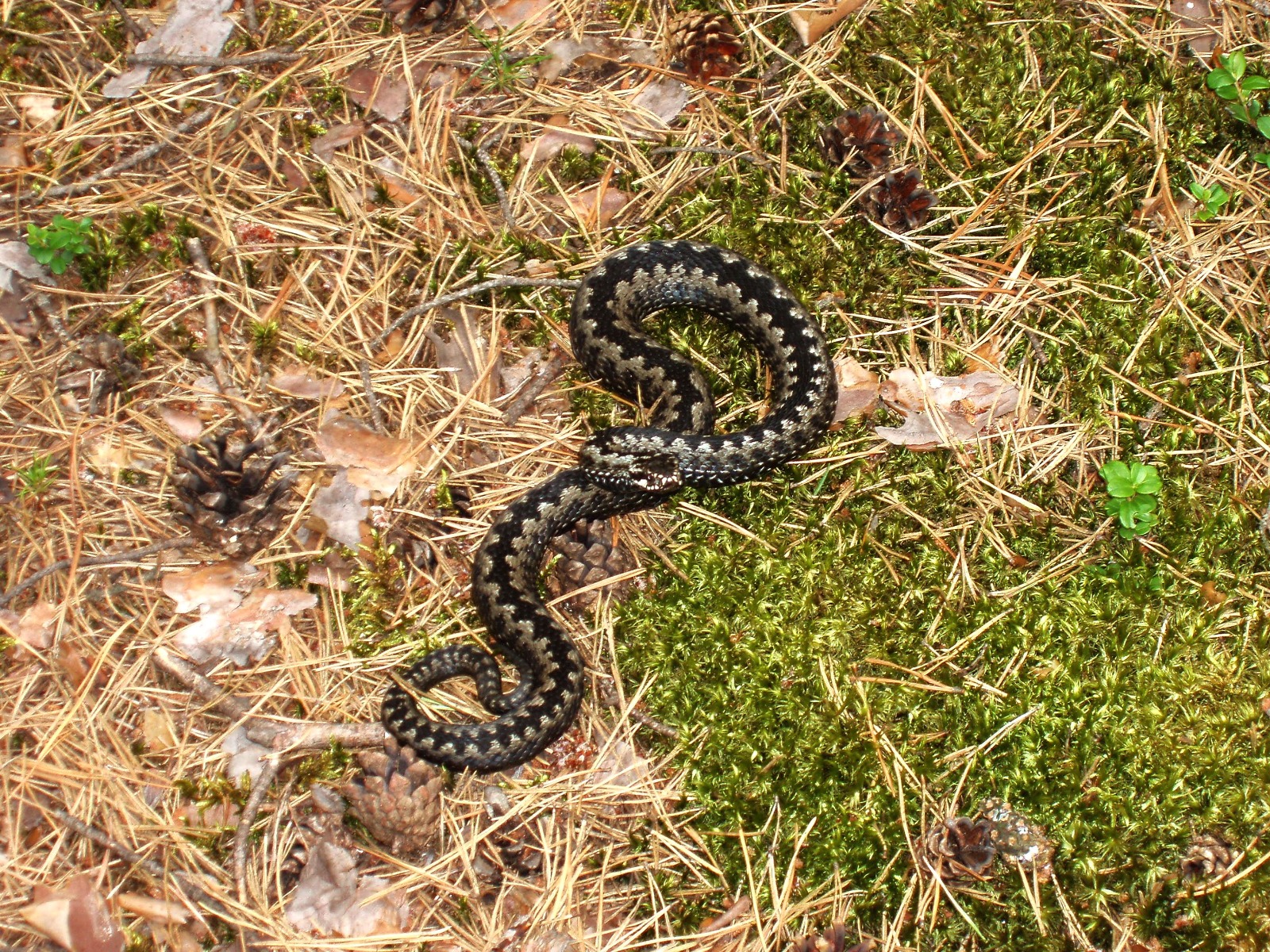
The only venomous snake found in Latvia. It is relatively small – usually 50–70 cm long; females are often slightly longer and stouter than males. The adder’s body is strong, slightly cylindrical, with clearly distinguishable scales.
The most characteristic feature is a zigzag dark stripe along the middle of the back, which contrasts with the rest of the body color. In males, the back is often gray or silvery gray, while females are more often brownish, copper, or dark brown. The head is triangular and slightly wider than the neck, and a characteristic V-shaped mark can be seen on it.
Adders are found in sunny forest edges, clearings, shrubs, swamp edges, and meadows with sparse vegetation. It is important that the habitat has sufficient moisture and a rodent population, which is their main food source. Adders also like sun-heated stones and logs where they can warm up after cooling down at night. In Latvia, adders can be seen particularly often in the spring when they emerge from their winter dens and actively seek the sun.
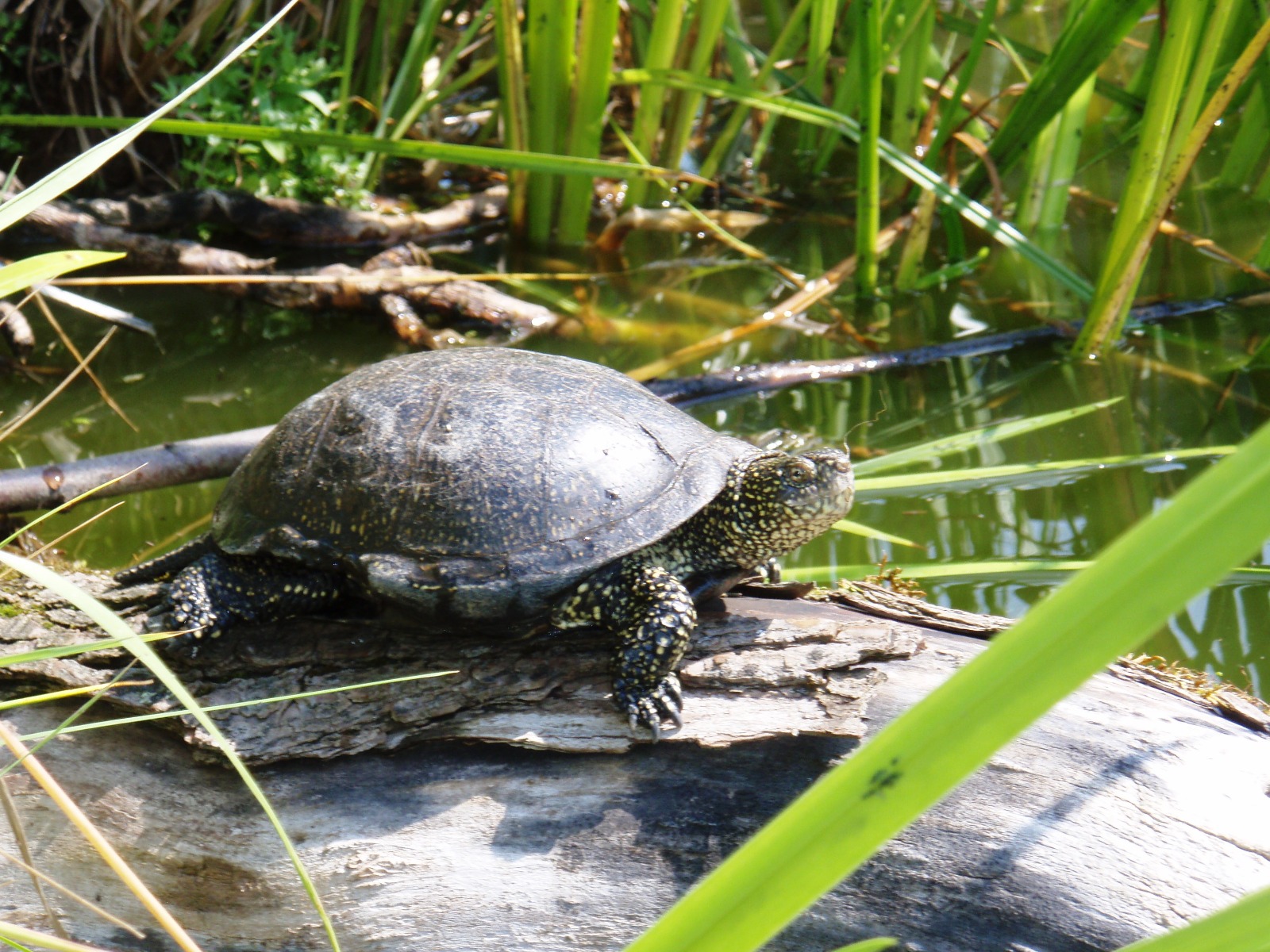
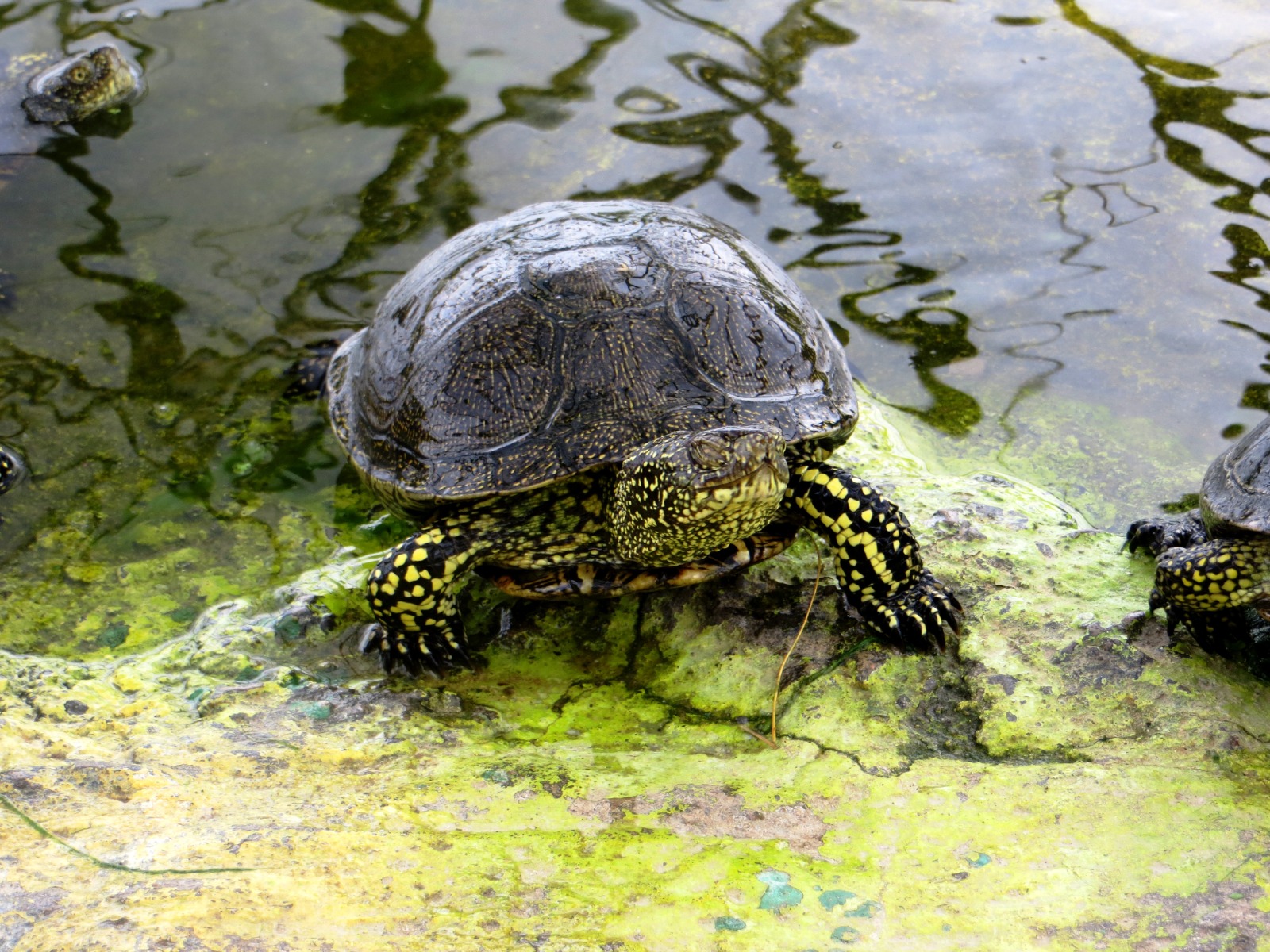
European pond turtle (Emys orbicularis L.)
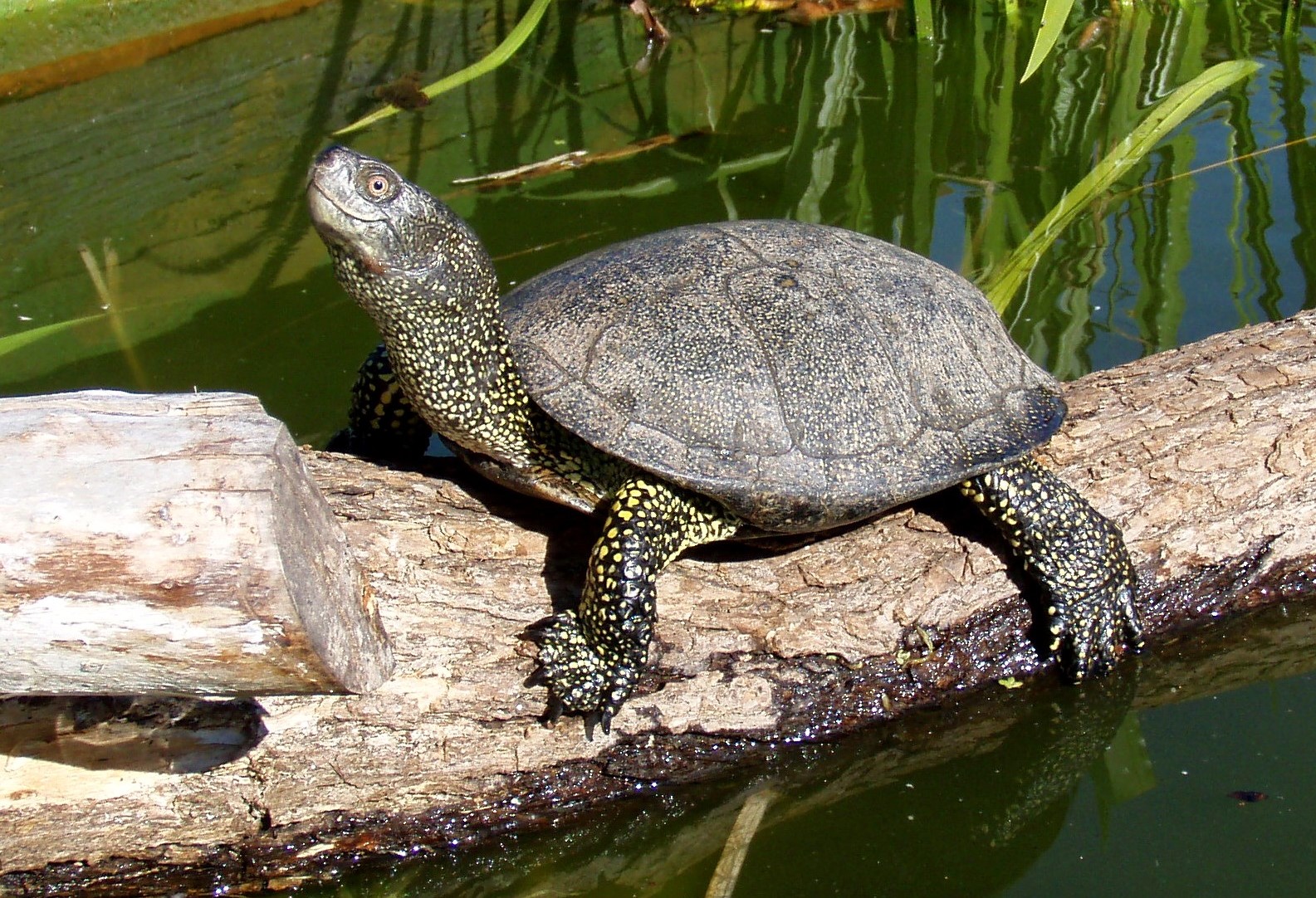
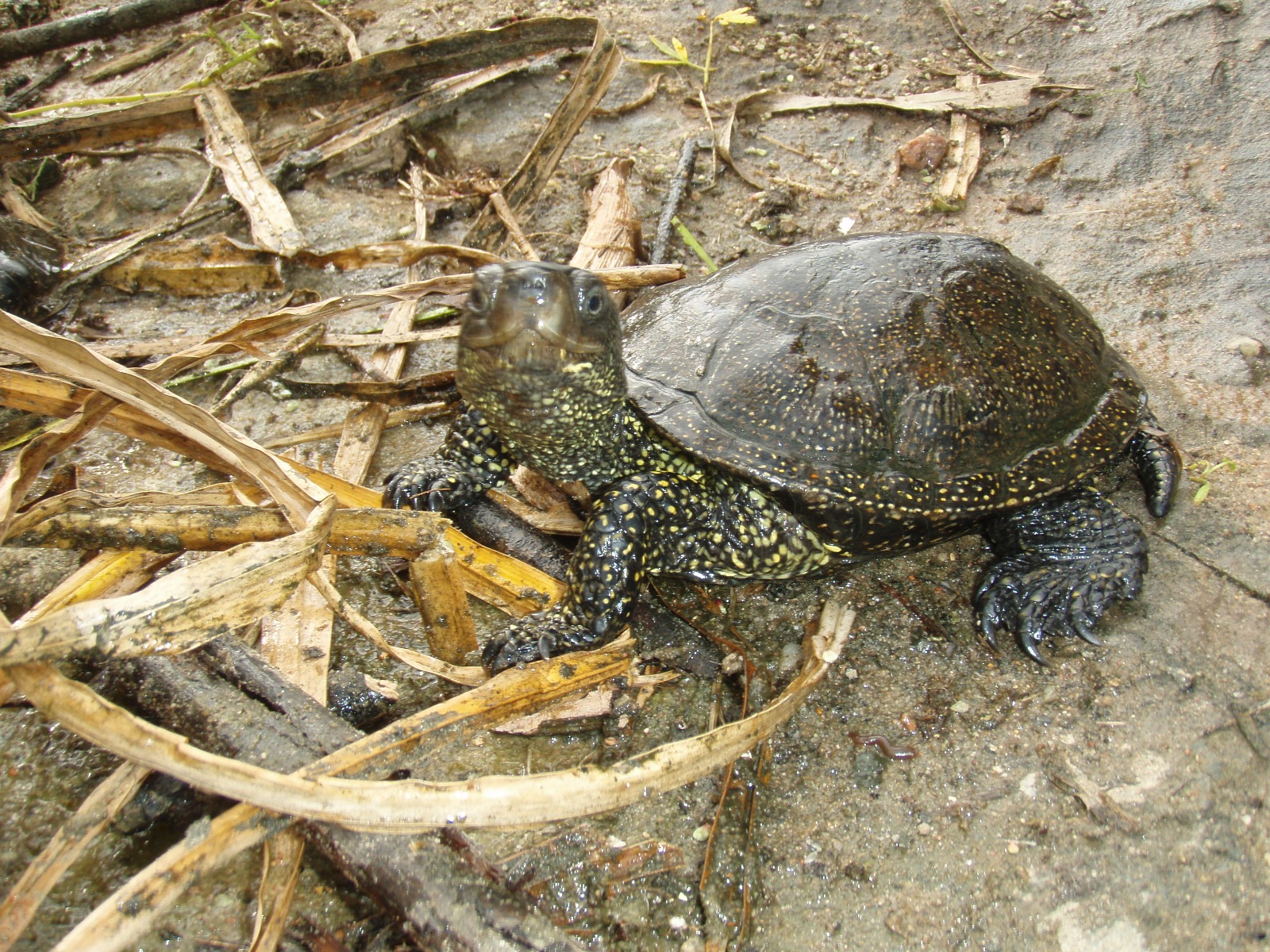
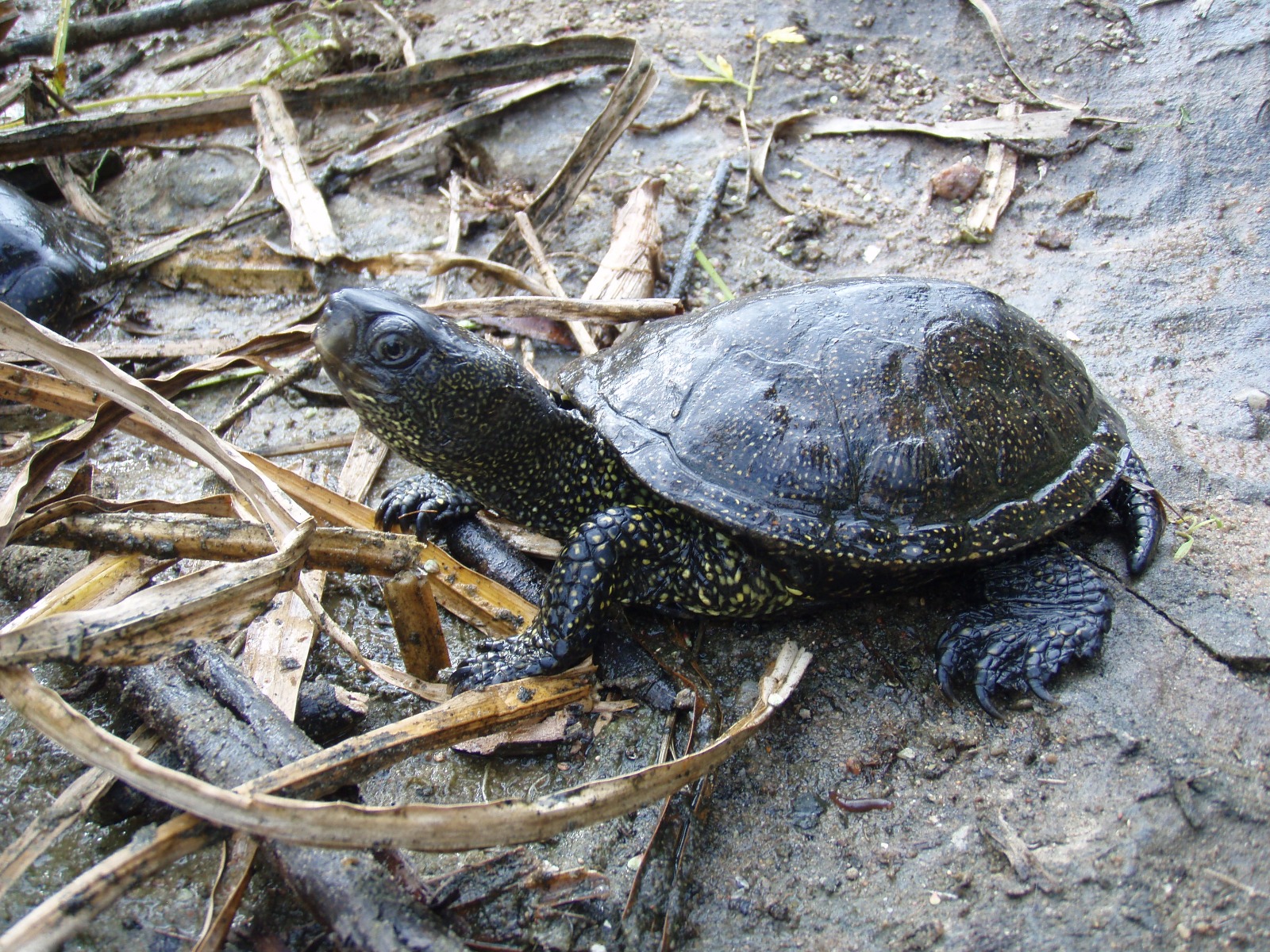
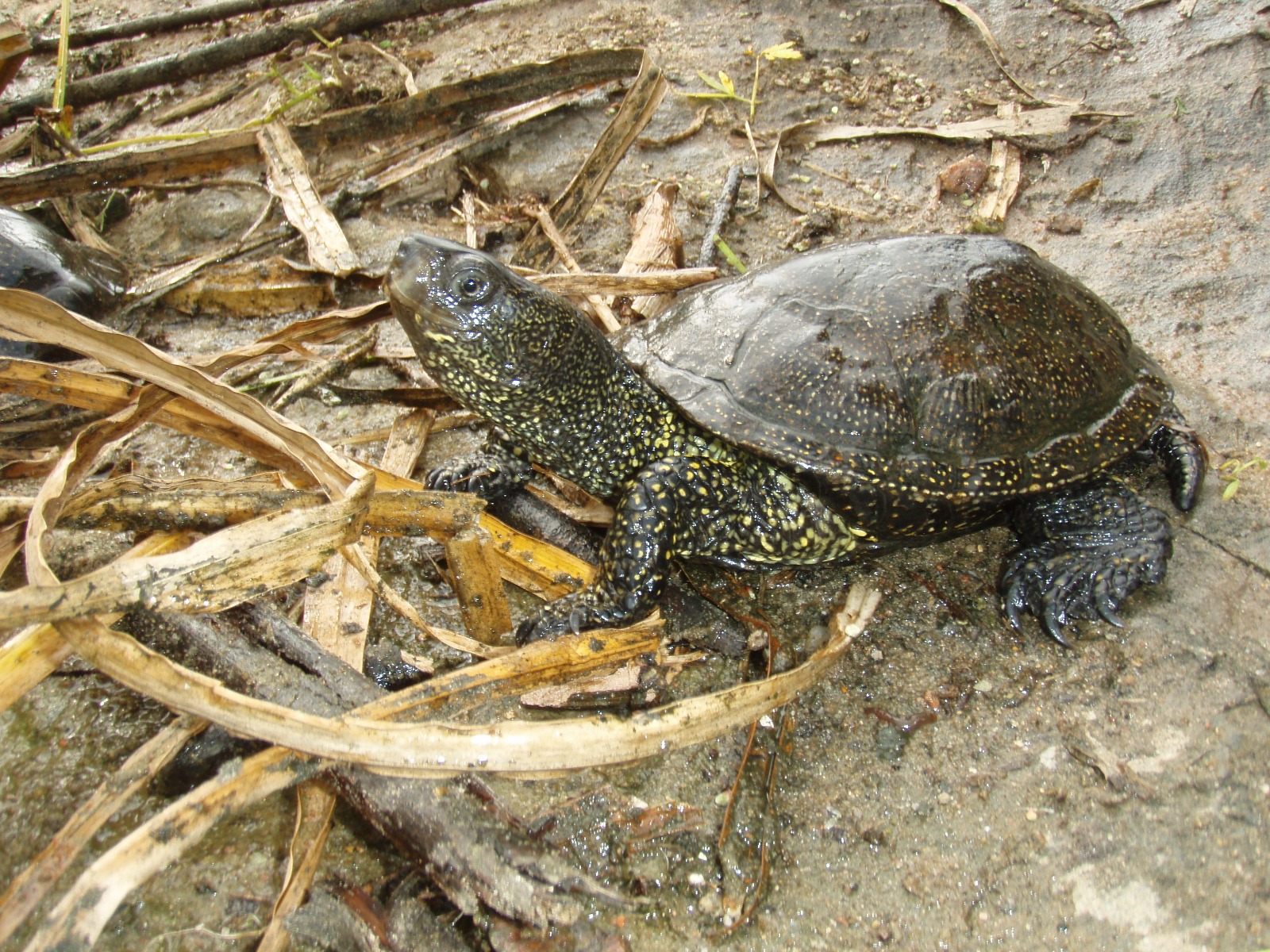
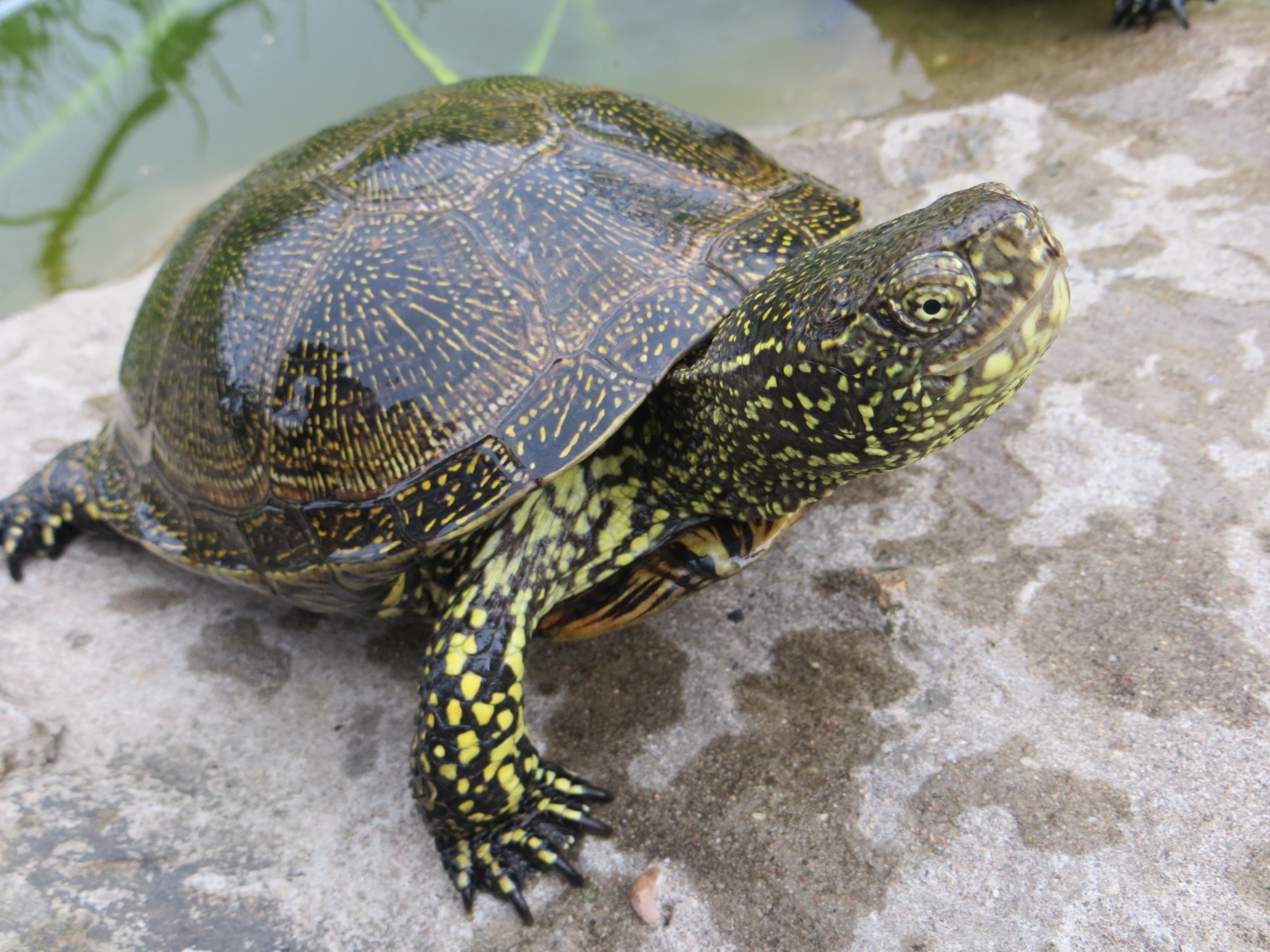
The carapace (upper shell) is smooth, oval, slightly convex, and movably connected to the plastron (lower shell). The carapace length of adult turtles is up to 210 mm, and the turtle’s weight is up to 1 kg. Often, the carapace has no clear spots. The plastron is dark gray or black, as well as yellowish with large dark gray spots.
In Latvia, the European pond turtle inhabits freshwater bodies: small lakes, bays, fish farming ponds, oxbow lakes, and low bogs with a sufficient water mirror area. They prefer stagnant water bodies or slow-flowing water bodies with a muddy bottom and rich aquatic and semi-aquatic vegetation, and water bodies well-heated by the sun. As feeding water bodies, turtles also use small water bodies that may dry out in the summer.
In Latvia’s climatic conditions, the opportunity to warm up plays a special role in the lives of pond turtles, therefore it is important that the habitat has comfortable places for this: fallen tree trunks, grass clumps, etc. The species’ food spectrum consists of aquatic invertebrates: snails, mosquito and caddisfly larvae, water beetles, dragonfly larvae, earthworms, etc., as well as vertebrates: tadpoles, newts, frogs, fish.