Amur sleeper (Perccottus glenii Dybowski)
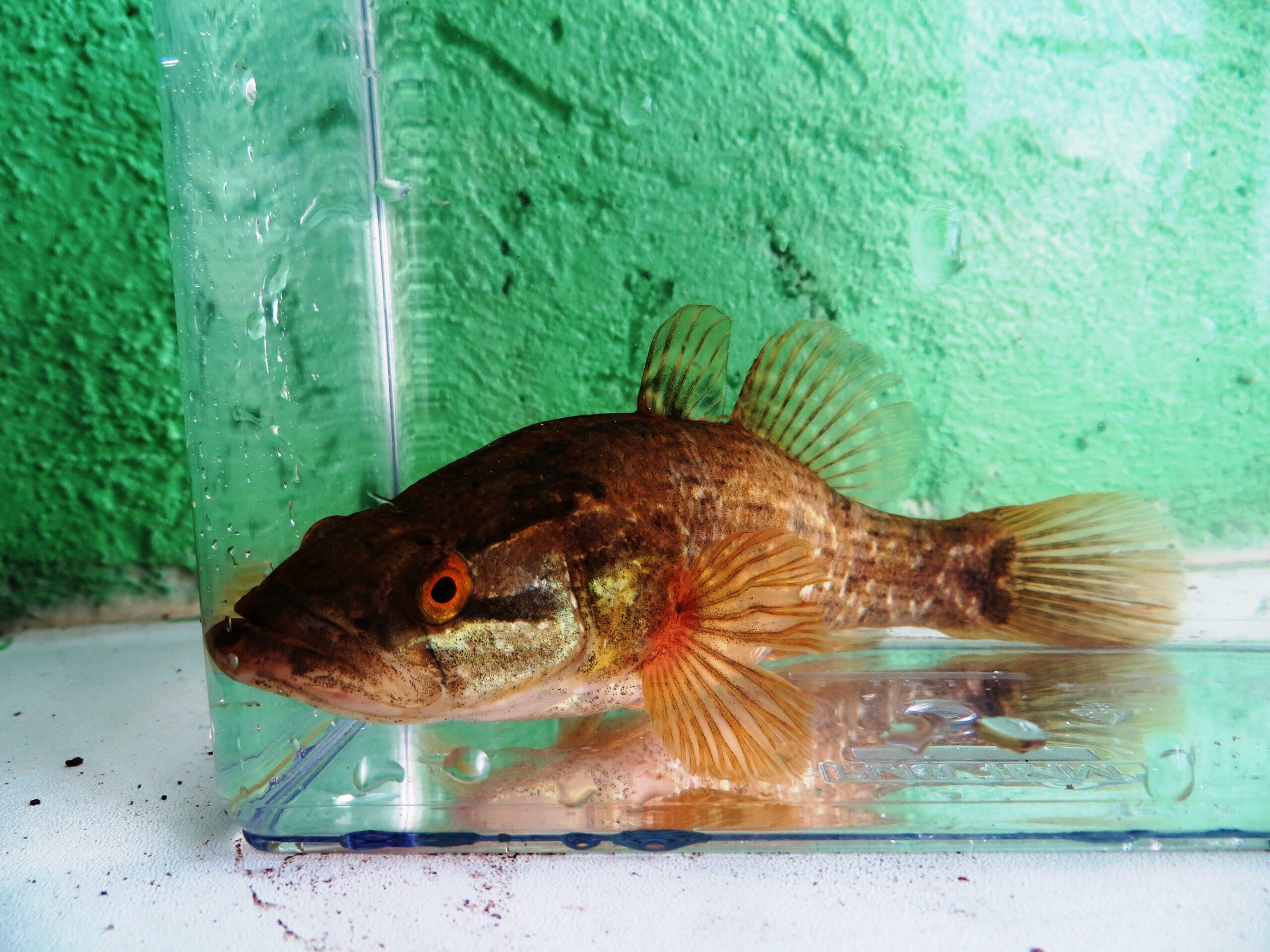
A benthic freshwater fish whose natural distribution area covers East Asia – the Amur basin, North China, and the Korean Peninsula. The species entered Latvia as an invasive alien species, mainly through the transport of fish fry and aquaculture material, as well as possible cases of aquarium releases. The species has been found in several river basin systems, including water bodies in southeastern Latvia.
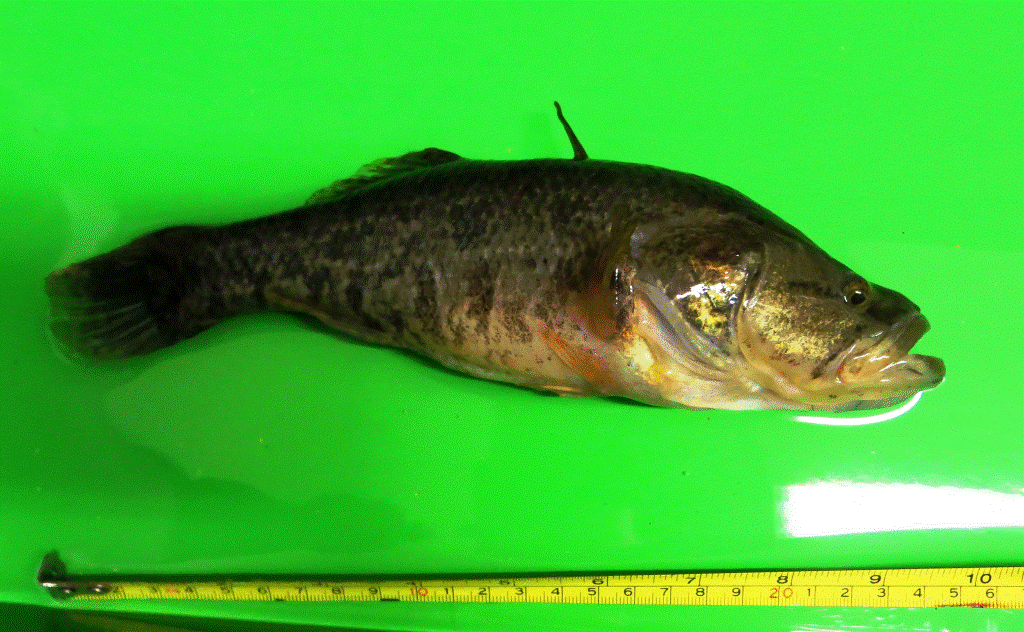
The species is characterized by a short, massive body, the length of which is usually 8–18 cm, with a relatively large, wide head and a wide mouth opening that allows it to ingest relatively large prey. The dorsal side is dark olive brown to grayish brown with irregular dark spots and a marble-like pattern, while the ventral side is lighter.
In terms of habitats, the species prefers small, stagnant, or slow-flowing, shallow water bodies with rich aquatic vegetation – ponds, oxbow lakes, ditches, peat quarries, and forest puddle systems. The species is highly tolerant of hypoxic conditions and organic pollution, is able to overwinter in small, freezing waters, and form dense populations. As a predator, it feeds on invertebrates, fish eggs and fry, as well as amphibian eggs and larvae.
Red-eared slider (Trachemys scripra Thunberg and Schoepff)
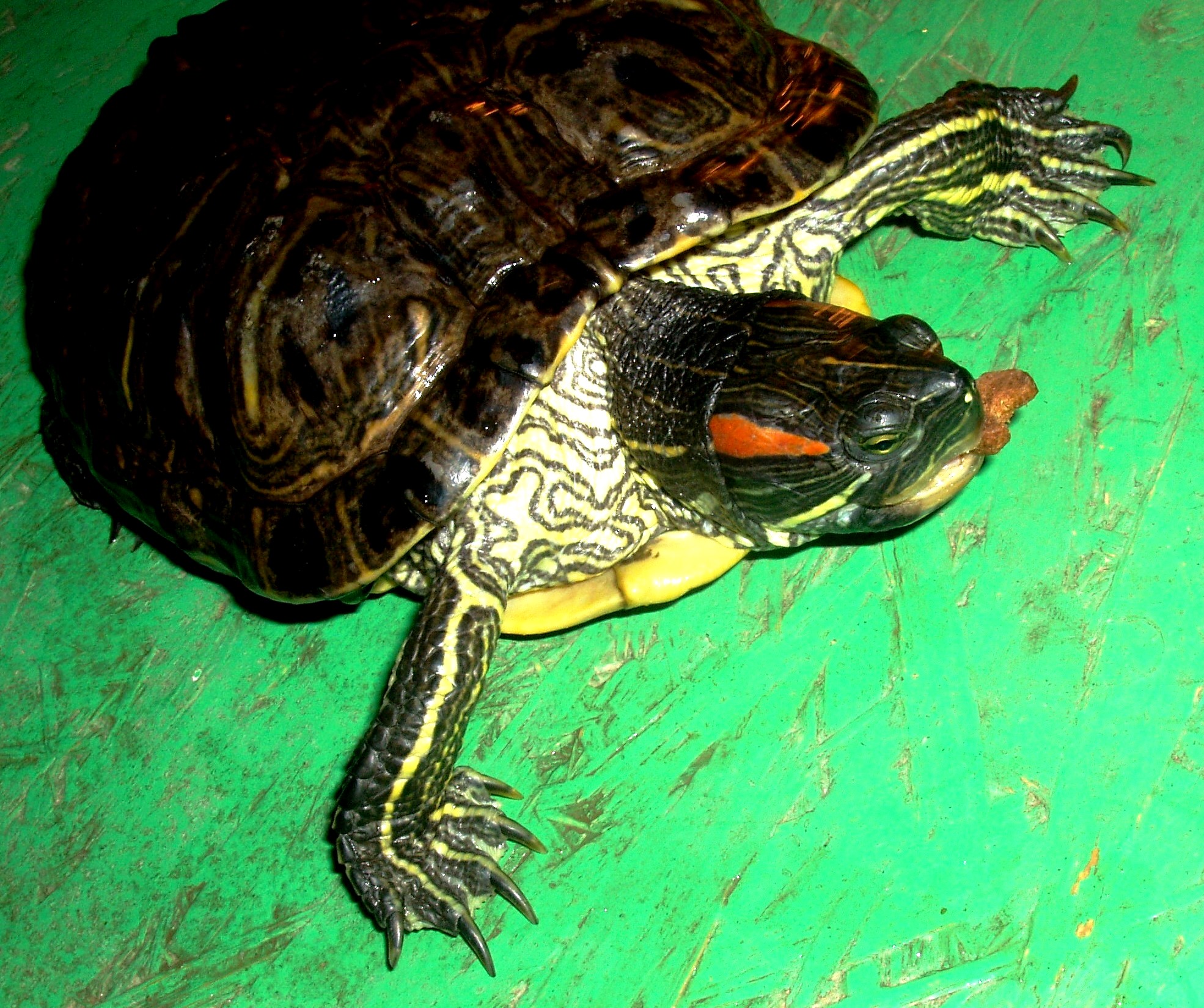
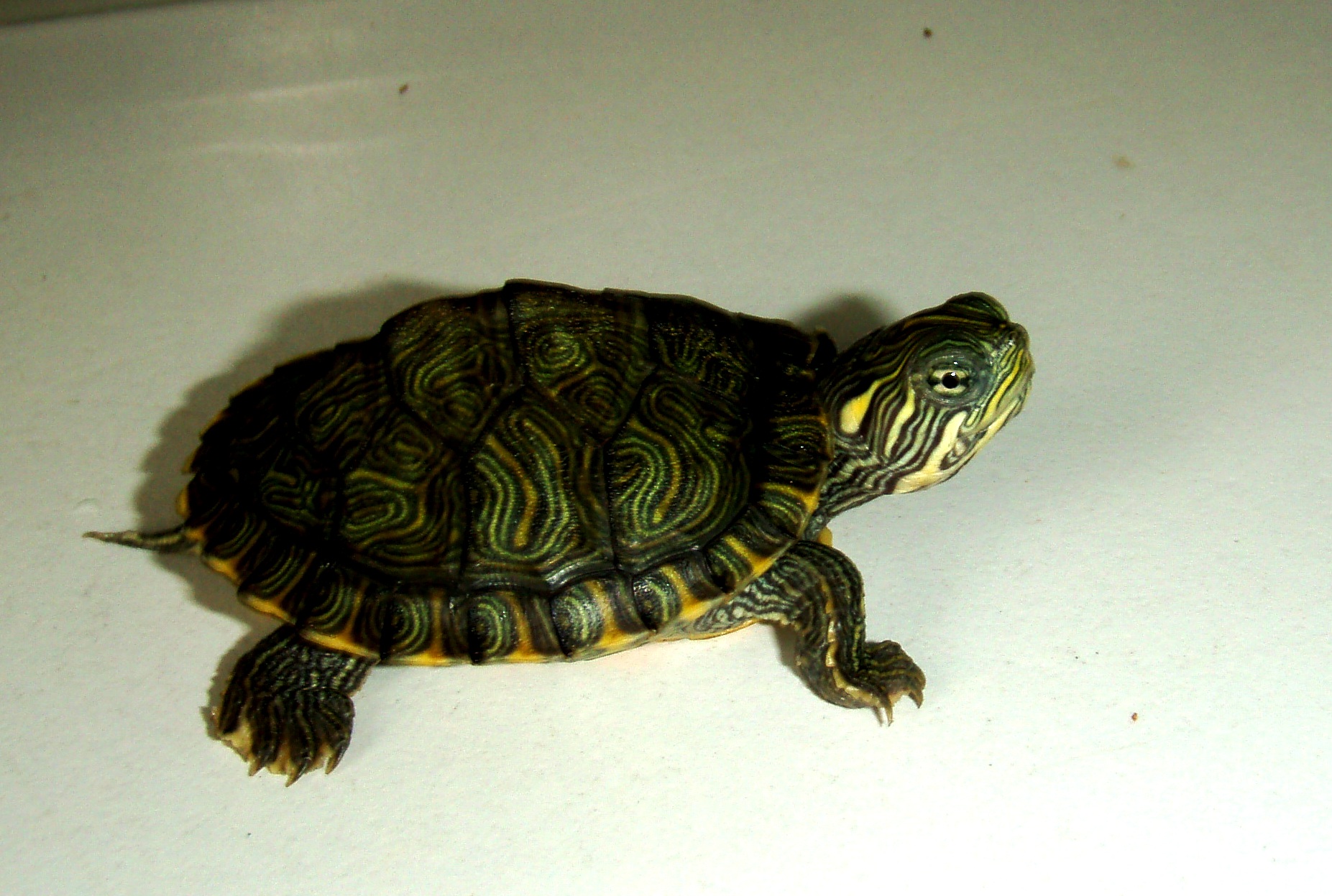
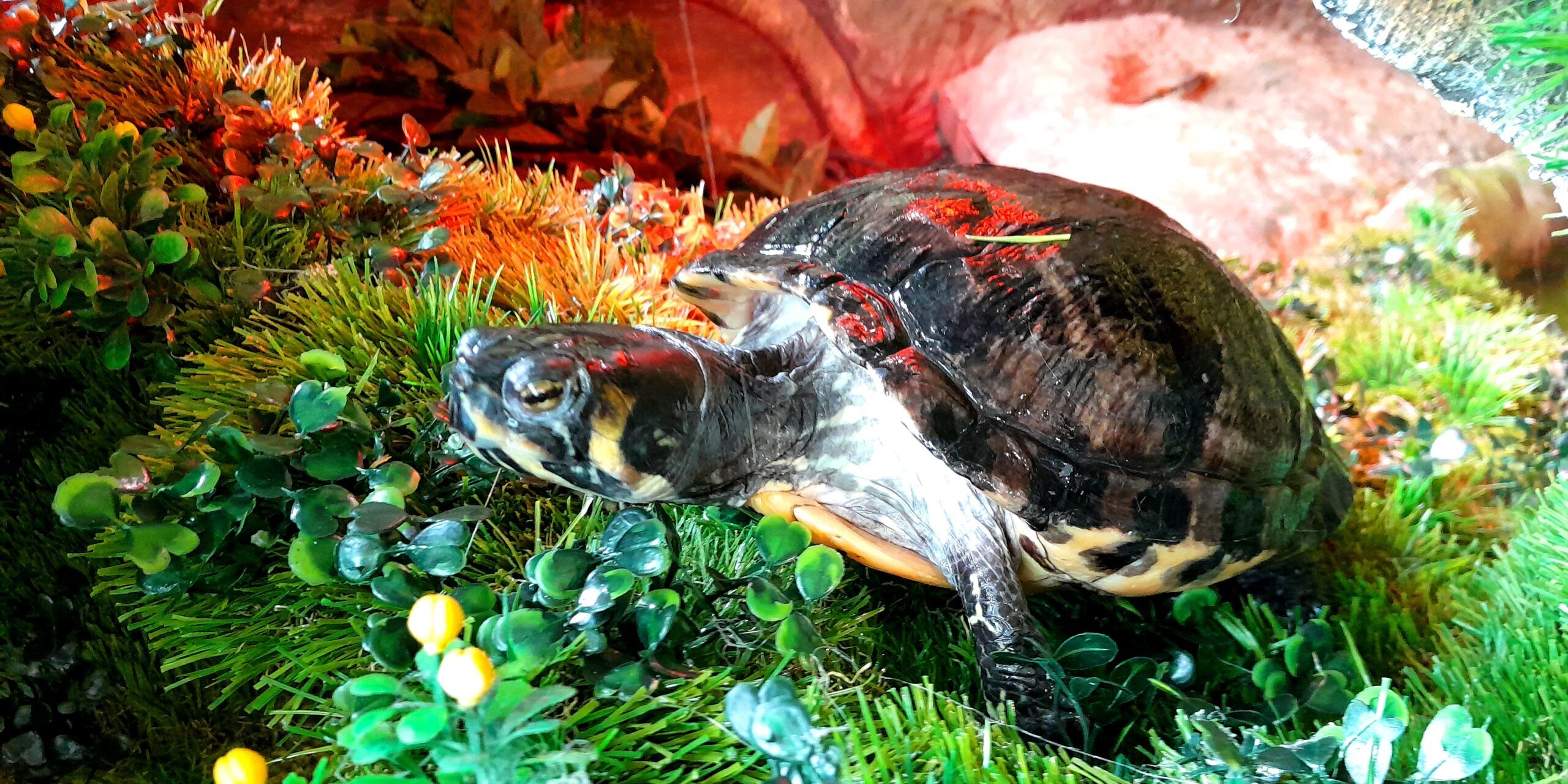
A species of freshwater turtle whose natural area of origin is in North America — in the Central and Southwest Mississippi basin and the Gulf of Mexico region. In Europe — including Latvia — this species has appeared as an introduced species, mainly due to the pet trade and the human habit of “releasing” turtles into the wild when they are no longer needed.
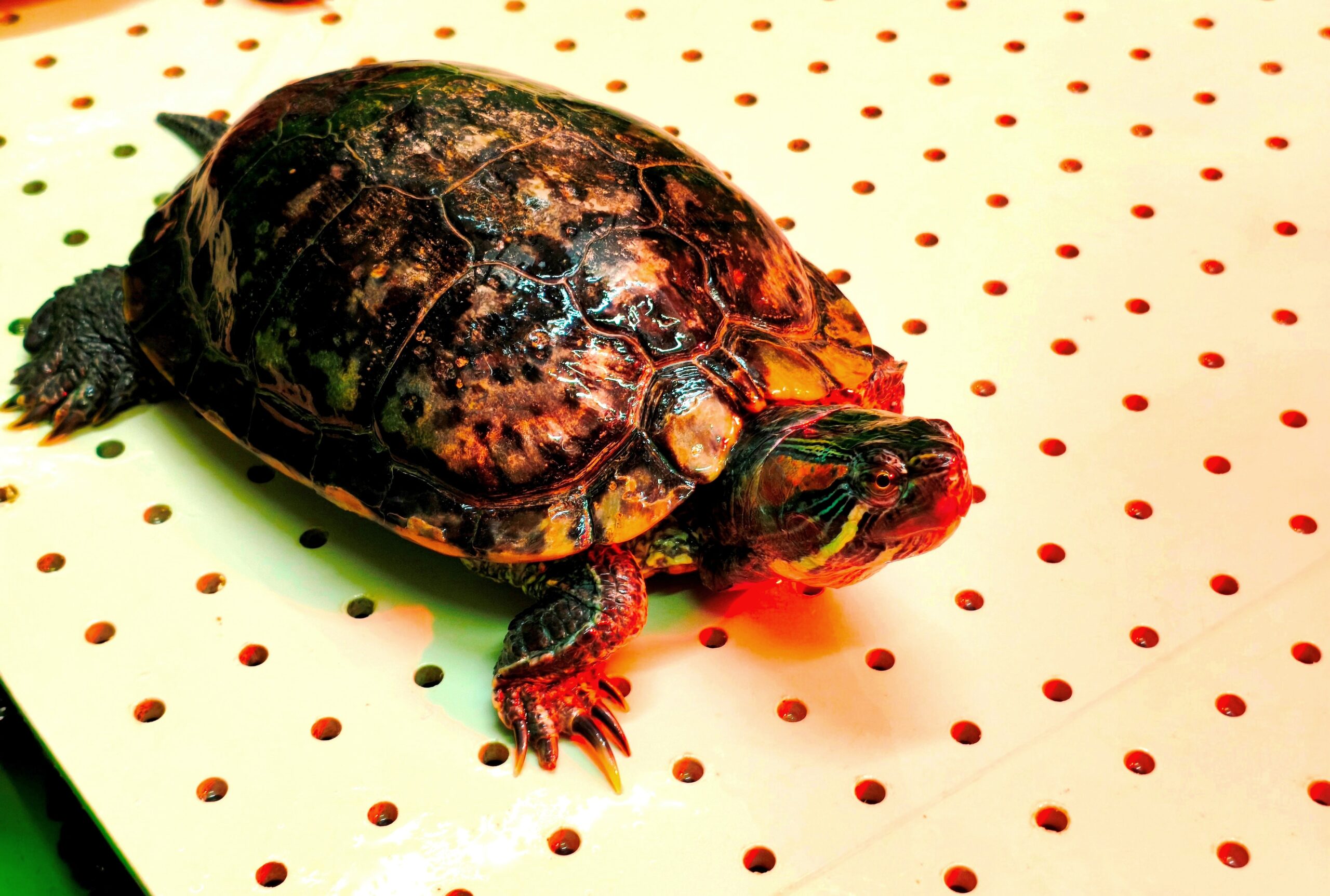
The shape of the carapace is flat and oval, often with a small “keel” visible in the juvenile stage; with age, the shell becomes darker. On the sides of the head, there are characteristic red or orange spots. The lifespan is potentially 30 years and longer.
The red-eared slider is an aquatic species that prefers slow-flowing or stagnant freshwater bodies in its natural environment: lakes, ponds, slow river sections, swamps, ditches with soft bottoms, vegetation, and with basking spots in the water: stones and fallen trees. Omnivorous, feeding on both plants and invertebrates, fish, and amphibians.
The red-eared slider is an invasive species, one of the world’s 100 worst invasive species. In Latvia, it competes with the native European pond turtle for food and for basking and egg-laying places. Red-eared sliders are more active and aggressive — due to competitive pressure, the activity, food digestion rate, and reproductive capabilities of native turtles can decrease. The species can transmit parasites and diseases that are new to native species, which increases pathogen risks for native herpetofauna.